Residential Air Duct Cleaning in Ken Caryl, Colorado
Overview
When your home's air quality feels stagnant or you notice dust accumulating faster than usual, your ductwork might be silently harboring contaminants that circulate throughout your living space. Professional air duct cleaning removes years of accumulated debris, allergens, and pollutants from your HVAC system's pathways.
Air duct cleaning involves specialized equipment that creates powerful suction while agitating debris loose from duct walls, registers, and system components. This process addresses not just visible dust but microscopic particles, pet dander, pollen, and other contaminants that standard cleaning methods can't reach. Ken Caryl's high altitude environment and seasonal temperature swings create unique conditions that affect indoor air circulation patterns.
Professional service matters because improper cleaning techniques can actually worsen air quality by redistributing contaminants or damaging ductwork seals. Our systematic approach addresses Ken Caryl's specific environmental factors:
High-altitude air density changes that affect circulation efficiency
Seasonal pollen loads from surrounding foothills vegetation
Construction dust from ongoing neighborhood development
Dry climate conditions that increase static particle accumulation
Common issues in Ken Caryl, CO
Ken Caryl's location along the foothills creates specific air quality challenges that directly impact ductwork cleanliness. The community's elevation at approximately 5,800 feet means lower air density, which can cause HVAC systems to work harder and accumulate particles more rapidly than at sea level locations.
Seasonal wind patterns carry fine particles from the nearby hogback ridges and construction sites throughout the growing community. Spring brings intense pollen loads from cottonwoods, oak brush, and mountain grasses, while summer dust storms can deposit significant debris in outdoor air intake systems. Winter's dry conditions create static electricity that attracts and holds particles within ductwork.
Many Ken Caryl residents notice these warning signs that indicate ductwork cleaning needs:
Visible dust buildup around registers and return air vents
Musty or stale odors when the HVAC system starts
Increased allergy symptoms, especially during seasonal transitions
Higher than expected utility bills from reduced system efficiency
Uneven heating or cooling between rooms
Fine dust settling on furniture shortly after cleaning
Our systematic approach begins with a thorough inspection using camera equipment to assess contamination levels and identify any structural issues within your ductwork. We document problem areas and explain findings before beginning any cleaning procedures.
The cleaning process follows these methodical steps:
System shutdown and safety preparation, including covering furniture and flooring
Access point creation at strategic locations for equipment insertion
High-powered vacuum attachment to main trunk lines
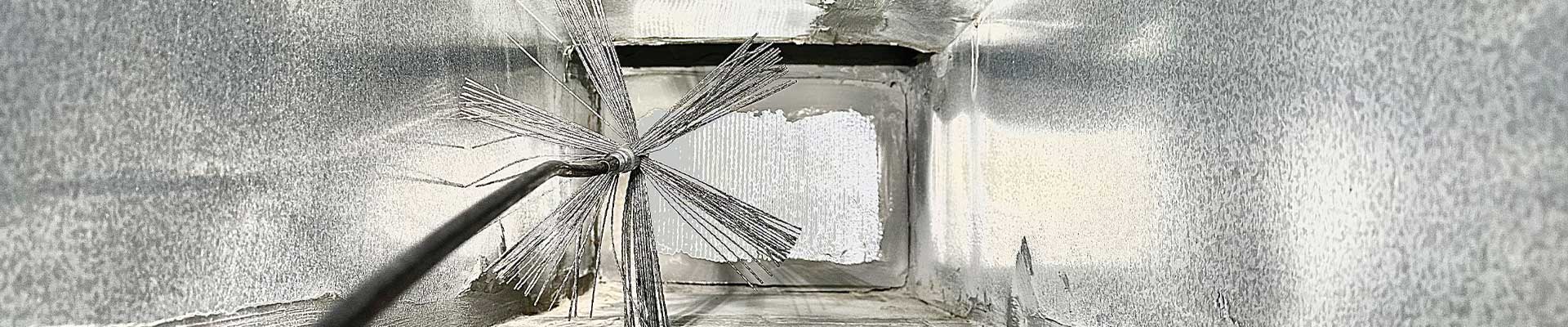
Agitation cleaning of branch ducts using rotating brush systems
Register and grille removal, cleaning, and sanitization
Return air pathway cleaning and filter replacement
Final inspection and system testing
Our specialized equipment includes truck-mounted vacuum systems generating over 15,000 CFM of suction power. We use compressed air tools, rotating brushes, and HEPA filtration to contain removed contaminants. Each cleaning session addresses the complete system – supply ducts, return pathways, registers, and accessible plenum areas.
Quality control involves post-cleaning camera inspection to verify thorough debris removal. We test airflow measurements at multiple registers and provide before-and-after documentation. Communication includes real-time updates about findings and recommendations for maintaining improved air quality.
Action Air Duct holds NADCA (National Air Duct Cleaners Association) certification and maintains Colorado contractor licensing with full bonding and insurance coverage. Our technicians complete ongoing training in advanced cleaning techniques and safety protocols specific to residential HVAC systems.
Local knowledge sets us apart – we understand Ken Caryl's unique environmental factors and how they affect ductwork contamination patterns. Our response time commitment means same-week service availability, with emergency appointments for urgent air quality concerns. We maintain detailed service records and provide follow-up consultations to track system performance improvements.
Technology advantages include truck-mounted equipment that eliminates portable unit limitations and reduces indoor noise during cleaning. Our camera inspection systems provide clear documentation of cleaning results. Customer service includes detailed explanations of findings, maintenance recommendations, and scheduling flexibility to accommodate your schedule.
Housing Characteristics & Air Duct Cleaning Considerations
Most homes in Ken Caryl were built between 1970 and 2000, representing a mix of ranch-style properties and two-story traditional designs. The community features predominantly single-family homes ranging from 2,000 to 4,000 square feet, with many properties including finished basements that create complex ductwork routing patterns.
Construction methods from this era typically used galvanized steel or early flexible ductwork systems, often with multiple joints and connections that can accumulate debris over time. Many homes feature central air systems with ductwork running through crawl spaces, attics, and basement areas where temperature differentials can cause condensation issues. The larger floor plans common in Ken Caryl mean extensive duct runs that require systematic cleaning approaches.
Age-related considerations for these homes include:
Original ductwork seals that may have deteriorated, allowing contaminant infiltration
Insulation around ducts that can harbor moisture and particles
Multiple system zones requiring coordinated cleaning procedures
Accessibility challenges in homes with finished basement ceilings
Environmental Conditions & Air Duct Cleaning Implications
Ken Caryl's semi-arid climate creates specific challenges for indoor air quality management. Annual precipitation averages only 15-17 inches, leading to consistently low humidity levels that increase static electricity and particle adhesion within ductwork. The area's position along the foothills exposes homes to chinook winds that can reach 60+ mph, driving fine particles into outdoor air intakes and creating pressure differentials that affect system efficiency.
Air quality conditions include periodic ozone action days during summer months, when ground-level pollutants concentrate due to temperature inversions. Wildfire smoke from regional fires can infiltrate HVAC systems, leaving residues that require professional removal. The nearby Chatfield Reservoir and South Platte River corridor contribute seasonal pollen loads from riparian vegetation.
High UV exposure at elevation that degrades outdoor unit components
Freeze-thaw cycles that can crack duct connections
Dust from ongoing construction in developing neighborhoods
Seasonal temperature swings of 80+ degrees requiring system adaptability
Low humidity conditions that increase particle suspension time
Air Quality Data in Ken Caryl
Ken Caryl's air quality monitoring shows particulate matter levels that fluctuate significantly with seasonal and weather patterns. PM2.5 concentrations typically range from 8-15 μg/m³ during clear conditions but can spike above 35 μg/m³ during wildfire events or dust storms. The Colorado Department of Public Health tracks ozone levels that frequently approach unhealthy thresholds during summer months, particularly affecting residents with respiratory sensitivities.
Local air quality challenges include:
Annual wildfire smoke events that deposit fine particles in HVAC systems
Construction dust from active development projects throughout Jefferson County
Vehicle emissions from C-470 and nearby transportation corridors
Natural dust from exposed soil during drought periods
Pollen counts that peak in May and September from diverse plant communities
These environmental conditions directly impact ductwork contamination rates and cleaning frequency needs. Homes with standard filtration systems typically require professional cleaning every 3-5 years, while properties near construction zones or with pets may need service every 2-3 years. Regular duct cleaning becomes particularly important for Ken Caryl residents with allergies or respiratory conditions, as clean ductwork significantly reduces indoor particle circulation and improves overall air quality management.