
Summer Energy Bills Too High? 7 Quick HVAC Fixes Denver Homeowners Can Try
Denver homeowners can reduce high summer energy bills by addressing common HVAC issues that lead to increased cooling costs. Many fixes are DIY-friendly and can be completed in an afternoon.
- Replacing a clogged air filter is a simple and effective way to improve AC efficiency. Homeowners should check their filters monthly during the summer months.
- Clearing the outdoor condenser unit of debris ensures it can effectively expel heat, reducing the workload on the AC system.
- Sealing air leaks around windows and doors helps keep cool air inside, which can significantly lower energy bills.
What are some quick HVAC fixes to reduce summer energy bills in Denver?
Homeowners in Denver can reduce summer energy bills by performing simple HVAC fixes. These include cleaning or replacing air filters, sealing duct leaks, checking insulation, and ensuring the thermostat is functioning properly. Addressing these issues can improve system efficiency and lower cooling costs during hot months.
Denver summers push cooling systems hard, and a spike in your July energy bill is usually a sign your system is working harder than it should. The good news: many causes are fixable in an afternoon. Learning how to reduce cooling costs in Denver starts with a few checks most homeowners can handle themselves.
Denver’s high-altitude climate creates specific problems for air conditioners. Thin air, intense afternoon sun, and dust from dry conditions all make your AC run longer to hit the same temperature. Below are seven fixes, marked clearly as DIY-safe or pro-level.
Why Denver Summer Energy Bills Climb So Fast
Your cooling costs rise when your AC runs longer to reach the thermostat setting. In Denver, three things drive that: restricted airflow, refrigerant issues, and heat leaking into the home.
A system straining against dirty filters or leaky ducts burns extra electricity every hour it runs. Fixing the small stuff first usually brings the fastest savings. Most Denver homes have at least two of the problems below happening at once.
7 Quick HVAC Fixes to Reduce Cooling Costs in Denver
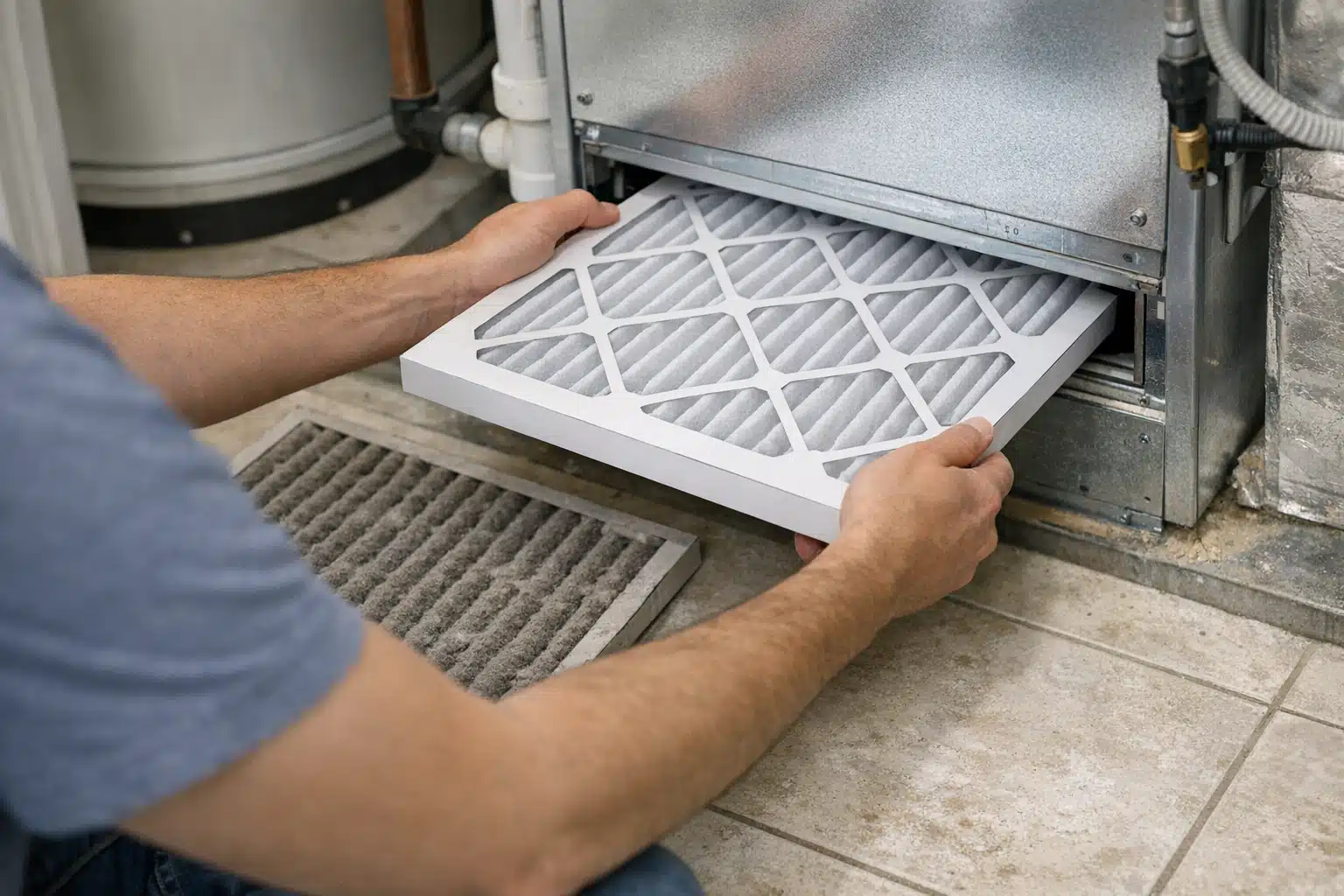
1. Replace a Clogged Air Filter (DIY)
A dirty air filter is the most common reason a Denver AC works overtime. When the filter clogs, your blower fights to pull air, and the system runs longer to move less cool air.
Check your filter monthly during summer. Denver’s dry, dusty air and spring pollen load filters faster than most homeowners expect.
- Standard 1-inch filters: replace every 30-60 days in summer
- Homes with pets or allergies: check every 3-4 weeks
- Thick 4-5 inch media filters: replace every 3-6 months
A clean filter is the cheapest fix on this list. It takes five minutes and often trims runtime right away.
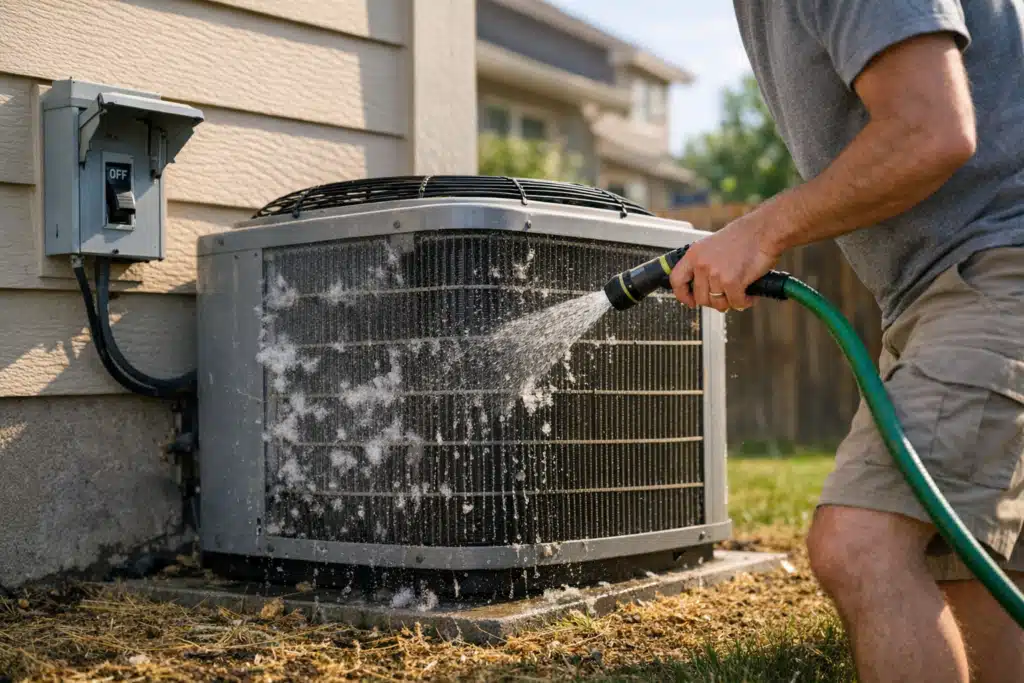
2. Clear the Outdoor Condenser Unit (DIY)
Your outdoor condenser dumps heat outside, and it cannot do that job when blocked. Cottonwood fluff, grass clippings, and dust cake the fins on Front Range units every summer.
Turn off power to the unit at the disconnect box first. Then follow these steps:
- Clear leaves, weeds, and debris from around the base
- Spray the fins gently with a garden hose from the inside out
- Trim plants back at least two feet on all sides
- Check that nothing sits on top of the unit
A caked condenser forces the system to reject heat slower, raising runtime and your bill. Never use a pressure washer, since it bends the delicate fins.
3. Seal Air Leaks Around the House (DIY)
Cool air escaping your home means your AC never catches up. Denver’s older neighborhoods, like parts of Wash Park and Berkeley, have homes with gaps around windows and doors.
Hold your hand near window frames and outlets on a hot day to feel for drafts. Common leak points include:
- Window and door frames
- Attic access hatches
- Recessed lighting
- Where pipes and wires enter walls
Weatherstripping and caulk cost little and stop cooled air from leaking outside. Sealing the attic hatch alone makes a real difference in Denver’s two-story homes.
4. Adjust Your Thermostat Strategy (DIY)
A smart or programmable thermostat lowers cooling costs by matching runtime to when you are home. Setting the temperature higher when the house is empty cuts unnecessary cooling during Denver’s hottest afternoon hours.
Raise the setting a few degrees when you leave for work. A programmable schedule handles this automatically once set.
Pair this with your ceiling fans. Fans let you keep the thermostat a couple degrees higher because moving air feels cooler on skin.
5. Close Blinds During Peak Sun (DIY)
Denver’s high-altitude sun heats interiors fast through west- and south-facing windows. Closing blinds or shades during afternoon peak hours blocks that solar gain before it becomes a cooling load.
This costs nothing and works best from late morning until sunset. Homes with large western exposures notice the biggest change.
6. Check and Clean Your Vents and Registers (DIY)
Blocked supply vents force your system to work harder for even cooling. Furniture, rugs, and drapes covering registers create hot spots that make you push the thermostat lower.
Walk each room and confirm every vent is open and unblocked. Vacuum dust off the register grilles at the same time.
If some rooms cool poorly even with open vents, the issue may sit deeper in your ductwork. That points to the next fix.
7. Schedule Duct Cleaning and an AC Tune-Up (Call a Pro)
Dirty ducts and an untuned AC quietly raise cooling costs all summer. Dust, pet dander, and construction debris collect inside Denver ductwork and restrict airflow across the whole home.
This is where DIY stops and a trained technician steps in. A tune-up covers items homeowners cannot safely check:
- Refrigerant charge: low levels cripple cooling and spike energy use
- Coil condition: a dirty evaporator coil kills efficiency
- Electrical connections: loose contacts waste power and risk failure
- Blower and airflow testing: confirms the system moves the right air volume
Duct cleaning restores airflow and removes the dust that circulates through your rooms. Cleaner ducts support energy efficient air conditioning and better indoor air quality, which matters during Denver wildfire smoke season.
Which Fixes Are DIY and Which Need a Pro?
Knowing where the line sits saves you money and prevents damage. Use this quick breakdown before you start.
- DIY-safe: filter changes, condenser rinsing, air sealing, thermostat settings, blind management, vent clearing
- Call a technician: refrigerant concerns, coil cleaning, electrical issues, duct cleaning, weak airflow that persists after DIY checks
If your bill stays high after the six DIY fixes, the problem is hidden inside the system. That is your signal to book a tune-up rather than keep guessing.
Warning Signs Your AC Needs More Than a Quick Fix
Some symptoms point to problems no filter change will solve. Watch for these signs during Denver’s cooling season:
- AC runs constantly but never reaches the set temperature
- Warm air blowing from vents
- Ice on the refrigerant lines or coil
- Loud grinding, buzzing, or rattling
- Sudden bill jump with no weather change
- Musty smells when the system runs
Ignoring warning signs turns a small repair into a compressor replacement. Catching issues early keeps your system running its full lifespan of 12-15 years.

How Often Should Denver Homeowners Maintain Their AC?
Schedule a professional AC tune-up once a year, ideally in spring before summer heat arrives. Denver’s dust and dry air mean ducts benefit from cleaning every three to five years for most homes.
Homes with pets, allergies, or recent remodeling may need duct cleaning sooner. Pairing yearly maintenance with monthly filter checks keeps cooling costs predictable all season.
Start With the Quick Wins
Most high summer bills in Denver trace back to airflow, sun, and leaks, and six of the seven fixes above cost little or nothing. Handle the DIY items first, then bring in a technician for duct cleaning and a tune-up when your bill stays stubborn.
Action Air Duct helps Denver homeowners reduce cooling costs with duct cleaning and AC maintenance built for the Front Range climate. Call or text 720‑257‑3319, email tamir@actionairduct.net, or visit https://actionairduct.net to schedule your service.