
What Wildfire Smoke Leaves Behind in Your Air Ducts – A Denver Homeowner’s Guide
Wildfire smoke infiltrates Denver homes, leaving behind fine particulate matter and odors trapped in air ducts. This guide explains the impact of smoke on HVAC systems and when to consider duct cleaning or filter upgrades.
- Wildfire smoke can settle in ducts, causing odors to recirculate into living spaces. Homes in Denver are particularly affected due to local weather patterns that trap smoke.
- Duct cleaning is effective when smoke residue is present, while a filter upgrade may suffice for light smoke exposure.
- Homeowners should avoid running HVAC fans continuously during smoke events to prevent further contamination of their ductwork.
What does wildfire smoke do to air ducts?
Wildfire smoke infiltrates homes, particularly affecting air ducts where it can become trapped. As the smoke settles in the ductwork, it releases particles and odors each time the heating or cooling system operates, leading to contaminated indoor air quality and persistent unpleasant smells.
When wildfire smoke rolls into the Front Range, the smell does not stay outside. It works its way into your home, and a good portion of it ends up trapped inside your air ducts. Once wildfire smoke settles into Denver ductwork, every fan cycle pushes those particles and odors back into your living space.
This post covers what wildfire smoke physically leaves behind in your system. You will learn when duct cleaning makes sense, when a filter upgrade and a purge are enough, and the single fan mistake that makes your indoor air worse during a smoke event.
What Wildfire Smoke Leaves Behind in Your Air Ducts
Wildfire smoke is a mix of fine particulate matter and volatile organic compounds. The particulate is what you see as haze. The compounds are what you smell.
Both find their way into your HVAC system in three ways:
- Fine particulate settles in duct runs. The smallest smoke particles, often smaller than 2.5 microns, ride the airflow and drop out in low-velocity sections of your ductwork.
- Odor absorbs into existing dust. Duct interiors already hold a layer of dust. Smoke compounds bind to that dust and hold the smell for weeks.
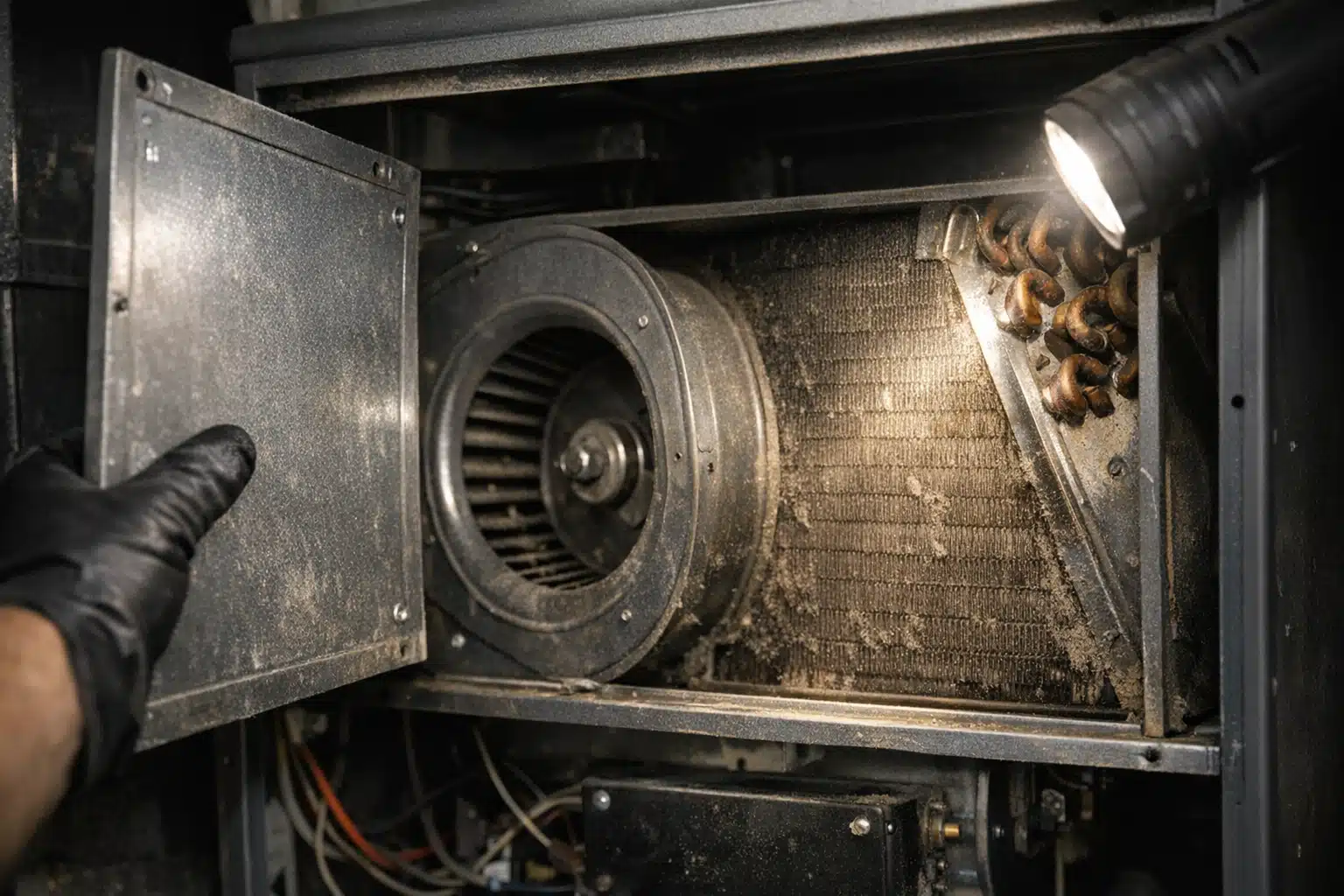
- Residue coats the blower and coil. Sticky smoke residue lands on the blower wheel and evaporator coil, where it keeps releasing odor into passing air.
The problem is recirculation. Every time your furnace or air conditioner fan kicks on, air passes over that settled residue and carries the smell back into your rooms.
This is why a house can smell like campfire days after the smoke outside has cleared. The source is no longer the sky. It is your ductwork.
Why Denver Homes Are Hit Harder
Denver sits where summer wildfire smoke from Colorado and neighboring states pools along the Front Range. Temperature inversions trap that smoke near the ground for days.
Homes here run cooling hard during those same weeks. More fan runtime means more smoke pulled into the system and more residue left behind on interior surfaces.
High-altitude air is also drier and dustier. That existing dust load gives smoke odor more to cling to inside your ducts.
When Duct Cleaning Actually Helps After Wildfire Smoke
Duct cleaning helps when smoke residue and odor have settled into the interior surfaces of your system. It does not help every situation, and honest guidance matters here.
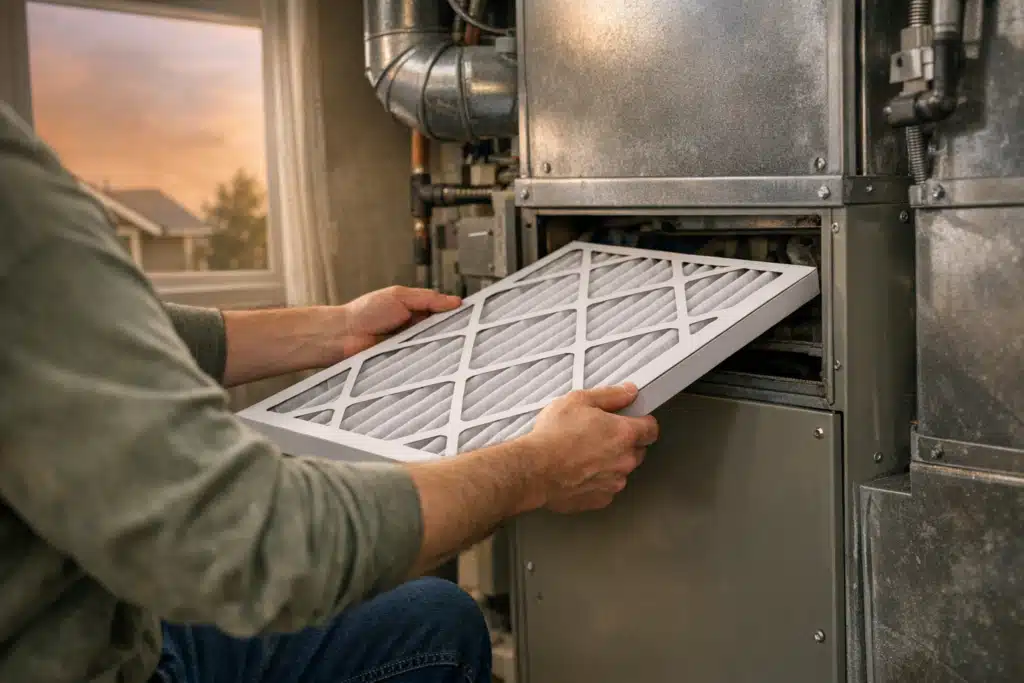
A filter upgrade catches airborne particles. It does nothing for residue that has already coated your duct walls, blower, and coil.
Signs Your Ducts Need Cleaning After Smoke
- Smoke smell returns every time the fan starts, even after outdoor air has cleared for days.
- Visible gray film on supply registers or around vent openings.
- Heavy smoke exposure from a nearby fire event, not distant haze.
- The blower compartment smells like smoke when you remove the filter.
If you notice odor tied directly to fan operation, cleaning the interior surfaces is the fix. A new filter alone will not remove what is already stuck in place.
When a Filter and Purge Are Enough
Light, distant smoke exposure often does not require full duct cleaning. If your home only saw a few hazy days and no lingering odor, a simpler approach works.
- Install a MERV-13 filter. This rating captures fine smoke particulate while still allowing enough airflow for most Denver residential systems.
- Run a fresh-air purge once smoke clears. Open windows on a clear day and run the fan to flush settled particles out of the space.
- Wipe down registers and return grilles. Removing surface dust cuts the amount of odor-holding material near your vents.
Check that your system can handle a MERV-13 filter before installing one. Older furnaces with weak blowers may restrict airflow with a dense filter, which strains the system.
The Fan Mistake That Makes Indoor Air Worse
Do not run your HVAC fan continuously during an active smoke event. This is the most common mistake Denver homeowners make, and it works against you.
When smoke is heavy outside, running the fan pulls smoke-laden air across your filter faster than the filter can clean it. Fine particles slip past a standard filter and load into your ducts.
You are feeding your ductwork the exact residue you want to keep out. The more you run the fan during peak smoke, the more odor gets embedded for later.
What to Do Instead During a Smoke Event
- Keep windows and doors closed to limit smoke entering the home.
- Set the thermostat fan to AUTO, not ON, so it only runs during cooling cycles.
- Run a portable HEPA air cleaner in the rooms you use most.
- Wait for a MERV-13 filter and fresh-air purge until outdoor air quality improves.
Once the smoke outside has cleared, that is your window to purge and upgrade the filter. Doing it during the event just recontaminates everything.
What Professional Duct Cleaning Removes That Filters Cannot
Professional duct cleaning removes settled particulate and odor-holding dust from surfaces a filter never touches. A filter only cleans air passing through it. It cannot reach residue already deposited inside the system.
A thorough cleaning addresses:
- Supply and return duct runs where fine smoke particulate has dropped out of the airflow.
- The blower wheel and motor housing, common spots for sticky smoke residue.
- The evaporator coil area, which holds odor and restricts airflow when coated.
- Return grilles and registers that collect visible film.
Removing the dust layer removes the material holding the smoke smell. That is why cleaning stops the recirculating odor when a filter change does not.
How Often This Matters in Denver
Most Denver homes benefit from duct cleaning every three to five years under normal conditions. A heavy wildfire smoke season can move that timeline up.
If your area saw dense smoke and you still smell it indoors weeks later, do not wait for the calendar. The odor will keep returning with every fan cycle until the residue is removed.

Protecting Your System and Air Quality Year-Round
Wildfire smoke is one seasonal stress on Denver HVAC systems. Dust, pollen, and heating-season buildup add to the load the rest of the year.
A few habits keep your air cleaner and your system running longer:
- Check your filter monthly during smoke season and replace it when it looks loaded.
- Match filter rating to your equipment so airflow stays healthy.
- Schedule duct cleaning after a heavy smoke year rather than waiting years.
- Pair cleaning with a filter upgrade for the best air quality result.
Clean ducts and the right filter work together. One removes what is already there, the other catches what comes next.
Key Takeaways for Denver Homeowners
Wildfire smoke leaves fine particulate and odor-holding residue inside your air ducts, and it recirculates every time the fan runs. Light exposure calls for a MERV-13 filter and a fresh-air purge, while heavy exposure with lingering odor calls for duct cleaning.
Whatever you do, keep the fan on AUTO during an active smoke event so you stop feeding smoke into your system.
If smoke smell keeps coming back through your vents, Action Air Duct can inspect and clean your ductwork to remove the residue holding it. Call or text 720‑257‑3319, email tamir@actionairduct.net, or visit https://actionairduct.net to schedule a smoke-season duct cleaning or inspection.