
How to Choose Between AC Repair vs. Replacement in Denver’s Climate
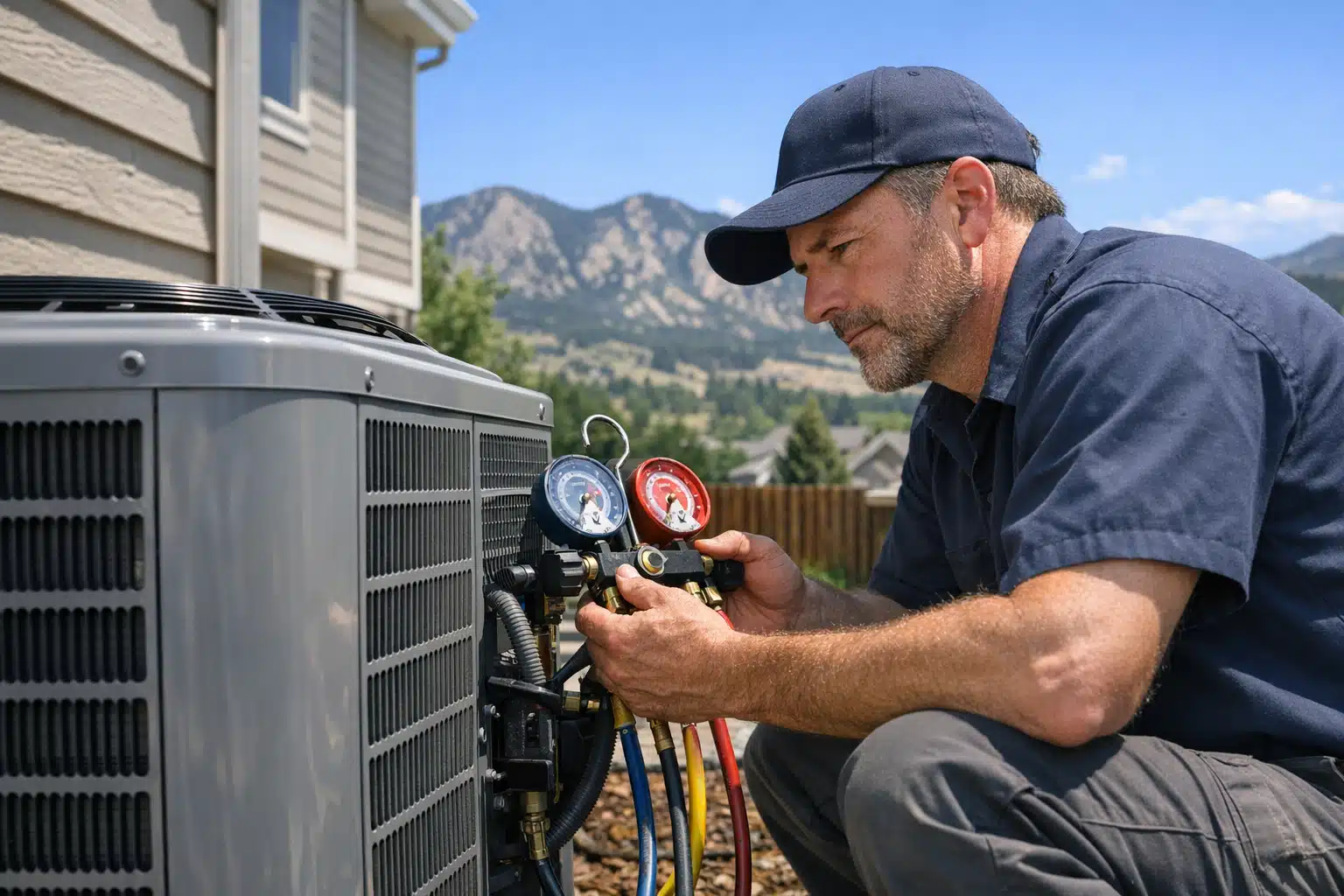
Denver homeowners face a tough choice when their AC fails: repair or replace. This decision hinges on the system's age, repair costs, and energy efficiency.
- If the repair cost exceeds half the price of a new unit or the system is over 12 years old, replacement is advisable.
- Younger units with minor repairs and steady cooling performance should be repaired instead.
- Regular maintenance like duct cleaning can extend the life of an AC unit and improve efficiency.
How to choose between AC repair and replacement in Denver?
To choose between AC repair and replacement in Denver, consider the age and condition of your unit, the cost of repairs compared to replacement, and the efficiency of a new system. Evaluate how long you plan to stay in your home and the potential energy savings of a new unit.
Your AC quits on the hottest July afternoon, and the technician hands you a repair estimate that makes you pause. Now you face the question every Denver homeowner dreads: fix the old unit or replace it entirely.
The choice between repair and AC replacement in Denver depends on three things: the age of your system, the size of the repair bill, and how much you spend cooling your home each summer. Peak season pressure makes this decision harder, because waiting means sweating.
Below is a practical framework built for Front Range homes, where cooling demand climbs fast in June and drops just as quickly by September.
The Quick Answer: When AC Replacement in Denver Makes Sense
Replace your AC when the repair cost exceeds half the price of a new unit, or when the system is over 12 years old. Repair it when the unit is younger, the fix is minor, and the system still cools efficiently.
Here is the fast decision rule many Denver technicians use:
- Repair if the unit is under 10 years old and the repair costs less than $500.
- Weigh both options if the unit is 10–12 years old and the repair runs $500–$1,500.
- Replace if the unit is over 12 years old or the repair tops half the cost of a new system.
This rule bends based on your energy bills and how the unit handles Denver’s altitude. More on that below.
How Denver’s Climate Changes the Math
Denver AC units work in short, intense bursts rather than season-long marathons. Summer highs push into the 90s, but nights cool off fast along the Front Range.
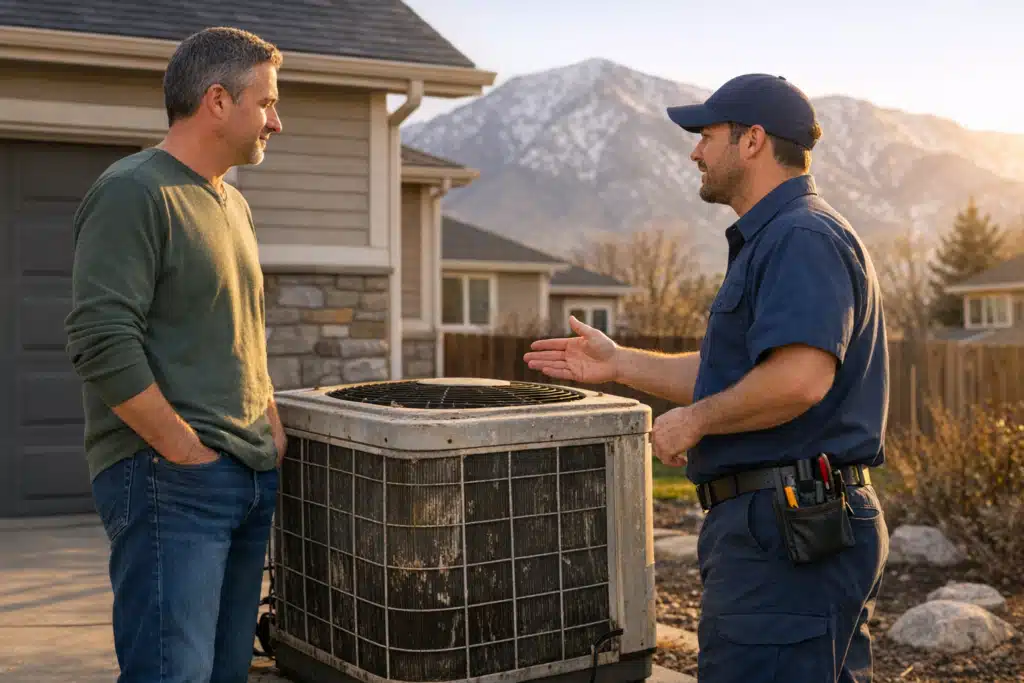
That pattern affects your decision in two ways.
Fewer Runtime Hours, Longer Lifespan
A Denver AC unit sees fewer total cooling hours than one in Phoenix or Dallas. This means a 12-year-old system here may have life left that a Southern unit would not.
An older unit in good shape can be worth repairing if it still cools evenly. Have a technician check refrigerant levels and compressor health before deciding.
Altitude and Efficiency
Denver’s thin air changes how HVAC equipment performs. Air-cooled condensers move less dense air, so proper sizing and airflow matter more here than at sea level.
An oversized or poorly matched replacement wastes money. A right-sized unit installed for altitude conditions runs less and lasts longer.
The Real Cost Factors Behind AC Repair vs. Replacement
Air conditioner repair costs depend on the failed part, refrigerant type, and how quickly you need service during peak demand.
Common Denver repair scenarios include:
- Capacitor or contactor failure — a smaller, quick fix. Usually worth repairing on any unit.
- Refrigerant leak — cost depends on the leak location and refrigerant type. R-22 units are expensive to recharge.
- Compressor failure — one of the priciest repairs. On an older unit, replacement usually wins.
- Evaporator coil replacement — a major cost that often tips the scale toward a new system.
The R-22 Refrigerant Problem
If your AC still uses R-22 refrigerant, repairs get expensive fast. R-22 was phased out, and remaining supply carries a steep price.
A refrigerant leak on an R-22 system is a strong signal to replace rather than repair. You would pour money into cooling a unit already at the end of its service life.
Peak-Season Pricing Pressure
Repair demand spikes when temperatures hit their July peak. Emergency calls cost more, and replacement lead times stretch out.
Homeowners who wait until the unit dies in mid-summer face both higher prices and hotter waits. Assessing your system in spring avoids that trap.
Side-by-Side: Repair vs. Replacement for Denver Homes
Use this comparison to frame your own situation.
When Repair Wins
- System is under 10 years old.
- Repair cost stays under $500.
- The unit still cools every room evenly.
- Energy bills have stayed steady year over year.
- It uses R-410A, not R-22, refrigerant.
When Replacement Wins
- System is 12+ years old.
- Repair cost exceeds half the price of a new unit.
- Summer energy bills keep climbing.
- The compressor or evaporator coil has failed.
- The unit runs on R-22 refrigerant.
- You have paid for multiple repairs in the past two seasons.
The Efficiency Argument Most Homeowners Miss
A new high-efficiency AC can cut cooling costs meaningfully compared to a 15-year-old unit. Older systems lose efficiency as parts wear and coils clog.
Here is the cost-benefit angle for Denver homes:
Because our cooling season is short, energy savings alone rarely justify replacing a working unit. The math changes when the old unit needs a big repair anyway.
The smart move is bundling the decision. When facing a major repair on an aging system, put that repair money toward a new efficient unit instead.
A Real Denver Scenario
A homeowner in Lakewood has a 13-year-old R-22 unit. The compressor fails in late June, with a repair quote near $2,000.
Repairing keeps an inefficient, obsolete system alive for a few more seasons. Replacing that same day with a right-sized R-410A unit ends the cycle of repair bills. In this case, replacement is the sound financial call.

Warning Signs Your AC Is Nearing the End
Watch for these signals that point toward AC replacement in Denver rather than another repair:
- Rising energy bills with no change in usage habits.
- Uneven cooling between rooms or floors.
- Frequent breakdowns during the same season.
- Loud or unusual noises from the outdoor unit.
- Short cycling, where the system turns on and off rapidly.
- Weak airflow even after a filter change.
Some of these point to dirty ducts or a clogged filter rather than a failing unit. That distinction matters before you spend on replacement.
Why Duct and System Cleaning Belongs in This Decision
Before condemning an AC, rule out airflow problems. Dirty ducts, a clogged coil, or a neglected filter mimic the symptoms of a failing system.
Denver homes collect fine dust, and wildfire smoke seasons load filters faster than normal. A restricted system strains the compressor and mimics equipment failure.
A cleaning and inspection can restore performance and delay a costly replacement. It also tells you the true condition of the equipment before you invest.
Recommended intervals for Denver homes:
- Air filters — check monthly during cooling season, replace every 1–3 months.
- Duct cleaning — every 3–5 years, sooner after heavy wildfire smoke.
- AC tune-up — once each spring, before peak demand.
What to Expect From an Honest AC Assessment
A fair evaluation looks at the whole system, not just the broken part. Expect a technician to check the following before recommending replacement:
- Age and refrigerant type of the unit.
- Condition of the compressor, coils, and blower.
- Airflow and duct health.
- Your recent energy bills and comfort complaints.
- The repair cost against the price of a right-sized new unit.
Be cautious of any recommendation to replace without this review. A rushed peak-season upsell rarely serves your budget.
Conclusion
The repair-versus-replace decision comes down to age, repair cost, refrigerant type, and how your system handles Denver’s short but intense cooling season. Repair younger units with minor issues, and replace aging R-22 systems facing major repairs. Rule out dirty ducts and clogged filters before spending on a new unit.
Action Air Duct gives Denver homeowners honest assessments backed by system cleaning and inspection, not pressure. For a straight answer on whether to repair or replace before peak heat arrives, call or text 720‑257‑3319, email tamir@actionairduct.net, or visit https://actionairduct.net.