
Does Running the HVAC Fan Constantly Help or Hurt Air Quality?
Many Denver homeowners wonder if running their HVAC fan constantly improves air quality. The effectiveness of this setting depends on factors like filter quality and duct cleanliness.
- The auto setting is generally better for most homes, as it runs the fan only when heating or cooling is needed. This helps reduce dust buildup in ducts.
- Constant fan operation can improve air mixing but may also stir up dust and create moisture issues if filters are not maintained.
- For optimal air quality, a clean filter and duct system are essential; otherwise, running the fan continuously can spread dust throughout the home.
Does running the HVAC fan constantly improve air quality?
Running the HVAC fan constantly can help improve air quality by promoting continuous air circulation and filtration. However, it may also lead to increased energy costs and potential wear on the system. Homeowners should weigh the benefits of cleaner air against these factors when deciding on fan settings.
Keeping your thermostat fan on the “ON” position feels like a smart move for cleaner air. Many Denver homeowners flip the switch believing constant air movement means constant filtration. Whether you run your HVAC fan on or auto changes more than your electric bill, and the difference shows up inside your ductwork.
This post answers the question that follows every fan-runtime discussion: does the “ON” setting clean your air or just push dust around? You will learn what each setting does, how it affects air quality, and what our technicians find when they open ducts in both types of homes.
Should You Run the HVAC Fan On or Auto?
The auto setting works better for most Denver homes. Your fan runs only when the system heats or cools, then shuts off. The “ON” setting runs the fan continuously, moving air even when no heating or cooling happens.
Constant fan operation can improve air mixing and even temperatures. It can also recirculate dust, strain your filter, and create moisture problems in certain conditions. The right answer depends on your filtration, your home, and how your ducts are set up.
What Each Setting Means
- AUTO: The blower cycles with heating or cooling demand. Air gets filtered during each cycle, then the fan rests.
- ON: The blower runs 24/7. Air passes the filter constantly, but so does any dust already loose in the ducts.
HVAC Fan Setting and Air Quality: The Honest Tradeoffs
Your HVAC fan setting affects air quality in both directions. Running the fan constantly pushes more air across your filter, which can catch more particles over time. That only helps if your filter is clean and rated to trap small particles.
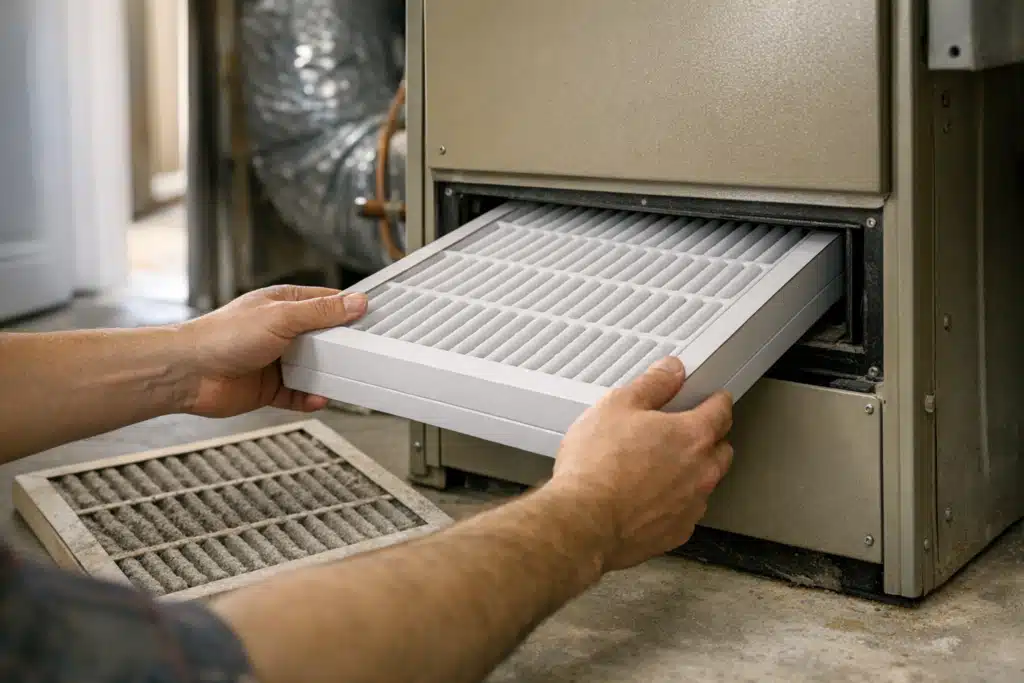
A clogged or low-grade filter turns constant operation against you. The fan keeps moving air, but the filter stops catching much. Loose debris in the ducts gets stirred up and redistributed into your living space.
When Constant Fan Operation Helps
- You run a MERV 11 or higher filter and change it on schedule.
- Wildfire smoke drifts into the Front Range and you want steady filtration during smoke events.
- You have uneven temperatures between upstairs bedrooms and the main floor.
- You use a whole-home air purifier that needs airflow to work.
When Constant Fan Operation Hurts
- Your filter is cheap or overdue for replacement.
- Your ducts hold years of dust that gets kicked loose.
- You run AC in humid conditions and the fan re-evaporates moisture off the coil back into the air.
- Your energy bill matters and the blower motor is older and inefficient.
What Our Technicians Find in “ON” Homes vs. “Auto” Homes
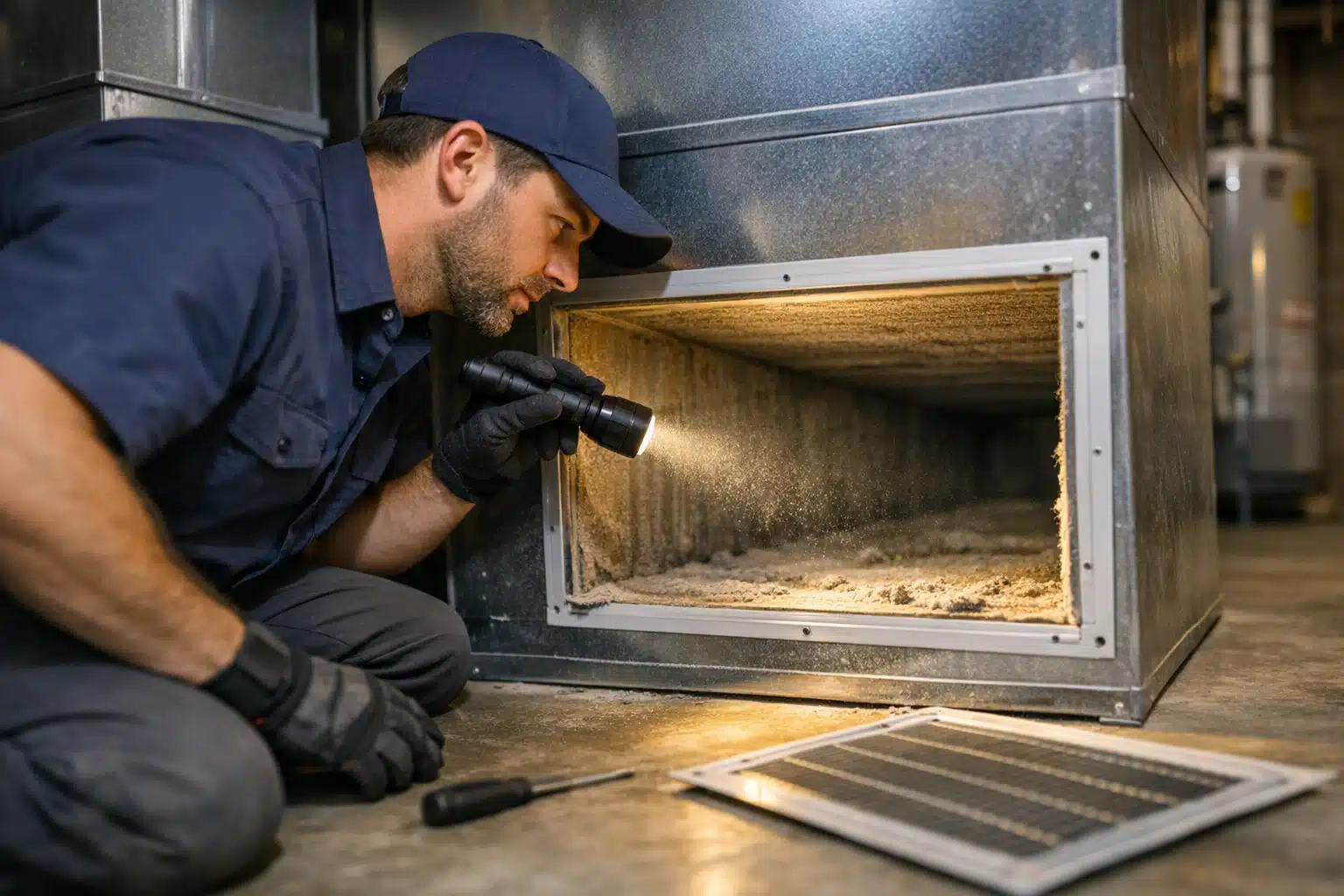
The fan-setting debate gets concrete when you open the ducts. Our crews clean systems across Denver, Aurora, and Lakewood, and the two setups look different inside.
Homes That Run the Fan Constantly
Dust distribution tells the story. In constant-fan homes, we see even, fine dust coating the entire duct run, not just near the registers. The air keeps moving, so particles settle across every surface instead of piling in one spot.
When the filter is good, the main trunk lines stay cleaner than expected. When the filter is cheap or ignored, the opposite happens. We find gray film on the blower wheel and evaporator coil because unfiltered air cycled past them thousands of times.
One pattern stands out in older Denver homes with return leaks. Constant fan pressure pulls dust from wall cavities, crawl spaces, and attics into the ducts. That debris then spreads house-wide instead of staying put.
Homes That Run the Fan on Auto
Auto-setting ducts show heavier buildup near supply registers and lighter dust deeper in the runs. Dust settles during the long fan-off periods and stacks up where airflow starts and stops.
The blower wheel and coil usually look cleaner in auto homes. Less total air volume means less chance for particles to coat the equipment. The payoff is lower wear on the motor over years of use.
The downside we see: stagnant pockets in the ductwork. Rooms far from the furnace collect dust and allergens that never get stirred or filtered between cycles.
Denver Conditions That Change the Math
Local climate shifts the right choice. Denver’s dry air, dust, and seasonal swings all push the decision in different directions.
Winter Heating Season
Colorado winters run long and dry. Constant fan operation helps even out heat between a cold basement office and a warm top floor. Static buildup and dry air mean dust stays airborne longer, which raises the value of steady filtration.
Summer Cooling Season
Summer flips the logic. Running the fan nonstop during AC season can pull moisture off a wet coil and send it back inside. In a dry climate that is usually minor, but during monsoon-season humidity spikes it works against comfort.
Wildfire Smoke Events
Smoke season changes the answer fast. During heavy smoke, running the fan on “ON” with a MERV 13 filter gives your system more chances to scrub fine particles from indoor air. Switch back to auto once air outside clears.

How to Decide Which Setting Fits Your Home
Match the setting to your equipment and goals. Use these steps to make the call.
- Check your filter rating. MERV 11 or higher makes constant operation worthwhile. Below that, auto is the safer pick.
- Inspect your filter date. If you cannot run a clean filter every 1 to 3 months, stay on auto.
- Note your comfort complaints. Uneven temperatures favor “ON.” No complaints favor auto for efficiency.
- Factor in your blower type. A variable-speed ECM motor costs little to run constantly. An older PSC motor costs more.
- Watch the season. Switch to “ON” during smoke events, back to auto in humid stretches.
Why Duct Condition Decides the Winner
The fan setting only matters as much as your ducts allow. Running the fan constantly in a dirty duct system spreads that dirt everywhere. Running it in clean ducts gives you the filtration benefit without the dust penalty.
Warning signs your ducts are working against you:
- Dust reappears on surfaces within a day of cleaning.
- Allergy symptoms worsen when the system runs.
- Visible debris or streaking around supply registers.
- Musty or stale smell when the fan kicks on.
If you plan to switch to constant fan operation, clean the ducts first. Otherwise you move loose debris into every room instead of leaving it trapped where it settled.
Maintenance Rhythm That Supports Either Setting
- Filter changes: Every 1 to 3 months, more often on “ON” or during smoke season.
- Duct cleaning: Every 3 to 5 years, sooner for pets, remodels, or heavy dust.
- Furnace tune-up: Once a year before winter.
- AC check: Once a year before summer.
The Verdict for Denver Homes and Businesses
Running the fan constantly helps air quality only when your filter is strong and your ducts are clean. In those conditions, “ON” gives steady filtration and even temperatures. In dirty ducts or with a weak filter, it spreads dust and raises your bill.
For most homes, auto handles daily needs with lower wear and cost. Reach for “ON” during smoke events or when a quality filter and clean ducts back it up.
Clean ducts and a fresh filter decide whether your fan setting helps or hurts. If dust keeps returning no matter which setting you use, your ductwork is the problem. Schedule a duct cleaning or inspection with Action Air Duct by calling or texting 720‑257‑3319, emailing tamir@actionairduct.net, or visiting https://actionairduct.net.