
What’s the Difference Between Sealed and Unsealed Ductwork?
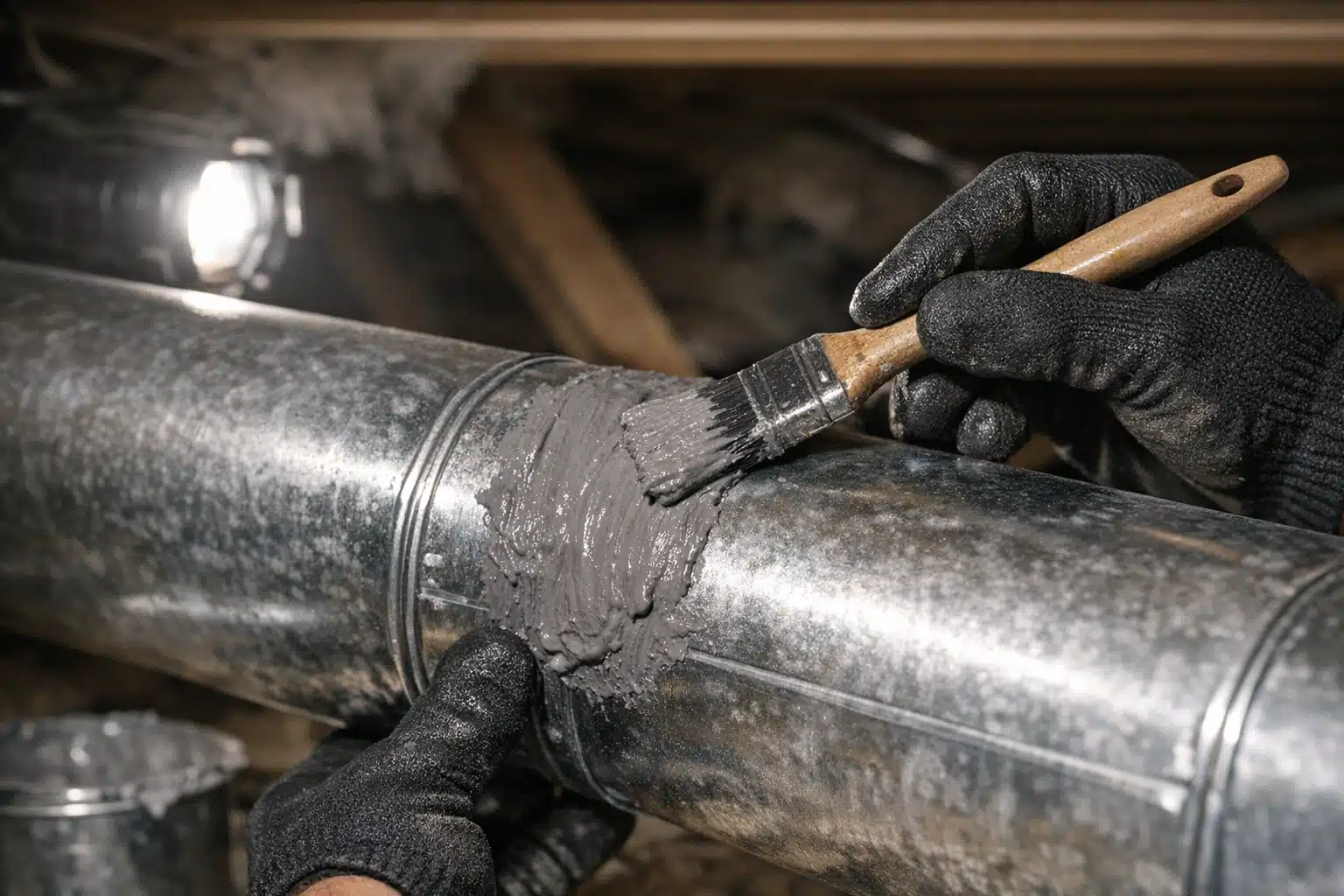
The difference between sealed and unsealed ductwork significantly impacts heating and cooling efficiency in homes. Sealed ducts maintain conditioned air within the system, while unsealed ducts allow air to escape, leading to higher utility bills and inconsistent room temperatures.
- Sealed ductwork uses mastic or foil tape to close all joints, minimizing air loss and ensuring consistent temperatures. Unsealed ductwork has gaps that let air escape, causing uneven heating and cooling.
- In Denver's climate, leaky ducts can lead to increased energy costs during both winter and summer due to inefficient heating and cooling.
- Regular duct cleaning helps identify leaks, making it the ideal time for sealing or re-ducting to improve airflow and comfort.
What is the difference between sealed and unsealed ductwork?
The difference between sealed and unsealed ductwork lies in the presence of gaps and leaks. Sealed ductwork is properly taped and insulated, preventing air loss, while unsealed ductwork has openings that allow heated or cooled air to escape, leading to inefficiency and increased energy costs.
Every winter, a crew pulls back a return grille in a Denver home and finds a cold draft rushing out of a joint that was never taped. That gap is the difference between sealed vs unsealed ductwork, and it decides how much heated or cooled air reaches your rooms versus how much vanishes into your attic, crawlspace, or wall cavities.
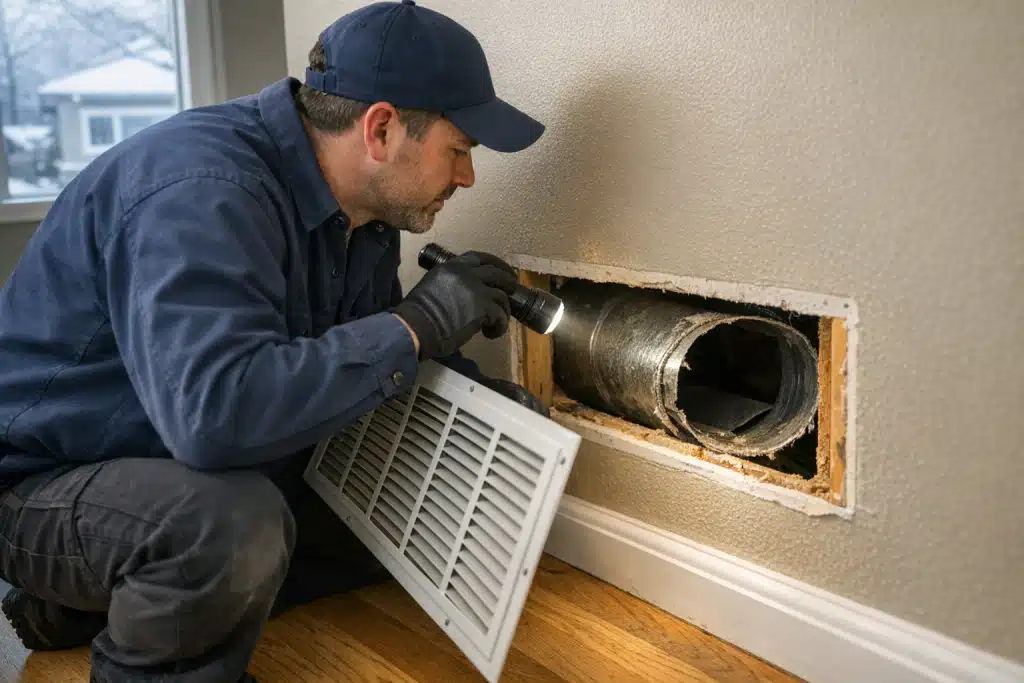
Most homeowners never see the inside of their ducts. During a cleaning, our techs do, and the disconnected sections and open seams tell the real story of why some rooms stay cold.
Below, you will learn what separates sealed from unsealed duct systems, how much air Denver homes lose, and when sealing or re-ducting makes more sense than tolerating the leaks.
Sealed vs Unsealed Ductwork: The Direct Answer
Sealed ductwork is a duct system where every joint, seam, and connection is closed with mastic or UL-listed foil tape so conditioned air stays inside the ducts. Unsealed ductwork has open or loosely connected joints that let heated and cooled air escape before it reaches your vents.
The visual difference is small. The performance difference is large.
A sealed system pushes nearly all of your furnace or AC output into living spaces. An unsealed system wastes a portion of that output into spaces you do not occupy.
Quick Comparison
- Sealed ductwork: Joints bonded with mastic or foil tape, minimal air loss, consistent room temperatures, lower runtime.
- Unsealed ductwork: Gaps at connections, conditioned air escapes, uneven heating and cooling, longer runtime and higher bills.
- Sealed returns: Pull air only from intended rooms, cleaner intake.
- Unsealed returns: Suck in attic dust, crawlspace air, and insulation particles.
Why the Difference Matters More in Denver
Denver asks a lot of a duct system. Front Range temperature swings mean your equipment runs hard in January and again in July.
When ducts leak, that demand climbs. Your furnace fights single-digit mornings, and a chunk of the heat it makes never arrives.
The same happens in summer. Cooled air escaping into a hot attic forces your AC to cycle longer against Denver’s intense high-altitude sun.
Air Loss You Pay For Twice
Leaky duct air loss costs you in two directions at once. You pay to condition air that escapes, then you pay again because the system runs longer to compensate.
Industry testing generally shows duct leakage can waste a meaningful share of heating and cooling energy in homes with unsealed systems. In Denver’s climate, that waste shows up on both your winter and summer utility statements.
What Techs Actually Find Inside Unsealed Ducts
Cleaning a duct system puts a camera and a brush where no one looks. The gaps we document are rarely subtle once you see them.
Here are the recurring problems our crews expose during Denver duct cleanings:
- Disconnected takeoffs: A branch duct that popped off the main trunk entirely, dumping air into a crawlspace.
- Cloth-taped joints: Old fabric tape that dried out, curled, and left seams wide open.
- Crushed flex duct: Kinked flexible runs behind drywall that choke airflow and loosen at the collar.
- Unsealed boot connections: Gaps where the duct meets the floor or ceiling register, bleeding air into joist bays.
- Panned returns: Return air pulled across open framing cavities that leak attic and wall air into your system.
A disconnected branch is the clearest case. One bedroom stays cold all winter, and the reason is a duct lying on the crawlspace dirt instead of feeding the register.
Why Unsealed Returns Hurt Your Air Quality
Supply leaks waste energy. Return leaks waste energy and dirty your air.
An unsealed return pulls air from wherever the gap sits. That means attic dust, crawlspace moisture, fiberglass particles, and during fire season, wildfire smoke that drifts into those spaces.
Denver homeowners with allergy symptoms sometimes trace the cause to return ducts drawing unfiltered air straight past the furnace filter. Sealing the returns stops that intake.
Signs Your Ductwork Is Leaking
You do not need a camera to suspect duct leaks. Your home gives you clues.
- Rooms that never reach the thermostat setting, especially ones farthest from the furnace.
- High utility bills that climb faster than your neighbors’ in extreme weather.
- Excessive dust returning days after you clean, a sign of unsealed returns pulling debris.
- Whistling or hissing near registers or along duct runs in the basement.
- Attic or crawlspace that feels conditioned, warm in winter or cool in summer, when it should match outdoor temperatures.
Any one of these points to air going where it should not. Two or more usually means measurable leakage worth inspecting.
When Sealing Beats Living With Leaks
Duct sealing makes sense when your system is sound but the connections have failed. If the ducts are correctly sized and routed, sealing the joints recovers the air you are losing without major construction.
Our crews seal joints with mastic and foil tape, reconnect fallen takeoffs, and close return leaks. For a home with scattered gaps, that work restores airflow to starved rooms.
When Re-Ducting Is the Better Call
Sealing has limits. Some systems have problems no amount of tape can fix.
Re-ducting or partial replacement makes more sense when:
- Flex duct is crushed or collapsed behind finished walls, restricting airflow at the source.
- Duct sizing is wrong, so even sealed runs cannot move enough air to distant rooms.
- Old ductwork has corroded or the material has degraded past repair.
- A remodel changed the floor plan and the existing layout no longer matches the rooms.
A seasoned tech will tell you honestly which path fits your home. Sealing a system that needs re-ducting wastes your money and leaves rooms uncomfortable.

 Posted on Google
How Cleaning Reveals Sealing and Install Needs
Duct cleaning and duct sealing work together. You cannot see the gaps clearly until the dust is out of the way.
When our crew cleans your system, the camera footage shows the condition of every joint. That is the moment a disconnected branch or a crumbling seam becomes obvious.
A cleaning appointment is the best time to assess whether your ducts need sealing or replacement. The access is already open, and the problems are already exposed.
What to Expect From a Duct Assessment
During a cleaning and inspection, expect your tech to:
- Document duct condition with camera footage you can see.
- Point out open joints, disconnected sections, and crushed runs.
- Explain whether sealing, reconnecting, or re-ducting fits your system.
- Give you realistic expectations for airflow and comfort after the work.
Maintenance That Keeps Sealed Ducts Sealed
Sealed ductwork is not permanent without upkeep. Mastic lasts years, but vibration, settling, and temperature swings can stress connections over time.
Keep your system performing with a few habits:
- Replace filters every 1 to 3 months, more during Denver’s dust and smoke seasons.
- Schedule duct inspection every 3 to 5 years to catch loosened joints early.
- Book a furnace tune-up each fall before heating season loads the system.
- Service your AC each spring so cooling demand does not strain weak connections.
Neglecting this invites slow air loss to creep back. A joint that loosens goes unnoticed until a room turns cold or a bill jumps.
Key Takeaways
Sealed ductwork keeps conditioned air inside the system, cuts waste, and stabilizes room temperatures across your home. Unsealed ductwork bleeds heated and cooled air into spaces you do not use, raising bills and degrading air quality.
In Denver’s climate of cold winters and hot high-altitude summers, that difference shows up on every utility statement. The best time to find and fix those leaks is during a duct cleaning, when the gaps are visible and the access is open.
If your rooms feel uneven or your bills keep climbing, let Action Air Duct inspect, clean, and seal your system. Call or text 720‑257‑3319, email tamir@actionairduct.net, or visit https://actionairduct.net to schedule your duct cleaning and sealing assessment.