
Why Does My Furnace Short-Cycle On and Off?
Furnace short cycling occurs when the unit frequently turns on and off without adequately heating the home. This issue can stem from airflow problems that a cleaning can resolve or from component failures that require repairs.
- Short cycling is often caused by restricted airflow or dirt buildup, which can be fixed with a thorough cleaning. Common issues include a dirty flame sensor, clogged air filters, and blocked ductwork.
- Some problems, like a faulty high-limit switch or a cracked heat exchanger, necessitate repairs rather than cleaning.
- Homeowners can perform basic checks, such as replacing filters and ensuring vents are open, before calling a technician for deeper issues.
Why does my furnace short-cycle?
A furnace short-cycles when it turns on, runs briefly, and then shuts off before adequately heating your home. This issue typically arises from airflow problems that can be resolved with cleaning or from component failures that require repairs. Identifying the cause can help you avoid unnecessary expenses.
A furnace that fires up, runs for a minute, then shuts off before your Denver home warms up is called short cycling. Most furnace short cycling causes fall into two groups: airflow and heat problems a cleaning can fix, and component failures that need a repair. Knowing which group your furnace falls into saves you money and stops you from paying for the wrong fix.
This post breaks down why your furnace turns on and off frequently, what a cleaning actually solves, and when you need a different kind of service. It matters most right now, as Front Range temperatures start dropping and your furnace works harder.
What Short Cycling Means and Why It Happens
Short cycling is when a furnace completes heating cycles that are too short and too frequent. Instead of running until the thermostat is satisfied, it stops early and restarts minutes later.
The root reason is almost always the same: the furnace is overheating or losing its flame signal. Safety controls shut the unit down before damage occurs.
During Denver’s cold snaps, this pattern wastes gas and leaves rooms cold. It also wears out ignition and blower parts faster than normal use.
Warning Signs You Are Short Cycling
- The furnace runs for under three to five minutes, then shuts off
- Rooms feel uneven or never reach the thermostat setting
- You hear repeated ignition clicks and blower starts
- Gas bills climb without a drop in outdoor temperature
- The burner lights, then goes out within seconds
Furnace Short Cycling Causes a Cleaning Can Fix
Many short cycling problems come from restricted airflow and dirt buildup. These are the ones a thorough furnace cleaning addresses directly.

Dirty Flame Sensor
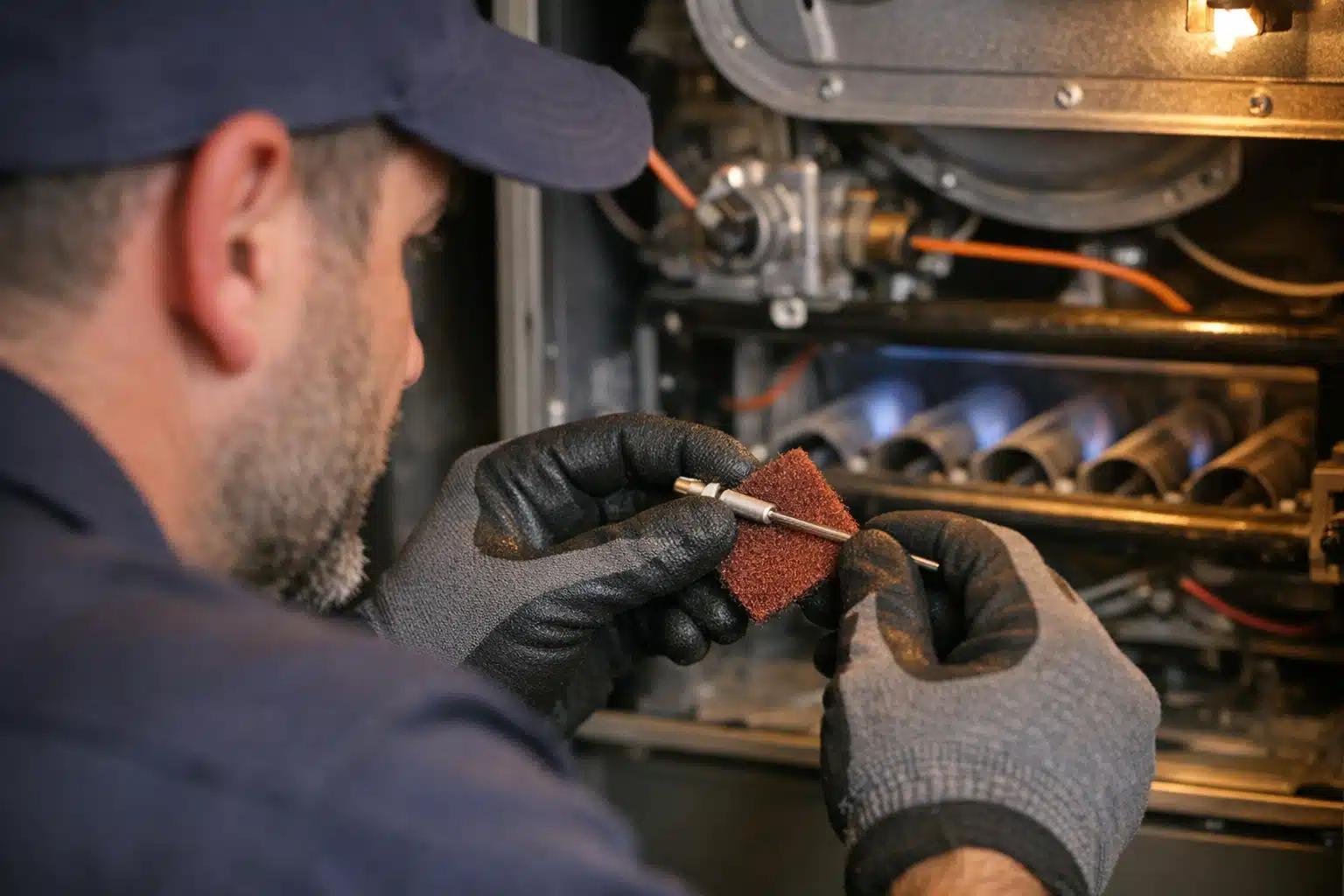
A dirty flame sensor is one of the most common reasons a furnace lights and then shuts off in seconds. The sensor confirms a flame is present. When soot or corrosion coats it, the control board thinks the flame failed and cuts the gas for safety.
We see this constantly in older Denver furnaces that have run several winters without cleaning. A technician removes the sensor, cleans the metal rod, and the furnace holds its flame again. This is a maintenance fix, not a parts replacement.
Clogged Air Filter
A clogged filter starves the furnace of return air and causes overheating. The high-limit switch then shuts the burner down to protect the heat exchanger.
Denver homes collect fine dust fast, and that load jumps during wildfire smoke season. A filter that looked fine in September can be gray and packed by late fall.
- Check 1-inch filters monthly during heating season
- Replace standard filters every 60 to 90 days
- Replace more often with pets, remodeling dust, or smoke events
Restricted or Dirty Ductwork
Blocked ducts choke airflow the same way a dirty filter does. Closed vents, crushed flex duct, and years of debris reduce how much air moves across the heat exchanger.
When airflow drops too low, the furnace overheats and short cycles. A duct cleaning clears the buildup and restores the air volume the system was designed to move.
This is a frequent find in older Front Range homes and in commercial spaces with long duct runs. If multiple rooms are starved and the furnace cycles fast, ducts are a strong suspect.
Dirty Blower Wheel
A blower wheel caked with dust moves far less air than a clean one. The reduced airflow triggers the same overheating shutdown as a clogged filter.
Cleaning the blower wheel restores airflow and lets the furnace finish full heating cycles. It is a routine part of a careful furnace cleaning.
Furnace Short Cycling Causes That Need a Repair Instead
Not every short cycling problem is airflow or dirt. Some point to failing parts or a mismatched system. A cleaning will not fix any of the items below.
Faulty High-Limit Switch
A failing high-limit switch can trip even when airflow is fine. If the switch reads false overheating, it shuts the burner down early and repeatedly.
A technician tests the switch and replaces it when it reads incorrectly. This is a repair, not a cleaning task.
Cracked Heat Exchanger
A cracked heat exchanger can cause erratic cycling and is a safety concern. It can let combustion gases reach your air stream.
No cleaning fixes a cracked exchanger. The furnace needs repair or, in many cases, replacement. Have it inspected right away if a crack is suspected.
Thermostat Problems
A thermostat placed near a heat source, a sunny window, or a supply vent misreads the room. It shuts the furnace off before the home is warm.
Wiring faults and failing batteries cause the same behavior. Relocation or replacement solves it, not a cleaning.
Oversized Furnace
An oversized furnace heats the air near the thermostat quickly, then shuts off. It never runs long enough to warm the whole house evenly.
This is a design issue from the original installation. It usually shows up as short cycling from day one and needs equipment or airflow correction.
Blocked Condensate or Flue Issues
High-efficiency furnaces shut down when the condensate line clogs or a pressure switch detects a venting problem. A blocked flue or failing inducer motor triggers safety shutdowns.
Denver’s temperature swings can cause freezing and condensation issues in some setups. These need diagnosis and repair, not cleaning alone.
Cleaning vs. Repair: Which One Fixes Your Short Cycling?
Use this side-by-side list to figure out what service your furnace needs.
A cleaning likely fixes it when:
- The flame lights, then dies in a few seconds (dirty flame sensor)
- The filter is gray, packed, or overdue
- Several rooms get weak airflow (dirty ducts or blower)
- The furnace runs longer right after you change the filter
A repair is needed when:
- Cleaning and a fresh filter change nothing
- You smell odd odors or suspect a cracked heat exchanger
- The thermostat reads wrong or behaves erratically
- Short cycling started the day the furnace was installed
- A high-efficiency unit shows pressure or condensate errors

They arrived on time, explained everything clearly, and completed the job thoroughly without trying to upsell unnecessary services. It’s refreshing to work with a company that values professionalism, integrity, and great customer service.
I highly recommend Action Air Ducts to anyone looking for reliable, trustworthy, and high-quality dryer vent cleaning. I’ll definitely be using them again!
 Posted on Google
Safe DIY Checks Before You Call
A few checks are safe for any homeowner and may solve the problem outright.
- Replace the air filter with the correct size and rating
- Open closed supply and return vents in every room
- Move furniture or rugs blocking return grilles
- Check the thermostat batteries and setting
- Clear snow or debris from exterior intake and exhaust pipes
If none of those restore full heating cycles, the cause is deeper. That is the point to call a technician for diagnosis.
Why Early-Season Service Pays Off in Denver
Scheduling a cleaning or tune-up before deep cold arrives prevents cold-night breakdowns. A clean flame sensor, fresh filter, and clear ducts let the furnace run full cycles from the start.
Short cycling that goes unaddressed strains the ignition system and blower motor. Fixing the airflow cause early protects the equipment and lowers gas use all winter.
For Denver homes and commercial buildings, a fall cleaning also clears summer dust and wildfire-season soot. That improves indoor air and supports longer furnace life.
Conclusion
Most furnace short cycling causes are either airflow problems a cleaning fixes or component failures that need a repair. Start with the filter and vents, then have the flame sensor, blower, and ducts cleaned if the furnace still turns on and off frequently. When cleaning does not solve it, a proper diagnosis finds the failing part.
Action Air Duct helps Denver homeowners and businesses pinpoint whether a cleaning or a repair is the right fix. Schedule a furnace cleaning or inspection by calling or texting 720‑257‑3319, emailing tamir@actionairduct.net, or visiting https://actionairduct.net.