
Restaurant Kitchen Exhaust vs. Range Hood: What’s the Difference?
A home range hood and a restaurant kitchen exhaust system serve different purposes, impacting fire safety and compliance for food businesses. Understanding these differences is crucial for Denver operators to maintain safety and meet legal requirements.
- A range hood is designed for home use, managing light grease and steam, while a commercial exhaust system handles heavy grease and high airflow.
- Commercial kitchen exhaust systems require regular cleaning and inspections based on cooking volume to prevent fire hazards.
- Denver's unique conditions, such as altitude and cold weather, affect how these systems operate, making proper installation and maintenance essential.
What is the difference between a restaurant kitchen exhaust and a range hood?
A restaurant kitchen exhaust system is designed to handle higher volumes of heat, smoke, and grease compared to a home range hood. This difference is crucial for fire safety, compliance with permits, and overall efficiency in a commercial kitchen, making it essential for restaurant operations.
A home range hood and a restaurant kitchen exhaust system look related, but they solve very different problems. If you run a cafe or restaurant in Denver, the gap between them affects your fire risk, your permits, and your bottom line. The question of commercial kitchen exhaust vs range hood comes up constantly when someone opens a food business after cooking at home for years.
The short answer: a range hood clears steam and light grease from a home stove, and a commercial kitchen exhaust system captures grease-laden smoke and heat from high-volume cooking. One is a comfort appliance. The other is fire-safety equipment.
Below, you learn how each system works, where restaurant obligations differ from home setups, and what Denver operators need to keep their kitchens safe and code-compliant.
Commercial Kitchen Exhaust vs Range Hood: The Direct Answer
A range hood is a residential appliance mounted over a stove that pulls cooking vapors, odors, and heat out of a kitchen. It moves modest amounts of air and handles light grease.
A commercial kitchen exhaust system is an engineered assembly of a hood, grease filters, ductwork, and a rooftop exhaust fan built to remove heavy grease vapor, smoke, and heat from continuous cooking. It runs at high airflow and must meet fire codes.
The difference is scale and purpose. A range hood keeps your kitchen comfortable. A restaurant hood ventilation system keeps your building from catching fire.
Quick Comparison
- Range hood: Home use, low airflow, washable or disposable filters, no fire suppression required.
- Commercial exhaust: Restaurant use, high airflow, stainless baffle filters, welded grease ductwork, and a fire suppression system.
- Cleaning: Range hoods wiped by the homeowner; commercial systems cleaned on a fire-code schedule by trained crews.
- Permits: Range hoods rarely need permits; commercial hoods require mechanical permits and inspections.
How a Residential Range Hood Works
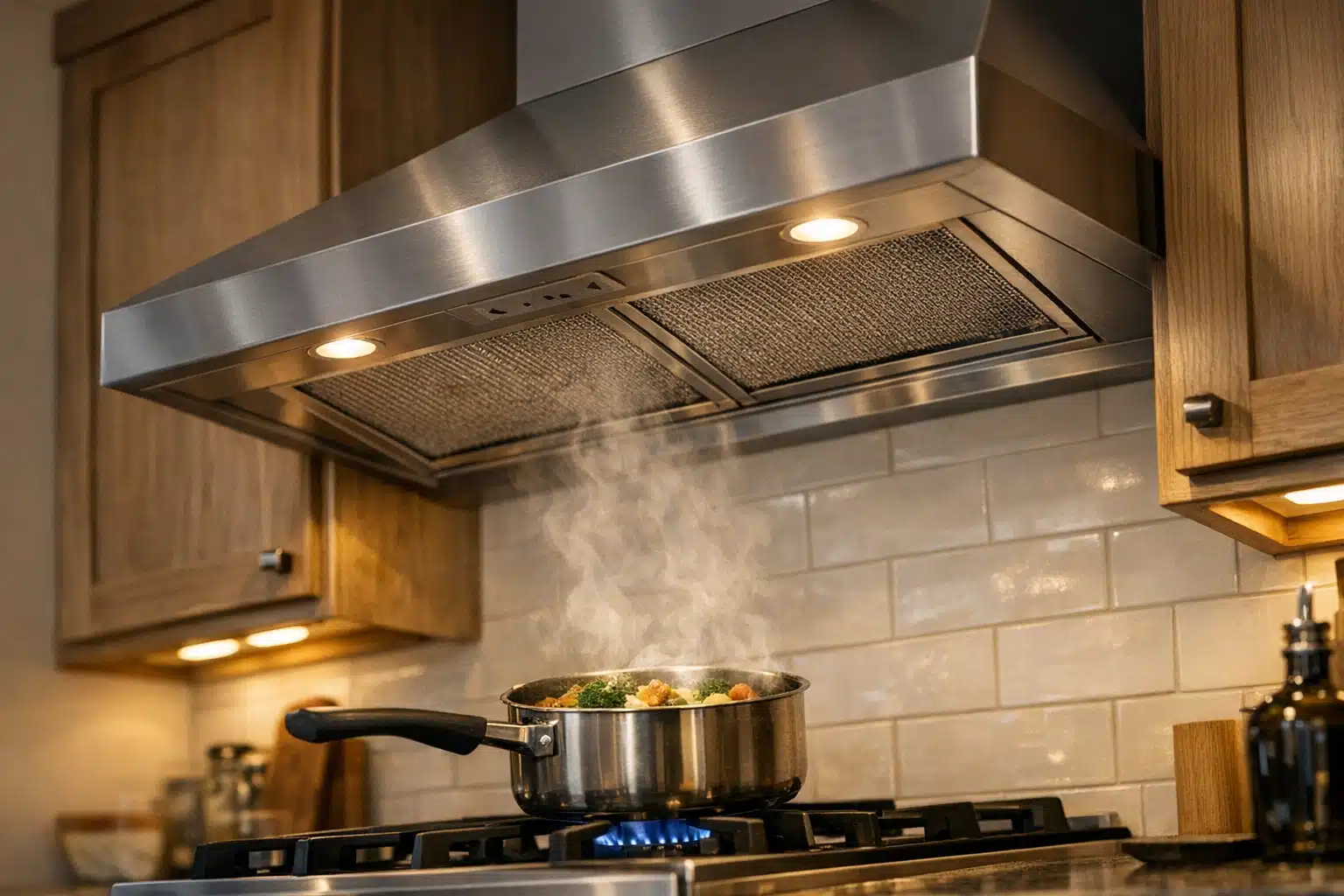
A range hood sits above a home cooktop and captures steam, smoke, and grease particles. It either vents outside or recirculates air after passing it through a filter.
Home cooking produces small amounts of grease. A metal mesh or charcoal filter catches most of it, and the fan handles the rest.
What Home Cooks Deal With
- Occasional heavy frying or searing.
- Light daily grease buildup on filters.
- Filter cleaning every few weeks in a dishwasher.
- Minimal fire risk under normal use.
For Denver homeowners, the bigger concern is indoor air quality. Homes are sealed tight against cold winters, which traps cooking fumes, moisture, and odors inside.
A working range hood that vents outdoors helps with that. When it recirculates instead, stale air and grease particles stay in the home and settle into ductwork over time.
How a Commercial Kitchen Exhaust System Works
A commercial kitchen exhaust system is a chain of components working as one. Each part has a job, and one weak link creates a hazard.
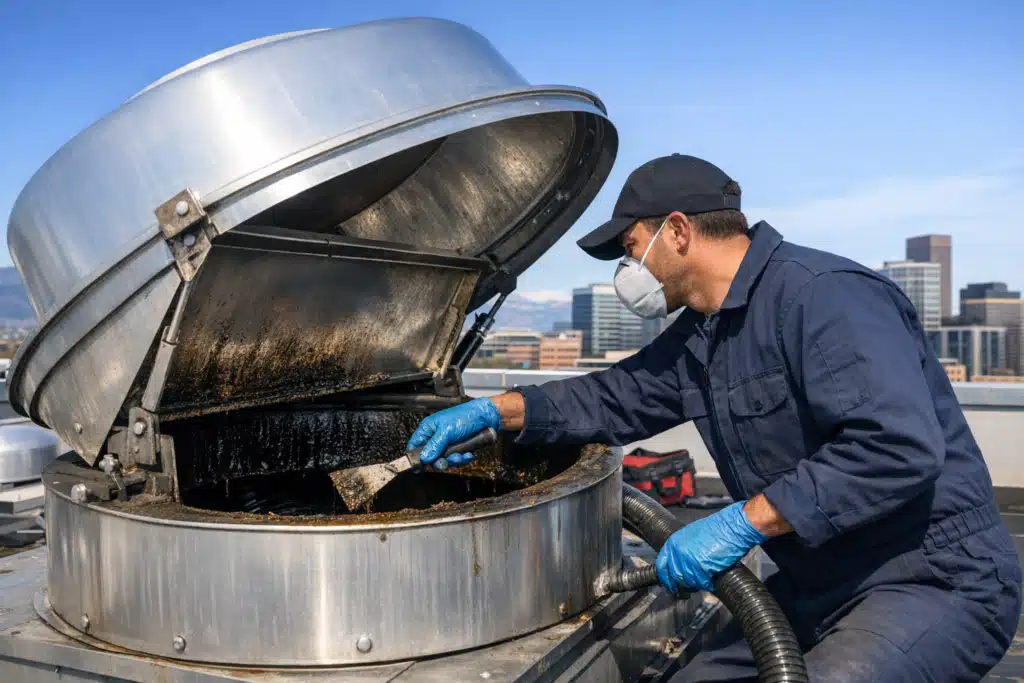
Grease vapor rises off the cooking line and hits the hood. Baffle filters knock down the heaviest grease, and the rest travels up the duct to a rooftop fan that pushes it outside.
The Main Components
- Hood canopy: Captures heat, smoke, and grease over the cooking line.
- Baffle filters: Stainless steel filters that separate grease from airflow.
- Grease duct: Welded, liquid-tight ductwork that carries vapor to the roof.
- Exhaust fan: A rooftop unit that maintains airflow across the system.
- Fire suppression: An automatic system that douses a grease fire at the hood.
- Makeup air unit: Replaces the air pulled out, keeping pressure balanced.
That makeup air piece matters more in Denver than most operators expect. Pulling large volumes of heated air out in January without replacing it strains your furnace and spikes gas bills.
Where Restaurant Obligations Differ From Home Setups
The gap between home and commercial cooking is where new restaurant owners get caught off guard. A home cook cleans a filter. A restaurant operator manages a fire-safety asset with legal cleaning requirements.
Grease Buildup Is a Fire Load
Grease accumulates fast on a busy line. A single fryer and a flat-top can coat ductwork in weeks, not months. That grease is fuel, and a flare-up on the range can ignite it inside the duct.
Home range hoods never reach that volume. That single difference drives every other requirement.
Cleaning Is Scheduled by Code, Not by Choice
Commercial exhaust cleaning follows the NFPA 96 standard, which sets inspection frequency by cooking volume:
- Monthly: High-volume operations like 24-hour kitchens or charbroiling.
- Quarterly: Moderate-volume restaurants with steady grease output.
- Semi-annually: Sit-down restaurants with average cooking loads.
- Annually: Low-volume kitchens such as churches or seasonal cafes.
A proper cleaning covers the hood, filters, full duct run, and the fan. Wiping only the visible hood leaves grease packed in the duct where fires start.
Documentation and Inspections
After a commercial cleaning, you receive a service report and a certification sticker showing the date and areas cleaned. Fire marshals and insurers ask for it.
Denver-area health and fire inspections check for this record. Missing paperwork can mean fines or a failed inspection that delays reopening.
Denver-Specific Considerations for Restaurant Ventilation
Front Range conditions add wrinkles that generic advice skips. Altitude, cold, and dry air all touch how your exhaust performs.
High Altitude Affects Airflow
Thinner air at Denver’s elevation carries less oxygen and less mass. Exhaust and makeup air units sized at sea level move less effective air here.
Systems set up without altitude correction can under-ventilate a hot line. If your kitchen feels smoky despite a running fan, airflow sizing is worth a look.
Winter Makeup Air and Heating Costs
Every cubic foot of exhaust air leaves the building and gets replaced by outside air. In a Denver January, that outside air arrives cold.
A balanced makeup air system tempers that incoming air so your dining room stays warm. Skipping it means drafts, chilly guests, and a furnace running nonstop.
Dry Air and Grease Behavior
Denver’s dry climate can make grease deposits harder and more baked-on. That buildup clings tighter to filters and duct walls, which makes routine cleaning matter even more.

Which System Does Your Business Actually Need?
The type of cooking decides the answer, not the size of your space. Even a small cafe with a fryer needs commercial-grade exhaust.
You Need a Full Commercial Exhaust System If You:
- Fry, grill, char-broil, or saute at volume.
- Run a commercial range, fryer, or flat-top griddle.
- Serve the public and face health and fire inspections.
- Produce grease-laden vapor during service.
A Range Hood May Be Enough If You:
- Operate a warming or reheating station only.
- Serve prepackaged food with no grease cooking.
- Run a coffee bar with no hot grease equipment.
When in doubt, ask before you build out. Retrofitting a commercial hood after a failed inspection costs far more than planning it upfront.
What Happens When Commercial Exhaust Gets Neglected
Skipped cleaning is the leading cause of restaurant fires that start in the ductwork. Grease ignites, travels up the duct, and reaches the roof fast.
Beyond fire, neglect creates other problems:
- Failed inspections that halt operations until corrected.
- Voided insurance claims when no cleaning records exist after a fire.
- Poor airflow that pushes smoke and heat back into the kitchen.
- Odor and grease settling into your dining space and rooftop.
A clean system also runs more efficiently. When filters and ducts are clear, the fan moves air with less strain and lasts longer.
Key Takeaways for Denver Operators
A range hood handles home cooking. A commercial kitchen exhaust system handles restaurant cooking and doubles as fire protection with legal cleaning duties.
The moment you cook grease-producing food for the public, you cross into commercial exhaust territory. Plan for scheduled cleaning, documentation, and Denver’s altitude and winter demands from day one.
Action Air Duct cleans and maintains commercial kitchen exhaust systems for Denver restaurants and cafes, keeping you code-compliant and fire-safe. To schedule an inspection or exhaust cleaning, call or text 720‑257‑3319, email tamir@actionairduct.net, or visit https://actionairduct.net.