
How Often Should a Restaurant Clean Its Kitchen Exhaust Hood?
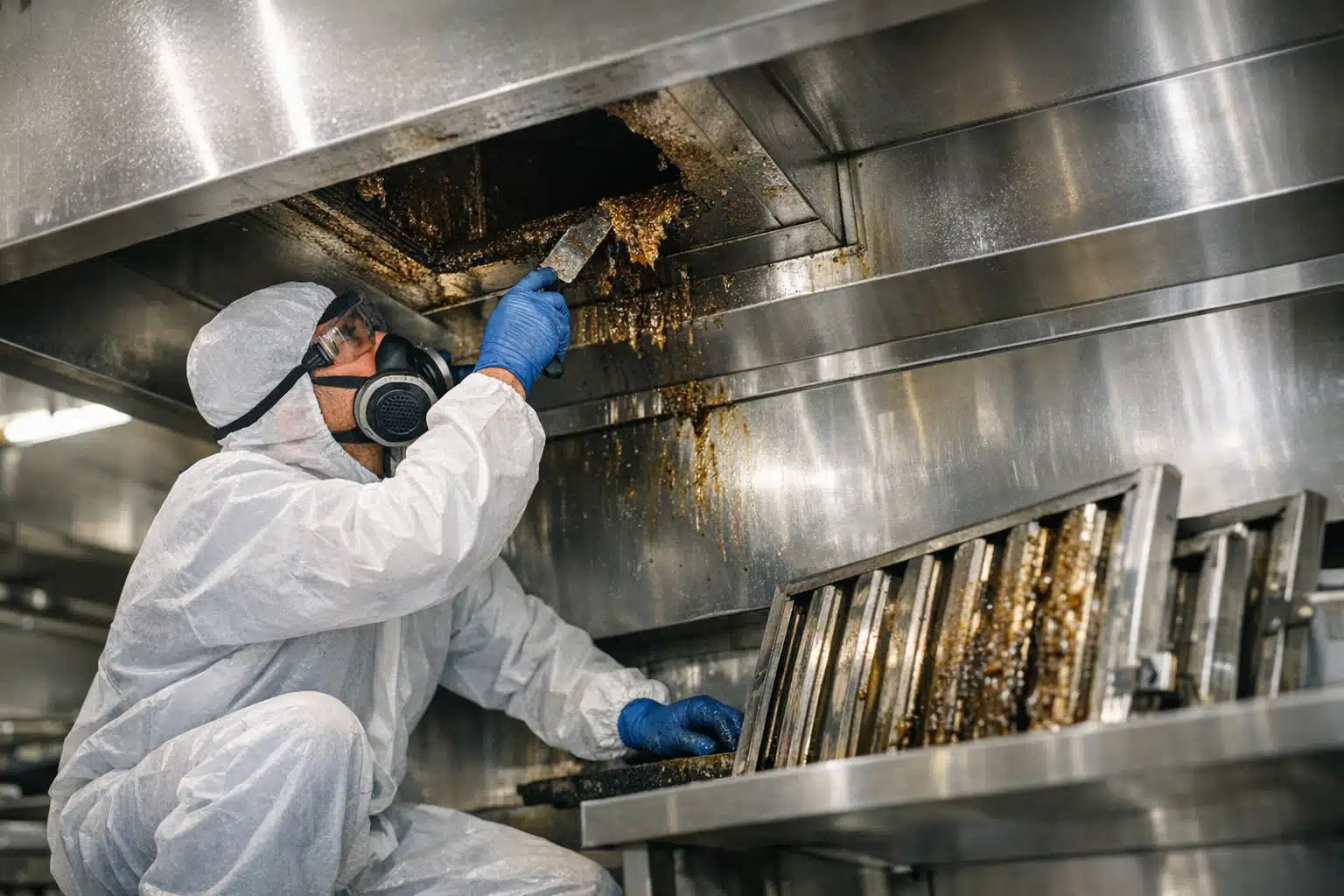
Cleaning frequency for restaurant kitchen exhaust hoods is crucial for safety and varies based on cooking volume and grease type. Understanding these factors helps Denver food businesses maintain compliance and prevent fire hazards.
- High-volume kitchens require monthly cleanings due to rapid grease buildup. Most full-service restaurants typically follow a quarterly cleaning schedule. Light-use kitchens can extend cleanings to semi-annual intervals without risk.
- A grease fire in a restaurant kitchen rarely starts on [...] A grease fire in a restaurant kitchen rarely starts on the cooktop.
- It starts inside the hood, ducts, and fan where grease has been building for months unseen.
How often should a restaurant clean its kitchen exhaust hood?
Restaurants should clean their kitchen exhaust hoods regularly to prevent grease buildup, which can lead to fires. The frequency of cleaning typically depends on the volume of cooking, but it is generally recommended to clean exhaust hoods every three to six months for optimal safety and compliance with health regulations.
A grease fire in a restaurant kitchen rarely starts on the cooktop. It starts inside the hood, ducts, and fan where grease has been building for months unseen. That is why restaurant kitchen exhaust cleaning frequency is one of the most important safety decisions a Denver food business makes.
The answer is not one-size-fits-all. A high-volume wok station and a sandwich shop griddle produce very different grease loads. This article breaks down how to set your cleaning interval by cooking volume and grease type.
You will learn what inspectors look for, what our techs find inside neglected hoods, and how to build a schedule that keeps your kitchen operating safely.
How Often Should a Restaurant Clean Its Kitchen Exhaust Hood?
Restaurant kitchen exhaust cleaning frequency is set by cooking volume, not the calendar alone. The reference point most inspectors and insurers use is NFPA 96, the fire code standard for commercial cooking ventilation.
NFPA 96 defines four inspection intervals based on how much grease-laden vapor your kitchen produces. Here is the breakdown.
- Monthly — High-volume operations such as 24-hour kitchens, charbroiling, and wok cooking
- Quarterly (every 3 months) — Moderate-volume kitchens with steady daily cooking
- Semi-annually (every 6 months) — Low-volume operations like churches, day camps, and seasonal businesses
- Annually — Very light use, such as kitchens serving only occasional events
Most full-service Denver restaurants fall into the quarterly category. The ones cooking over open flame or running late-night hours move into monthly territory.
Cleaning Frequency by Cooking Volume and Grease Type
The type of cooking you do matters as much as the hours you run. Solid fuel and high-fat proteins generate grease far faster than baking or steaming.
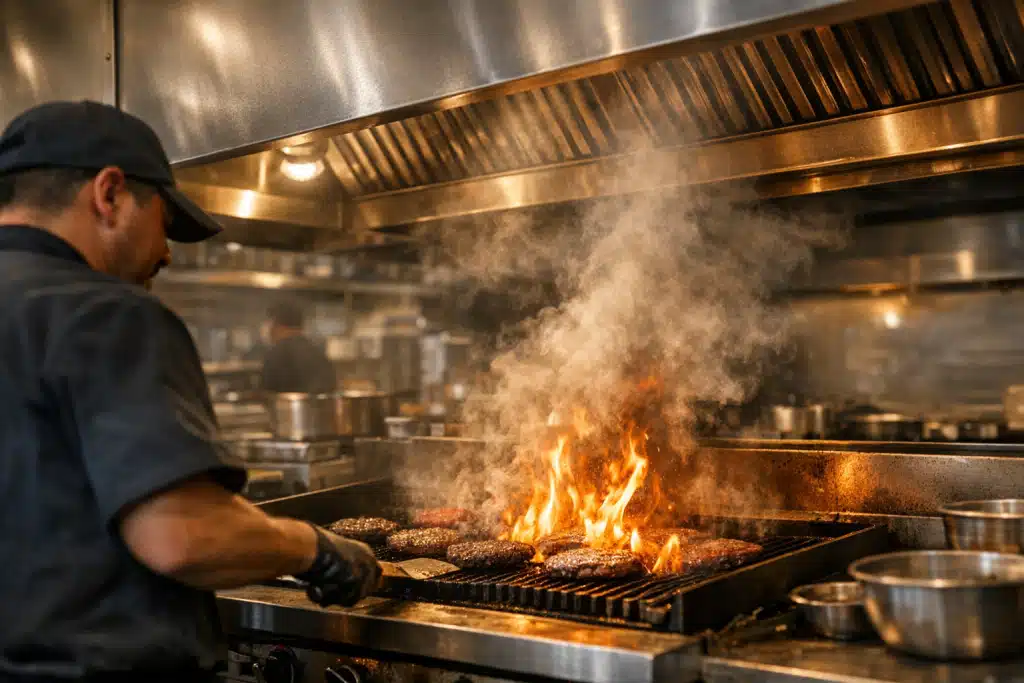
High-Volume and High-Grease Cooking
These kitchens need the most attention. Grease builds inside the duct within weeks, not months.
- Charbroilers and flame grills cooking burgers and steaks
- Wok stations with continuous stir-frying
- Deep fryers running all day
- Smokehouses and solid-fuel equipment
A Denver burger joint running a charbroiler 14 hours a day should plan on monthly hood system cleaning. Stretching past that coats the duct walls with hard, baked-on grease.
Moderate-Volume Cooking
Standard sit-down restaurants and diners land here. A quarterly commercial hood cleaning schedule fits most of these kitchens.
- Griddles, sauté stations, and mixed menus
- Breakfast-and-lunch diners
- Family restaurants with daily service
Low-Volume Cooking
Light-use kitchens produce little grease and can extend intervals safely.
- Coffee shops with minimal hot cooking
- Seasonal concession stands
- Houses of worship and community centers
Semi-annual cleaning keeps these systems compliant without overspending.
What Our Techs Find When Restaurants Stretch Intervals
The gap between a hood that looks clean and a duct that is dangerous is wide. The visible baffle filters tell you almost nothing about what is happening upstream.
When a Denver kitchen pushes a quarterly system to eight or ten months, here is what we scrape out.
- Hardened grease on duct walls — Soft grease oxidizes into a varnish-like coating that resists scraping
- Pooled grease at duct elbows — Horizontal runs and bends collect liquid grease that drips and feeds fire
- Grease-logged exhaust fan blades — Buildup throws the fan out of balance and cuts airflow
- Rooftop grease spillage — Overflow at the fan curb stains the roof and voids some warranties
A fan starved of airflow pulls heat and smoke back into the kitchen. Cooks notice it as a hotter line and a hazier dining room.
That buildup is also the fuel load for a flash fire. A single spark at the cooktop can run the length of a grease-coated duct in seconds.
Why Denver Kitchens Face Added Pressure
Denver’s altitude changes how combustion appliances behave. Thinner air affects burner tuning, and poorly adjusted equipment can produce more soot and grease carryover.
Seasonal swings along the Front Range add another wrinkle. Rooftop fan units cycle from summer heat to hard winter freezes, and grease that pools in a duct stiffens in the cold.
Indoor air quality also suffers when exhaust airflow drops. A grease-choked system fails to clear smoke, odors, and heat, leaving staff in a stuffy, uncomfortable kitchen.
Signs Your Hood Needs Cleaning Before the Scheduled Date
Intervals are a baseline. Watch for warning signs that your kitchen is producing grease faster than expected.
- Visible grease dripping from the hood or filters onto the cookline
- Smoke lingering instead of being pulled up and out
- Strong grease odor in the dining area
- Baffle filters saturated within days of cleaning
- Reduced airflow at the hood opening
Any one of these means move your next cleaning up. Two or more means call for service now.

I thought they were good but they left while the dryer still had a clogged vent notification, so that was $300 down the drain and now we have a real company, Denver Vent Techs, actually troublshooting the issue and finding that a booster fan is both non-functional and blocking everything they tried to blow out. They used a camera to help identify the issue and tracked down the access panel, and are also replacing all the elbows with proper ones. Unfortunately they fleeced us for their money, but now we know who to use in the future.
What a Code-Compliant Hood Cleaning Covers
A full cleaning reaches every grease-bearing surface from the cooktop to the rooftop fan. Wiping down filters alone is not a compliant cleaning.
- Hood interior and plenum — Scraped and degreased down to bare metal
- Baffle filters — Removed, soaked, and cleaned or replaced
- Duct runs — Accessed at panels and cleaned along the full length
- Exhaust fan — Blades and housing degreased and rebalanced as needed
- Rooftop termination — Grease containment checked and cleared
You should receive a service report and a certification sticker showing the date and scope. Fire marshals and insurers ask for that documentation.
What Happens If You Skip Cleanings
Neglect creates three stacked risks that grow with every month skipped.
- Fire — Grease is the fuel that turns a small flare-up into a structure fire
- Code violations — Missed intervals can trigger fines or forced closure during inspection
- Insurance denial — Carriers may reject a claim if cleaning records are missing
The cost of a cleaning is small next to a shut-down kitchen. Documentation protects the business as much as the cleaning protects the building.
Building the Right Schedule for Your Kitchen
Start with your cooking volume and grease type, then adjust based on what techs find. If a quarterly cleaning still leaves heavy buildup, tighten to bi-monthly.
A good cleaning partner will recommend an interval and revise it after seeing your actual grease load. That feedback loop keeps you compliant without overpaying.
Conclusion
Restaurant kitchen exhaust cleaning frequency comes down to how much and what you cook, measured against NFPA 96 intervals. High-grease kitchens need monthly attention, most full-service restaurants need quarterly, and light-use kitchens can run semi-annually. Setting the right schedule protects your staff, your building, and your insurance coverage.
Action Air Duct cleans commercial kitchen exhaust systems across the Denver area to code, with documentation your inspector and insurer expect. Call or text 720‑257‑3319, email tamir@actionairduct.net, or visit https://actionairduct.net to set up a hood cleaning assessment.