
Why Does My Dryer Vent Keep Getting Clogged So Fast?
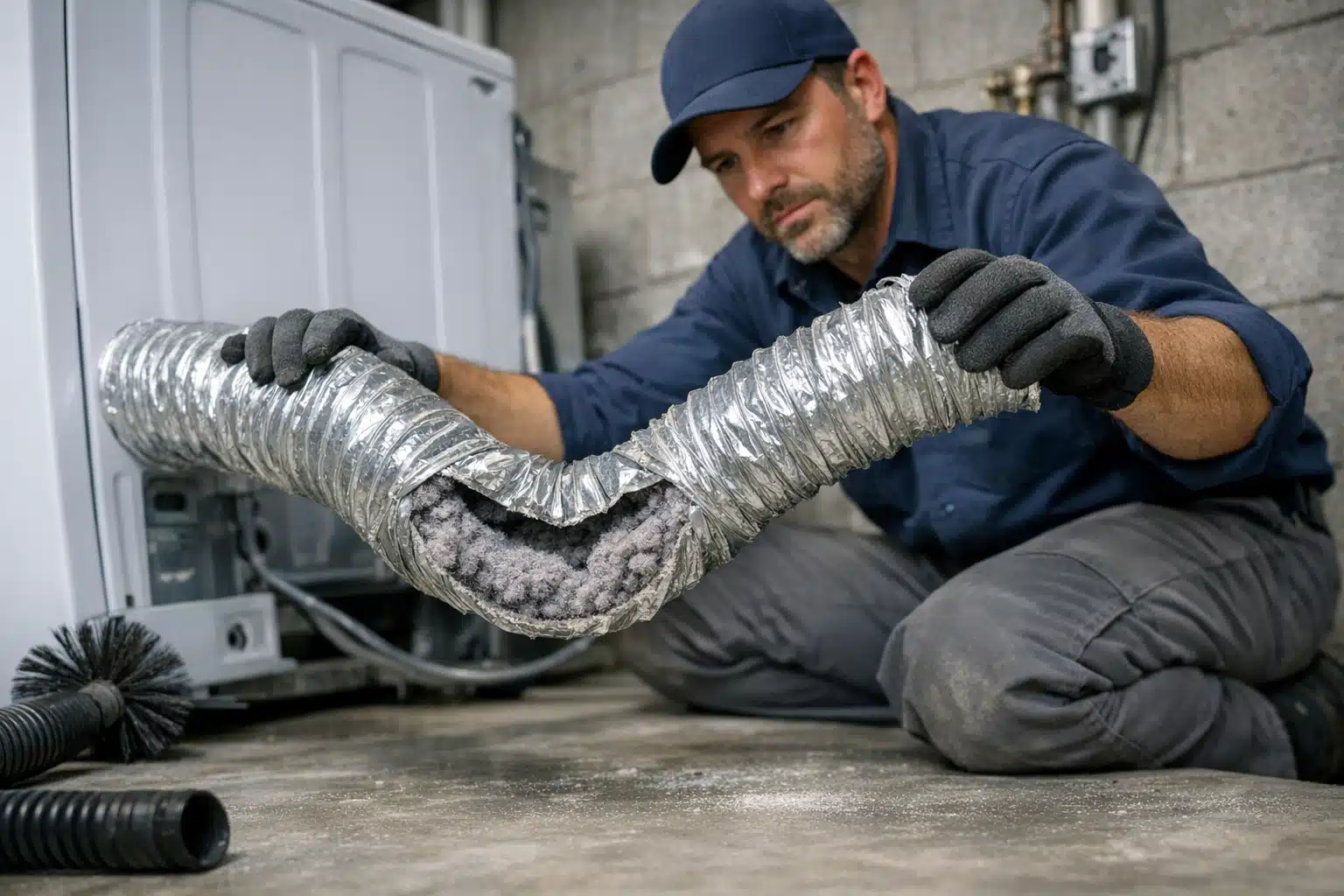
Dryer vents that clog quickly often have underlying path issues that require more than just cleaning. Identifying and correcting these flaws can prevent repeat clogs and improve dryer efficiency.
- Common causes of fast clogs include sagging ducts, crushed runs, and blocked exterior caps. These issues trap lint and hinder airflow.
- A one-time cleaning does not address the root problems, leading to recurring clogs shortly after service.
- Regular inspections and proper vent path corrections can eliminate the need for frequent cleanings and enhance dryer performance.
Why does my dryer vent keep getting clogged so quickly?
A dryer vent may clog quickly due to structural issues in the vent path, such as a sagging flex line, a crushed duct, or blockages like a bird nest. These factors trap lint and prevent proper airflow, leading to frequent clogs despite regular cleaning.
If your dryer vent clogs fast after a cleaning, the lint is a symptom, not the disease. On repeat-clog calls across Denver, our techs rarely find a vent that was dirty by chance. We find a vent path that traps lint by design — a sagging flex line, a crushed duct behind the dryer, or a bird nest wedged in the cap.
Below, you learn the real reasons dryer vents reclog within weeks, which problems a one-time cleaning cannot fix, and when a vent reroute matters more than another cleaning.
Why Your Dryer Vent Clogs Fast (The Short Answer)
A dryer vent clogs fast when the vent path has a flaw that catches lint faster than it can clear. Cleaning removes the buildup, but the flaw stays. Within weeks, lint collects at the same spot again.
The most common flaws our Denver crews find are physical, not maintenance-related:
- Sagging flexible duct that creates low pockets where lint settles
- Crushed or kinked runs pinched behind the dryer or inside a wall
- Bird nests or rodent debris blocking the exterior cap
- Screened vent caps that trap lint like a strainer
- Vent runs that are too long or have too many turns
Fix the path, and the clogs stop. Clean without fixing the path, and you pay for the same clog twice.
Frequent Lint Buildup Causes Our Techs See Most
Here are the frequent lint buildup causes behind repeat calls — the hidden problems a standard cleaning leaves untouched.
1. Sagging Flexible Duct Behind the Dryer
Flexible foil or plastic duct sags over time, forming U-shaped dips. Lint and moisture collect in those low spots. Each dip becomes a lint trap that fills faster than the rest of the line.
We see this constantly in Denver basements and laundry closets where the dryer sits far from an exterior wall. The ridged inner wall of flex duct grabs lint on every pass.
The fix: Replace flex duct with smooth-wall rigid metal. Rigid duct lets lint pass instead of catching it.
2. Crushed Runs From Pushing the Dryer Back
When a dryer gets pushed tight against the wall, the duct behind it gets crushed. A flattened duct chokes airflow and multiplies lint buildup at the pinch point.
This is the single most common cause we find in tight laundry rooms. The vent looks fine from the front, but the real damage sits hidden behind the machine.
The fix: Use a rigid 90-degree metal elbow or a periscope vent. These hold their shape and let the dryer sit closer to the wall without crushing the run.
3. Bird Nests and Rodent Debris at the Exterior Cap
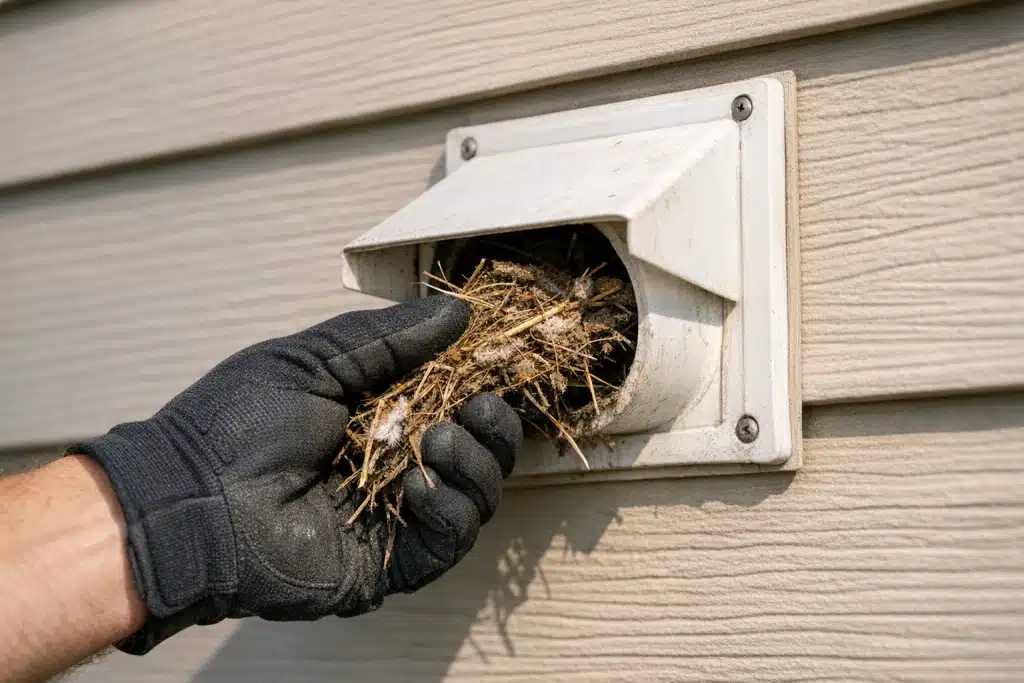
Birds and mice love the warm, sheltered opening of a dryer vent cap. A nest at the exit point blocks airflow and forces lint to back up the entire run.
Along the Front Range, we pull nests out of exterior caps every spring. If your vent clogged soon after warm weather arrived, check the outside cap first.
Warning sign: Clothes staying damp after a full cycle usually means the exterior exit is blocked.
4. Screened Vent Caps That Act Like a Strainer
A screened or meshed vent cap catches lint on the way out. Lint builds on the screen until airflow drops to nothing. Dryer vents are never supposed to have screens.
Many Denver homes have screened caps installed by a previous owner to keep pests out. The screen does stop pests — and it clogs the vent within weeks.
The fix: Replace the screened cap with a proper damper-style dryer vent hood. A backdraft damper keeps pests out without trapping lint.
5. Vent Runs That Are Too Long or Too Twisted
Long runs and sharp turns slow airflow. Slow air drops lint along the way instead of pushing it out. Every elbow adds resistance equal to several extra feet of straight duct.
Two-story Denver homes with upstairs laundry rooms often have runs that snake across the house. More distance and more bends mean faster buildup.
The fix: Shorten and straighten the path where the structure allows, or reroute to the nearest exterior wall.
Denver Conditions That Speed Up Dryer Vent Clogs
Local weather and home styles add to the problem. A few Front Range factors make dryer vents clog faster here than in milder climates.
- Cold winters mean more dryer use. Heavy winter loads push more lint through the vent in a shorter span.
- Dry Denver air and static make fine lint cling to duct walls instead of sliding out.
- Spring nesting season brings birds straight to warm exterior caps.
- Temperature swings cause condensation inside long runs, and damp lint sticks hard.
None of these are flaws you caused. They are reasons a correct vent path matters more here than elsewhere.
Why One-Time Cleaning Does Not Stop the Clogs
A one-time cleaning fixes the buildup but not the cause. If the vent path still sags, crushes, or strains lint, the clog returns on schedule.
Think of it like mopping a floor under a leaking pipe. You clear the water, but the leak refills the puddle. The vent path is the leak.
When a customer calls us back within a month, the answer is almost always structural:
- We inspect the full run, not just the opening.
- We check behind the dryer for crushed or kinked duct.
- We inspect the exterior cap for nests, screens, or damaged dampers.
- We measure run length and count the turns.
- We recommend a cleaning, a reroute, or a hardware swap based on what we find.
That inspection is the difference between a fix and a repeat visit.
DIY-Safe Checks Before You Call
You can check several things yourself before scheduling a visit. Each takes a few minutes and tells you how serious the problem is.
- Run the dryer and feel the exterior cap. Strong, warm airflow is good. Weak or no airflow points to a blockage.
- Check the cap for a screen or nest. Remove visible debris and replace any screened cap.
- Pull the dryer out and inspect the duct. Look for crushing, kinks, or sagging flex line.
- Watch your dry times. Loads taking two cycles signal restricted airflow.
Leave anything inside walls or above ceilings to a crew with the right tools. Pushing brushes into a hidden run can disconnect joints you cannot see.

Warning Signs Your Vent Path Needs Correction
Some signs point past a simple cleaning toward a vent path problem. Watch for these patterns:
- Clogs return within a few weeks of cleaning
- Clothes stay hot and damp after a full cycle
- The laundry room feels humid or smells musty
- The dryer body gets very hot to the touch
- Lint appears around the vent cap outside
A hot dryer and long dry times also raise your energy bills and shorten the machine’s life. A restricted vent makes the dryer work harder on every load.
What a Proper Fix Looks Like
A lasting fix corrects the vent path, not just the lint. Depending on what we find, that means one or more of the following:
- Swapping flex duct for rigid smooth-wall metal
- Installing a periscope vent to let the dryer sit close without crushing
- Replacing a screened cap with a damper hood
- Clearing and screening the cap correctly against pests without choking airflow
- Rerouting a long or twisted run to a shorter exterior exit
Correct the path once, and the next cleaning becomes routine maintenance instead of an emergency.
How Often Should a Dryer Vent Be Cleaned?
Most Denver households benefit from a dryer vent cleaning once a year. Large families, pet owners, and heavy winter users may need cleaning every six to nine months.
If the vent path is correct, an annual cleaning holds. If clogs keep returning despite yearly service, the path still has a flaw worth inspecting.
Key Takeaways
A dryer vent that clogs fast has a path problem — sagging flex, a crushed run, a nest, or a screened cap — that cleaning alone will not fix. Correct the vent path, and the repeat clogs stop for good. Watch for long dry times, a hot dryer, and clogs returning within weeks as your signal to inspect the full run.
If your dryer vent keeps clogging, Action Air Duct can inspect the entire path and fix the cause, not just the lint. Call or text us at 720‑257‑3319, email tamir@actionairduct.net, or visit https://actionairduct.net to schedule an inspection.