
What Happens If You Never Clean Your Dryer Vent?
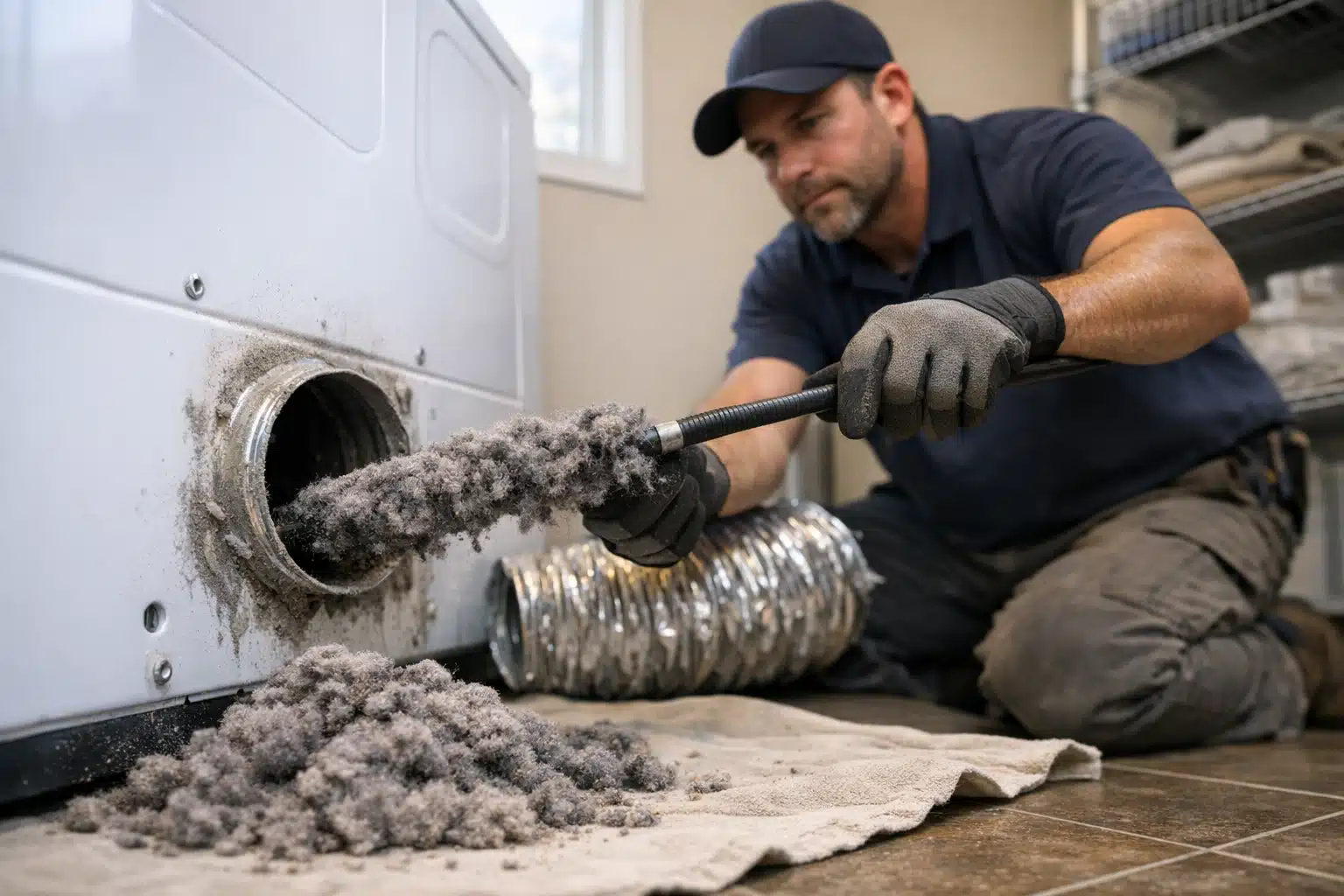
Neglecting dryer vent cleaning leads to a gradual buildup of lint that can cause longer drying times, increased heat, and ultimately a fire risk. Denver's dry climate exacerbates these issues, making regular maintenance essential for safety and efficiency.
- Clothes taking longer to dry is the first sign of a clogged vent. Homeowners may notice rising energy bills and a hotter dryer.
- Heat buildup in the laundry room indicates airflow failure, which can lead to damage in the vent system.
- Scorched lint and warped ducts signal serious neglect, increasing the risk of a dryer vent fire. Regular cleaning is necessary to prevent these hazards.
What happens if you never clean your dryer vent?
Neglecting to clean your dryer vent leads to a gradual buildup of lint, which can cause your dryer to overheat and result in longer drying times. Over time, this can create significant damage to the dryer and increase the risk of fire hazards in your home.
Skipping dryer vent cleaning does not cause a sudden failure. It builds slowly, one lint layer at a time, until your dryer runs hot and your laundry takes two cycles to dry. When homeowners never clean dryer vent systems, the damage follows a predictable path that our technicians see in Denver homes every week.
This post walks you down that path stage by stage. You will learn the warning signs at each point, why Denver’s climate accelerates the problem, and when to call for help.
What Happens If You Never Clean Your Dryer Vent?
A neglected dryer vent moves through four recognizable stages. Lint accumulates, airflow drops, heat builds, and materials begin to break down. Each stage costs you more in energy, repairs, and safety.
Here is the short version before the details:
- Stage 1: Clothes take longer to dry.
- Stage 2: The dryer and laundry room get noticeably hot.
- Stage 3: Lint scorches and the vent material warps.
- Stage 4: Overheated lint becomes a dryer vent fire risk.
Denver’s dry air changes the timeline. Low humidity creates fine, airborne lint that packs tighter and ignites faster than lint in humid regions.
Stage 1: Longer Dry Times and Wasted Energy
The first sign of a clogged vent is laundry that will not dry in one cycle. Partial lint buildup chokes airflow, trapping moisture inside the drum. Your dryer compensates by running longer and hotter.
Most homeowners miss this stage because it creeps in gradually. One day a load needs 45 minutes. A year later the same load needs 90.
What Denver homeowners notice first
- Towels and jeans still damp after a full cycle.
- Rising electric or gas bills without a clear cause.
- The dryer feeling hotter to the touch than it used to.
Longer cycles waste energy and add strain to the motor and heating element. At this point, cleaning the vent restores airflow and often cuts dry times in half.
Stage 2: Heat Buildup in the Laundry Room
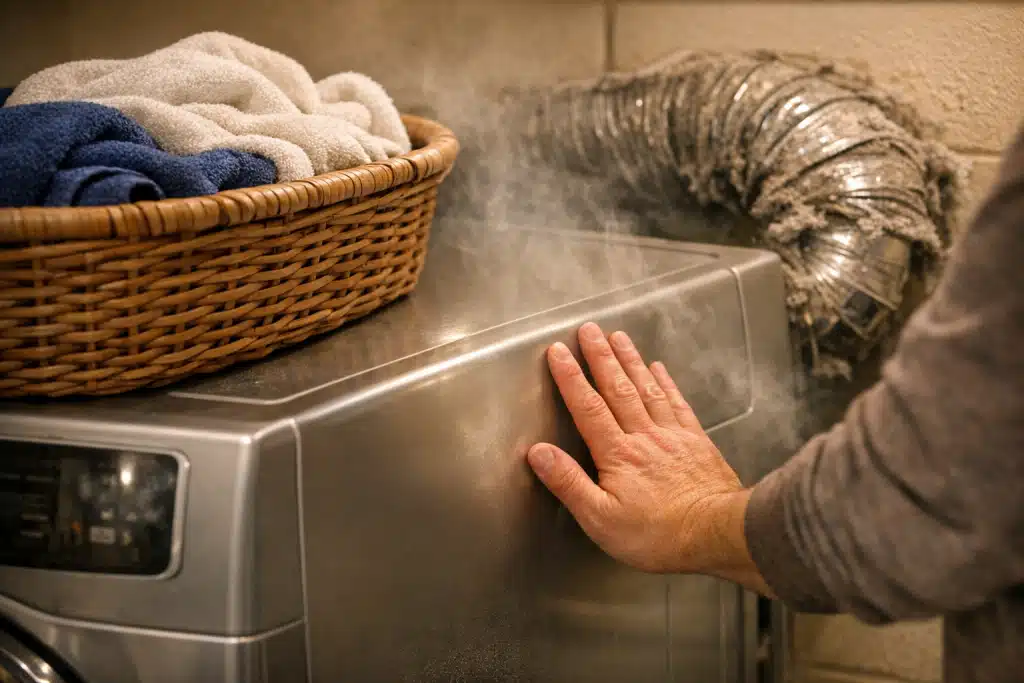
When lint blocks more of the duct, heat that should exit outside stays trapped inside. The laundry room grows warm and humid during a cycle. The dryer cabinet itself becomes hot enough to feel through the lid.
This is the stage where the high-limit thermostat starts cycling on and off. That safety switch shuts the heat down when temperatures spike. Frequent tripping is a direct message that airflow has failed.
Why this matters in Denver homes
Many Front Range homes route dryer vents up through long interior runs or across finished basements. Longer ducts hold more lint and lose more airflow. A buildup that would be minor in a short exterior vent becomes serious in a 25-foot run.
If your laundry room feels like a sauna during drying, treat it as a warning. The heat has nowhere to go.
Stage 3: Scorched Lint and Heat-Warped Ducts
By stage three, trapped heat begins damaging the vent itself. Our technicians pull out lint that is brown, brittle, and scorched from repeated overheating. Flexible foil and plastic ducts warp, sag, or partially melt at the connections.
This is the point where damage stops being reversible with cleaning alone. Warped ducting traps even more lint, speeding the decline. Crushed or sagging transition hoses behind the dryer make it worse.
Signs you have reached this stage
- A burning or hot-lint smell during drying.
- Visible discoloration on the duct or wall behind the dryer.
- Soft, melted, or collapsed sections of flexible ducting.
- Lint escaping around the dryer or vent cap.
Scorched lint is the clearest physical evidence that a vent has gone unmaintained for years. Denver’s arid climate keeps that lint bone-dry, which lowers the temperature needed to char it.
Stage 4: The Dryer Vent Fire Risk
The final stage is ignition. Dry, compacted lint is one of the most flammable materials in a home. When it sits against a heat source with no airflow to cool it, it can smolder and catch.
The dryer vent fire risk is highest in exactly the conditions Denver produces: low humidity, fine lint, and long duct runs. A spark from the heating element or a hot restart after a thermostat trip is enough.
What makes Denver vents more vulnerable
- Low humidity dries lint into easy-to-ignite tinder.
- Cold winters mean heavy dryer use for months straight.
- Wildfire-season dust adds fine particulate that mixes with lint.
- Long interior ducts hide buildup until it is advanced.
Homeowners who never clean dryer vent lines are gambling on all four of those conditions staying in their favor. That is not a bet worth making with a laundry room fire.

How Often Dryer Vents Should Be Cleaned
Dryer vents should be cleaned at least once a year for most households. High-use homes, long duct runs, and families with pets need cleaning more frequently. Here is a practical schedule:
- Once a year: Average household, short-to-medium duct run.
- Every 6 months: Large families, frequent laundry, or pet hair.
- Every 6 months: Long or complex duct runs through basements or roofs.
- Immediately: Any burning smell, long dry times, or hot cabinet.
Cleaning the lint screen after every load helps, but it does not reach the duct. Lint that bypasses the screen is what fills the vent run.
DIY Checks Versus Professional Cleaning
You can safely perform a few checks yourself before calling for service. Knowing the difference saves time and keeps you safe.
Safe DIY checks
- Clean the lint screen before every load.
- Feel the exterior vent cap for weak or no airflow during a cycle.
- Check that the vent flap opens freely when the dryer runs.
- Pull the dryer out and inspect the transition hose for crushing.
When to call a technician
Call for a cleaning when you notice long dry times, a hot laundry room, or any burning smell. A technician reaches the full duct length with brushes and vacuums that a shop vacuum cannot match. They also inspect for the warped or scorched ducting that signals replacement.
If your vent runs up through a roof or across a long basement, skip the DIY attempt. Those runs require equipment and access that most homeowners do not have.
Key Takeaways
A neglected dryer vent fails in stages: slow drying, heat buildup, scorched lint, then fire. Denver’s dry air and cold-weather dryer use push each stage along faster than in humid climates. Annual cleaning stops the decline before it reaches the dangerous end.
Protect your home, cut your energy costs, and lower your fire risk with regular dryer vent cleaning. Schedule service with Action Air Duct by calling or texting 720‑257‑3319, emailing tamir@actionairduct.net, or visiting https://actionairduct.net.