
Can a Range Hood Share the Same Duct as My HVAC System?
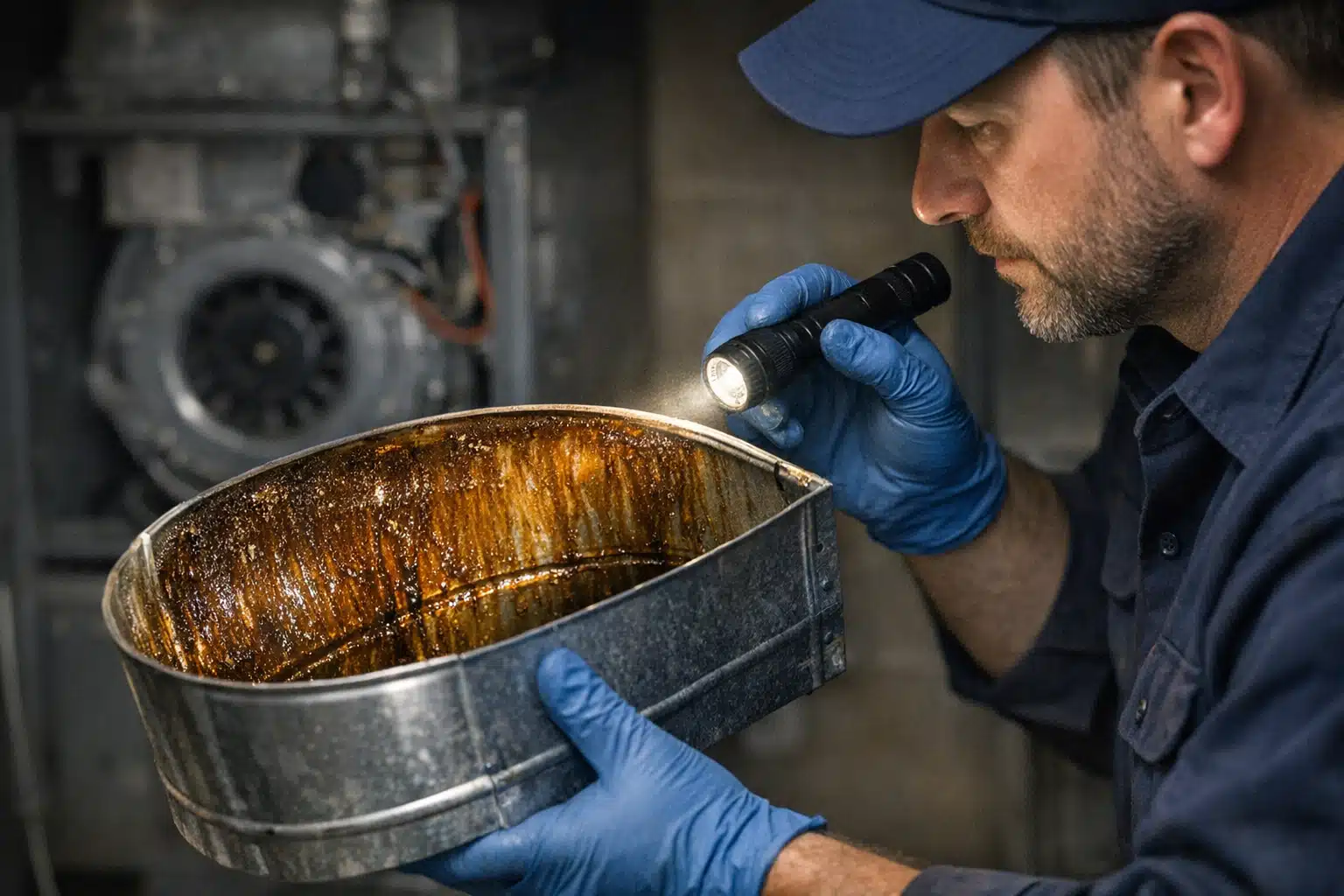
A kitchen range hood must have its own dedicated duct that vents outside and cannot share ductwork with HVAC systems. This separation is essential to prevent fire hazards, air quality issues, and code violations.
- Range hoods remove grease and moisture, while HVAC ducts circulate conditioned air. Mixing them can lead to grease buildup and fire risks.
- Homeowners often face air quality problems when range hoods are improperly connected to HVAC ducts.
- Dedicated exhaust routes are necessary for effective kitchen ventilation, especially in Denver's climate.
Can a range hood share the same duct as an HVAC system?
No, a kitchen range hood should not share ductwork with your HVAC system. Grease-laden air from cooking needs to be vented through a dedicated exhaust line that leads directly outside, ensuring proper ventilation and preventing contamination of the HVAC system.
A kitchen range hood should never vent into your heating and cooling ductwork. The short answer to the range hood shared duct HVAC question is no. Grease-laden kitchen air belongs in a dedicated exhaust line that runs straight outside.
Denver homeowners ask this question often during remodels, especially when a kitchen sits close to existing supply or return ducts. Tying the two together looks like a shortcut. It creates fire hazards, air quality problems, and code violations instead.
Below, you learn why kitchen exhaust and HVAC ducts must stay separate, what our techs find when a past installer cut corners, and the correct venting routes for Denver kitchens.
Can a Range Hood Share the Same Duct as My HVAC System?
No. A range hood cannot legally or safely share the same duct as your HVAC system. Kitchen exhaust carries grease, moisture, heat, and cooking odors that HVAC ducts are not built to handle.
Your HVAC ductwork moves conditioned air in a closed loop around the home. A range hood does the opposite job. It captures contaminated air and pushes it outside the building envelope.
Mixing those two functions sends grease vapor into supply registers and return ducts. That residue coats duct walls, filters, and the furnace blower over time.
Why the Two Systems Have Opposite Jobs
- HVAC ducts recirculate air. They distribute heated or cooled air and pull it back to the furnace for reconditioning.
- Range hoods exhaust air. They remove smoke, steam, and grease particles and vent them outdoors permanently.
- The air quality differs. Cooking air contains oil droplets and water vapor that stick to metal surfaces.
Connecting an exhaust-only appliance to a recirculating system forces dirty air back into living spaces. That defeats the purpose of running the hood at all.
Why Grease-Laden Kitchen Air Must Never Enter HVAC Ducts
Grease is the main reason kitchen exhaust requires separate range hood venting. Every time you sear, fry, or sauté, microscopic oil droplets rise with the steam. A proper exhaust line carries them outside before they settle.
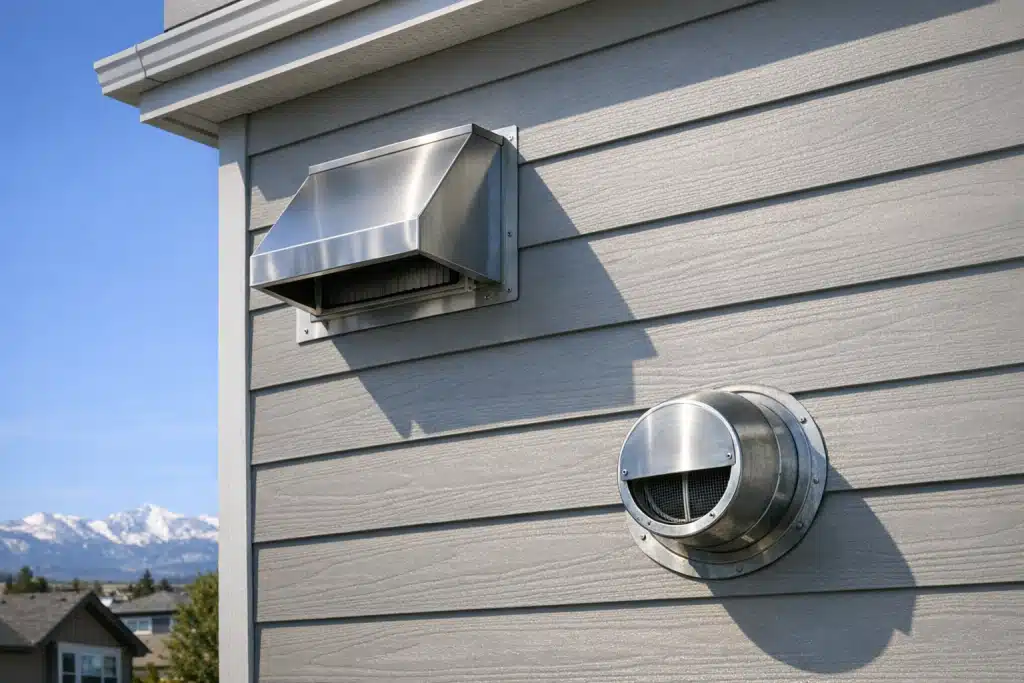
Route that air into HVAC ducts, and the grease condenses on cool metal surfaces. It builds a sticky film that traps dust, dander, and allergens.
The Fire Risk Is Real
Grease buildup inside ductwork is flammable. When it collects near a furnace blower or heat source, it becomes a hidden fuel source.
Kitchen fires that spread into shared ducts have a direct path to the rest of the house. A dedicated exhaust run keeps that fuel out of your mechanical system entirely.
Moisture and Mold Follow Grease
Cooking releases large amounts of steam. That moisture condenses inside HVAC ducts that were never designed to drain or dry.
Damp, grease-coated duct interiors grow mold and bacteria. In Denver’s dry climate, this hidden humidity source causes problems homeowners struggle to trace.
What Our Techs Find When an Installer Cut Corners
Our crews have opened ductwork across the Denver metro and found range hoods tied straight into return trunks. The signs are consistent and easy to spot once you know them.
- Blackened, sticky duct interiors. Grease film coats the first several feet of duct near the kitchen tie-in.
- Clogged furnace filters. Filters load up fast and smell like old cooking oil.
- Greasy supply registers. Dust sticks to vents in bedrooms far from the kitchen.
- Blower wheel buildup. The furnace fan carries a tacky coating that throws it out of balance.
- Lingering odors. Last night’s dinner smells travel to every room through the ducts.
One common shortcut we see is a flex connection from the hood spliced into the nearest return. It passes a quick visual check but fails the moment someone cooks.
Why Installers Take the Shortcut
Running a dedicated exhaust duct to the exterior takes planning. It means cutting a wall or roof penetration, adding a backdraft damper, and sealing the route.
Tying into existing ducts avoids that labor. The homeowner pays for it later in air quality problems, odor, and eventual duct cleaning or rework.
The Correct Dedicated Venting Routes for Denver Kitchens
A range hood needs its own duct that terminates outside the home. The route depends on where your kitchen sits and your home’s construction.
- Through an exterior wall. The shortest path for main-floor kitchens on an outside wall. Keep the run straight with minimal elbows.
- Up through the roof. Common for interior kitchens or island hoods with no nearby exterior wall.
- Through the soffit or eave. Used when a wall termination is blocked by a patio or deck.
Each route ends with an exterior cap that includes a backdraft damper. That damper keeps cold Front Range air from flowing back inside when the hood is off.
Denver-Specific Details That Matter
Colorado winters make the exhaust termination point important. A poorly sealed cap lets freezing air chill your kitchen every time the hood sits idle.
At Denver’s altitude, a hood must move enough air to clear cooking byproducts effectively. An undersized or kinked duct chokes airflow and leaves grease behind.
Smooth metal duct beats ribbed flex duct for kitchen exhaust. Flex duct traps grease in every ridge and restricts the fan’s output.
Sizing and Material Recommendations
- Use rigid galvanized or stainless steel duct. It cleans easily and resists grease buildup.
- Match the duct diameter to the hood. Reducing the size strangles airflow and overworks the fan.
- Limit elbows and length. Every turn cuts exhaust capacity and adds a spot for grease to collect.
- Seal every joint. Leaks let grease vapor escape into wall cavities.
Recirculating Hoods: The Ductless Alternative
A recirculating range hood filters air and returns it to the kitchen. It does not connect to any duct, including your HVAC system.
These hoods use charcoal filters to catch odor and grease. They work in apartments or kitchens where an exterior vent is not feasible.
A ducted hood vented outside removes far more heat, steam, and grease. For most Denver homes with cooking habits that include frying or high heat, exterior venting performs better.
When to Choose Each Type
- Ducted to exterior: Best for frequent cooking, gas ranges, and removing moisture from the home.
- Recirculating: A fallback when no exterior route exists, paired with frequent filter changes.

How This Affects Your Indoor Air and HVAC Maintenance
A proper exhaust setup keeps grease out of your ducts and protects indoor air quality. That matters year-round in Denver, where homes stay sealed during cold winters and smoky summer days.
If your range hood was ever tied into HVAC ducts, the system needs attention. Grease does not clear itself from duct walls or a furnace blower.
Recommended Steps if You Suspect a Shared Duct
- Stop running the hood until the connection is inspected, if odors reach other rooms.
- Schedule a duct inspection to confirm whether exhaust was tied into supply or return lines.
- Book a duct cleaning to remove grease film from affected runs and the blower.
- Separate the systems by installing a dedicated exterior exhaust route.
After correction, a standard HVAC maintenance rhythm keeps things clean. Change furnace filters every one to three months, and have ducts inspected when you notice odor or dust buildup.
Signs Your Kitchen Venting Needs a Pro
- Cooking smells reaching bedrooms through supply vents.
- Greasy residue on registers far from the kitchen.
- A hood that runs but barely clears steam.
- Cold drafts from the hood when it is switched off.
- Furnace filters that smell like cooking oil.
Any of these points to a venting defect that needs correction. A technician can confirm the duct path and recommend the right fix.
Key Takeaways
A range hood must never share ductwork with your HVAC system because grease, moisture, and odor contaminate the air you breathe and create fire risk. The correct setup uses a dedicated exhaust duct that vents straight outside with a sealed, damped exterior cap.
If you suspect a previous installer tied your kitchen exhaust into HVAC ducts, an inspection and cleaning protect your home and equipment. Contact Action Air Duct at 720‑257‑3319 by phone or text, email tamir@actionairduct.net, or visit https://actionairduct.net to schedule a duct inspection, cleaning, or range hood venting assessment.