
Do Apartment and Condo Dryer Vents Need Professional Cleaning?
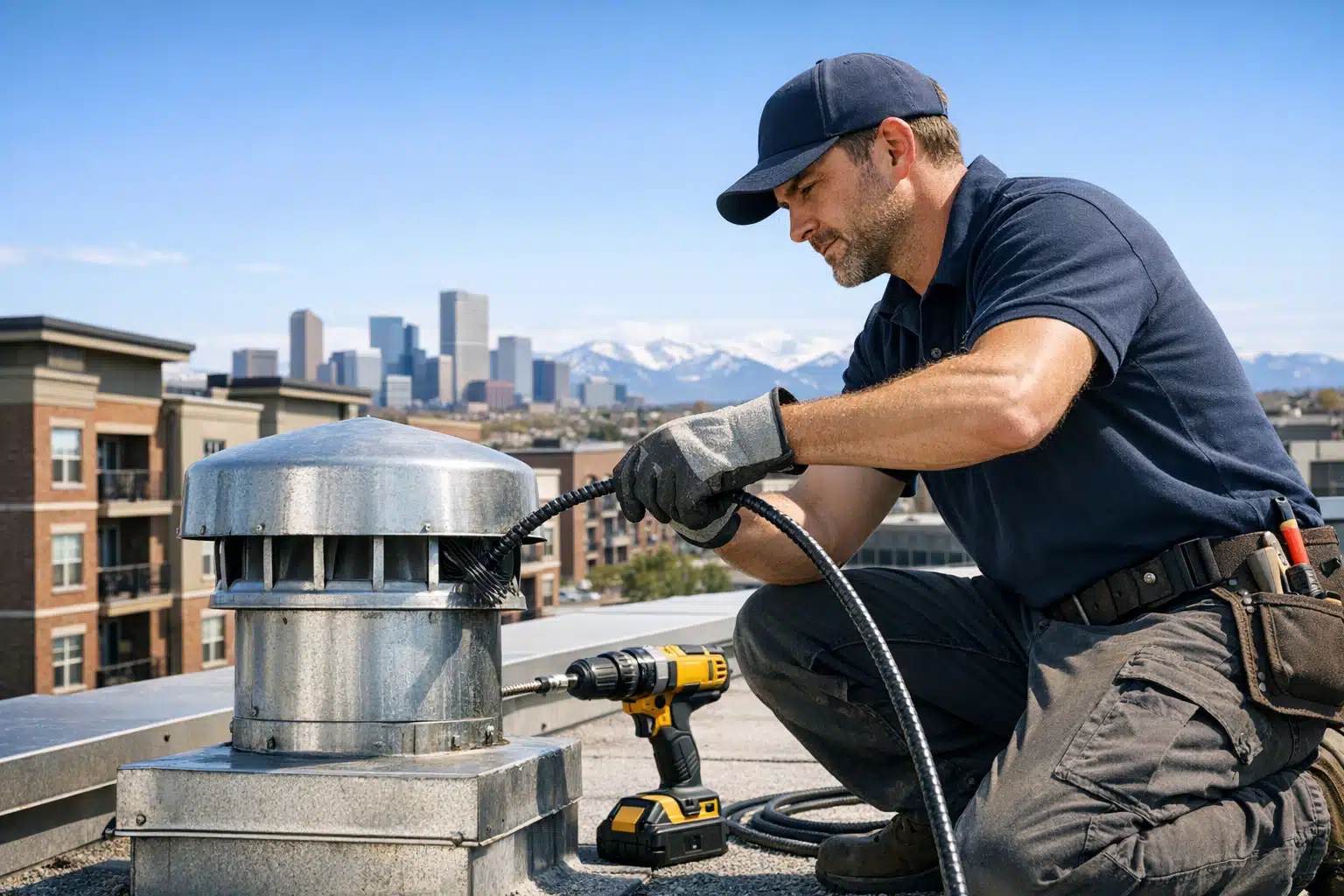
Apartment and condo dryer vents require professional cleaning due to their longer and often shared vent runs, which accumulate lint that residents cannot reach. Regular maintenance is essential to prevent airflow blockages and reduce fire risks.
- Apartment dryer vents can be much longer than those in single-family homes, often running 25 to 50 feet.
- Tenants can only clean the lint trap and initial hose, while professionals handle the inaccessible sections.
- Shared vents can affect multiple units, making it crucial for property managers to schedule regular cleanings.
Why do apartment and condo dryer vents need professional cleaning?
Apartment and condo dryer vents need professional cleaning to prevent lint buildup that can obstruct airflow and cause dryers to work inefficiently. This buildup can lead to longer drying times and increase the risk of fire hazards. Regular cleaning ensures optimal dryer performance and safety.
Your apartment dryer takes two cycles to dry a single load of towels. The lint trap looks clean, but the clothes still come out damp and hot. The problem sits where you cannot reach it: inside a long vent run buried in the building structure.
Apartment dryer vent cleaning matters more than most tenants and landlords assume. Condo and apartment vents route lint across far longer distances than single-family homes. Many share a single roof exhaust across stacked units.
Below is what technicians find inside multi-unit vent systems, who carries responsibility for cleaning them, and when a building needs service.
Do Apartment and Condo Dryer Vents Need Professional Cleaning?
Yes. Apartment and condo dryer vents need professional cleaning, usually more urgently than houses. The vent runs are longer, harder to access, and frequently shared between units.
A typical house dryer vents through an exterior wall within a few feet. An apartment vent may travel 25 to 50 feet before reaching the roof or an exterior cap.
Longer runs mean more surface area for lint to cling to. More bends mean more spots where lint collects and blocks airflow.
Why tenants cannot handle this themselves
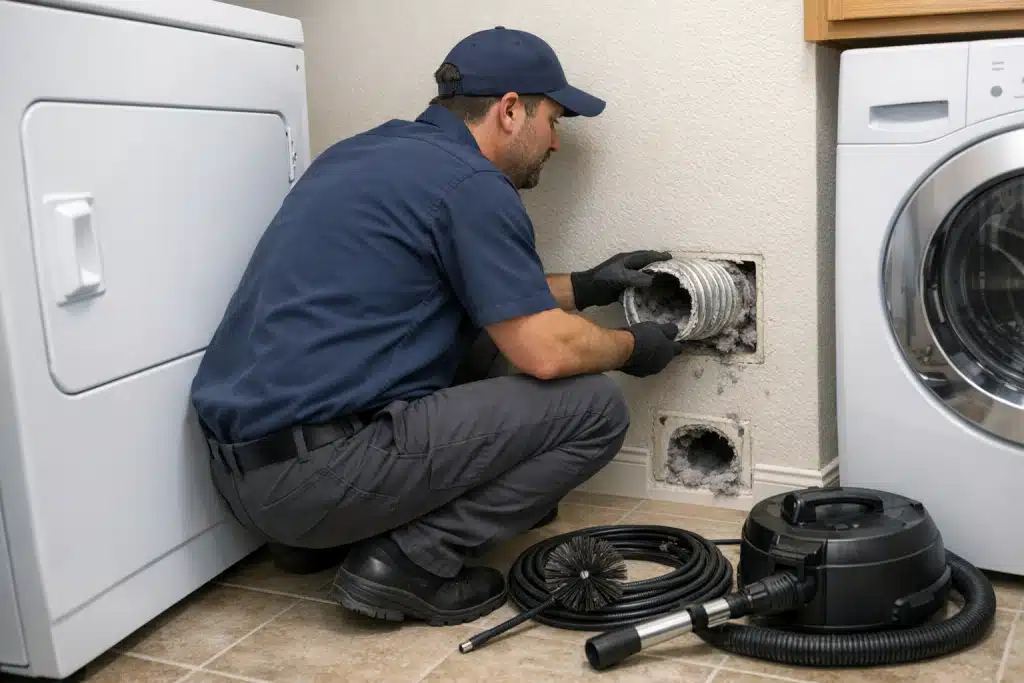
A tenant can clean the lint trap and the first few feet of flexible hose. Everything past that point sits inside walls, ceilings, or vertical shafts.
Reaching the full run requires rotary brush equipment fed from both ends. That work belongs to a trained technician with the right tools, not a resident with a vacuum.
The Long and Stacked Vent Runs Hiding in Denver Buildings
Denver has thousands of older brick apartment buildings and newer stacked condos along the Front Range. Both designs create vent runs tenants never see.
In stacked units, multiple apartments on different floors can tie into one vertical duct. That duct exits through a single roof vent at the top of the building.
A shared vertical vent is a known lint trap. Lint from every connected unit travels up the same shaft. When the top vent cap clogs, every dryer below it loses airflow.
What technicians find inside shared vents
Crews opening a stacked vent in a four-story building routinely find packed lint at the roof termination. Here is what shows up on real service calls:
- Bird and rodent nests built on top of weak airflow near the roof cap
- Compacted lint mats several feet long where the vertical run meets a horizontal section
- Crushed or disconnected transition hoses behind dryers pushed too close to the wall
- Backdraft damper failures that let one unit’s exhaust feed into another
- Screens added inside the vent that trap lint and violate standard venting practice
A single clogged roof cap can starve airflow for an entire vertical stack. One unit’s neglected dryer becomes every neighbor’s problem.
Why Denver’s climate makes this worse
Cold Colorado winters keep dryers running hard for months. Heavy coats, blankets, and layered laundry push more lint into the system.
Dry high-altitude air also makes lint lighter and easier to carry deep into the run. Warm summers add bedding and towel loads that build lint fast.
Seasonal swings along the Front Range mean dryers almost never get a rest. That steady use shortens the time between cleanings.
Who Is Responsible for Shared Dryer Vent Cleaning?
Shared dryer vent landlord responsibility usually falls on the property owner or HOA, not individual tenants. The vent run past a tenant’s unit is building infrastructure.
Tenants control the lint trap and the dryer itself. The shared duct, vertical shaft, and roof cap belong to whoever manages the building.
How responsibility usually breaks down
- Tenant: cleans the lint screen every load and keeps the dryer pulled away from the wall
- Landlord or property manager: schedules cleaning of the in-wall and shared vent runs
- HOA: maintains common roof vents and vertical shafts serving multiple units
In condos, the dividing line depends on the governing documents. Many HOAs own the shared shaft and roof termination even when the unit owner owns the dryer connection.
Shared dryer vent landlord responsibility becomes a safety issue when neglected. A fire in one unit’s vent can spread to the connected stack.
Why property managers should not wait for complaints
Most managers hear about dryer vents only after a tenant complains about slow drying. By then, lint has been building for a year or more.
A scheduled cleaning plan avoids emergency calls and tenant turnover frustration. It also protects the building from a preventable fire.
Warning Signs a Multi-Unit Dryer Vent Needs Service
Several signs point to a clogged or restricted vent run. Tenants and managers should watch for the following:
- Clothes stay damp after a full cycle or need a second run
- The dryer and laundry room feel unusually hot during use
- A burning or musty smell appears when the dryer runs
- The outside of the dryer is hot to the touch every cycle
- Multiple units in the same stack report slow drying at once
- Lint shows up around the roof cap or exterior vent opening
The last two signs point straight at a shared run problem. When several neighbors struggle at the same time, the blockage sits in the common duct.
How Often Should Apartment Dryer Vents Be Cleaned?
Most multi-unit dryer vents need cleaning every 12 months. Buildings with long shared runs or heavy use may need service more often.
High-traffic properties with communal laundry rooms run dryers all day. Those vents can clog within six to nine months.
Factors that shorten the cleaning interval include:
- Long vent runs over 30 feet
- Multiple bends or vertical rises
- Shared stacks serving several floors
- Older flexible ducting instead of rigid metal
- Communal laundry with constant daily use
A yearly inspection catches problems before they become fire risks. Managers overseeing several buildings benefit from a set cleaning calendar.

They arrived on time, explained everything clearly, and completed the job thoroughly without trying to upsell unnecessary services. It’s refreshing to work with a company that values professionalism, integrity, and great customer service.
I highly recommend Action Air Ducts to anyone looking for reliable, trustworthy, and high-quality dryer vent cleaning. I’ll definitely be using them again!
What to Expect From a Multi-Unit Dryer Vent Cleaning
A proper cleaning handles the full run, not just the accessible end. For stacked systems, that means working the vent from the roof and from each unit.
A thorough service includes the following steps:
- Inspection of the full run with a camera where access allows
- Rotary brush cleaning fed through the duct to break up lint
- Clearing the roof cap or exterior termination of debris and nests
- Checking backdraft dampers so each unit vents separately
- Airflow testing to confirm the dryer exhausts freely
For shared stacks, coordinating access to each unit matters. A technician who only cleans one apartment’s section leaves the rest of the stack clogged.
The goal is restored airflow across the entire system. That protects every connected tenant, not just one.
Why This Protects Your Building and Your Tenants
A clean vent run cuts drying time and lowers energy use. Tenants stop running second cycles, which trims utility costs for everyone.
Restored airflow keeps dryer motors from overheating and extends their life. Fewer appliance failures mean fewer maintenance calls.
Most importantly, a clear vent removes the lint that fuels dryer fires. For a building with stacked units, that safety margin protects the whole structure.
The Takeaway for Denver Property Owners and Tenants
Apartment and condo dryer vents need professional cleaning because their long, shared runs collect lint tenants cannot reach. Responsibility for the shared sections rests with the landlord, property manager, or HOA. Yearly cleaning restores airflow, lowers fire risk, and keeps every unit in a stack running right.
Action Air Duct handles stacked and shared dryer vent cleaning for Denver apartments, condos, and communal laundry rooms. To schedule an inspection or set up a recurring cleaning plan, call or text 720‑257‑3319, email tamir@actionairduct.net, or visit https://actionairduct.net.