
Overview
How long has it been since your commercial building's ductwork received professional attention? Commercial duct cleaning is a specialized service that removes accumulated dust, debris, allergens, and contaminants from your building's HVAC system. This comprehensive process involves cleaning supply and return air ducts, registers, grilles, diffusers, heat exchangers, cooling coils, and the air handling unit itself.
Professional commercial duct cleaning requires specialized equipment and expertise that goes far beyond what standard maintenance crews can provide. Aurora's semi-arid climate and seasonal temperature swings create unique challenges for commercial HVAC systems, making regular professional cleaning more than just routine maintenance.
- Improved indoor air quality for employees and customers
- Enhanced HVAC system efficiency and reduced energy costs
- Extended equipment lifespan through reduced strain
- Compliance with health and safety regulations
Common issues in Aurora, CO
Aurora's location along the Front Range creates specific challenges for commercial HVAC systems. The city's elevation at 5,471 feet means thinner air that requires HVAC systems to work harder, while frequent temperature fluctuations between seasons stress ductwork seals and connections.
The semi-arid climate brings dust storms and dry conditions that infiltrate commercial buildings through even the smallest openings. Aurora's proximity to major highways and the Denver International Airport means additional particulate matter from traffic and aircraft operations settles into ductwork over time.
Spring brings particularly challenging conditions as melting snow creates humidity fluctuations while wind patterns carry allergens and debris from surrounding agricultural areas and construction sites throughout the rapidly growing metro area.
- Dust accumulation from frequent wind events and dry conditions
- HVAC strain from altitude and temperature extremes
- Particulate infiltration from nearby traffic corridors and airport operations
- Seasonal debris from cottonwood trees and prairie grasses
- Construction dust from ongoing development projects
- Humidity fluctuations affecting mold and mildew growth potential
How Action Air Duct can help
Our commercial duct cleaning process begins with a thorough inspection using advanced camera systems to assess your ductwork condition and identify problem areas. We document findings and create a customized cleaning plan specific to your building's needs and HVAC configuration.
- Pre-cleaning inspection and documentation of system condition
- Protective setup including containment barriers and equipment staging
- Negative pressure system installation to prevent cross-contamination
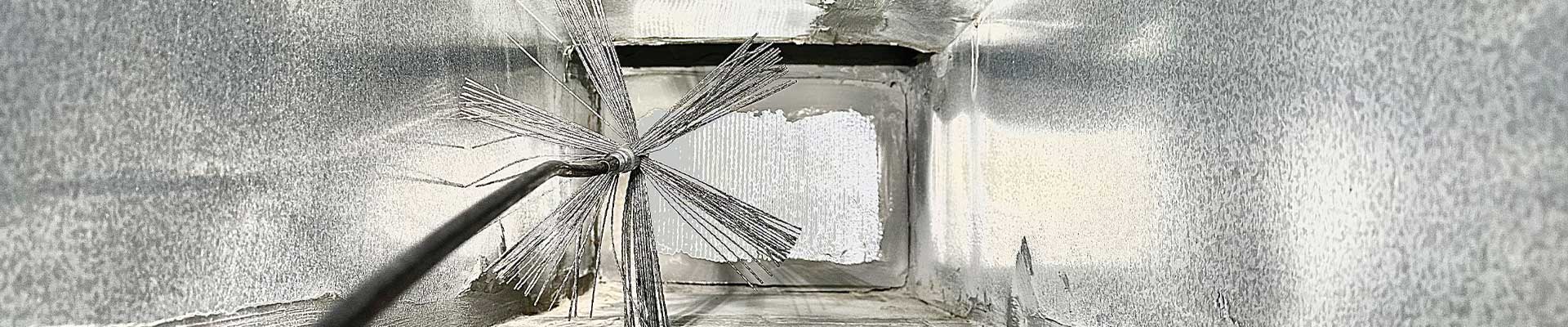
- Mechanical agitation of debris using rotating brushes and compressed air
- High-powered vacuum extraction of loosened contaminants
- Sanitization of cleaned surfaces using EPA-approved antimicrobial treatments
- Post-cleaning inspection and system performance verification
We use truck-mounted vacuum systems that provide consistent suction power throughout the cleaning process. Our technicians are trained in NADCA standards and use specialized tools designed for different duct materials and configurations commonly found in Aurora commercial buildings.
- HEPA-filtered vacuum systems preventing recontamination
- Flexible shaft systems for navigating complex ductwork layouts
- Compressed air whips for dislodging stubborn debris
- Video documentation showing before and after conditions
Why choose Action Air Duct
Action Air Duct brings specialized knowledge of Aurora's commercial building stock and local environmental challenges. Our technicians understand how Front Range weather patterns affect different HVAC systems and tailor their approach accordingly. We maintain NADCA certification and stay current with industry best practices for commercial duct cleaning.
Our local presence means faster response times and familiarity with Aurora's building codes and commercial districts. We've worked extensively throughout the Denver metro area and understand the specific needs of different commercial property types – from retail centers to office complexes to industrial facilities.
- NADCA-certified technicians with ongoing training requirements
- Local expertise in Aurora commercial building characteristics
- Advanced diagnostic equipment including thermal imaging
- Comprehensive insurance coverage and bonding
- Detailed reporting with photographic documentation
- Emergency service availability for urgent air quality issues
Housing Characteristics & Commercial Duct Cleaning Considerations
Aurora's commercial building landscape reflects the city's rapid growth from the 1970s through today. Many commercial structures were built during the 1980s and 1990s boom periods, featuring steel frame construction with concrete block or tilt-up concrete walls. These buildings typically have large open floor plans with extensive ductwork systems running through dropped ceilings and mechanical rooms.
The city's newer commercial developments, particularly along the E-470 corridor and near Denver International Airport, feature more modern HVAC designs with variable air volume systems and energy-efficient components. However, many of Aurora's established commercial districts still rely on older constant-volume systems that require different cleaning approaches and more frequent maintenance.
Commercial buildings in Aurora's older sections often have ductwork that was installed when building codes were less stringent regarding air sealing and insulation. This means these systems are more susceptible to infiltration and contamination, requiring thorough cleaning and potential sealing services to maintain optimal performance.
- Mixed-age commercial stock requiring varied cleaning approaches
- Large floor plates with extensive ductwork runs
- Older buildings with potential air sealing issues
- Modern facilities with sophisticated HVAC controls
Environmental Conditions & Commercial Duct Cleaning Implications
Aurora sits in the South Platte River Basin with clay-heavy soils that become airborne during dry periods and construction activities. The city experiences over 300 days of sunshine annually, creating significant temperature differentials between day and night that cause ductwork expansion and contraction. This thermal cycling can loosen joints and create entry points for contaminants.
Air quality in Aurora is affected by both local and regional factors. The city occasionally experiences ozone action days during summer months, and particulate matter levels can spike during wildfire seasons or dust storms. Commercial buildings must filter this outdoor air, placing additional burden on HVAC systems and accelerating contamination buildup in ductwork.
Aurora's semi-arid climate means relative humidity levels often drop below 30% during winter months, creating static electricity issues and making dust more likely to become airborne and settle in ductwork. The spring months bring cottonwood pollen and other allergens that infiltrate commercial buildings through outdoor air intakes and building envelope gaps.
- Clay soils contributing to airborne particulate matter
- Extreme temperature swings causing ductwork stress
- Low humidity conditions increasing dust suspension
- Seasonal wildfire smoke affecting regional air quality
- High UV exposure degrading outdoor HVAC components
Air Quality Data in Aurora
The Colorado Department of Public Health and Environment monitors air quality throughout Aurora, with the city experiencing an average of 15-20 days per year when air quality reaches unhealthy levels for sensitive groups. Particulate matter (PM2.5) concentrations typically range from 8-12 micrograms per cubic meter annually, though this can spike to over 35 during wildfire events or dust storms.
Aurora's location in the Denver-North Front Range nonattainment area for ozone means commercial buildings face additional challenges during summer months when ground-level ozone formation peaks. The city's proximity to major transportation corridors contributes to nitrogen oxide emissions that affect indoor air quality through HVAC system infiltration.
Recent air quality studies show that Aurora experiences some of the highest particulate matter concentrations in the Denver metro area during winter months due to temperature inversions that trap pollutants. Commercial buildings with older or poorly maintained HVAC systems show indoor particulate levels that can be 2-3 times higher than buildings with recently cleaned ductwork.
- Annual PM2.5 averages of 8-12 μg/m³ with seasonal spikes
- 15-20 unhealthy air quality days per year
- Winter temperature inversions trapping pollutants
- Ozone nonattainment area designation affecting commercial compliance
- Indoor air quality directly correlated with ductwork maintenance
Weather & Alerts in Aurora, CO
Current Conditions
Temp: 60°F · Feels like: 57°F
Humidity: 45% · Wind: 12 mph
Emergency Alerts
No active alerts.
Commercial Duct Cleaning in Other Service Areas
- Arvada, CO
- Boulder, CO
- Brighton, CO
- Broomfield, CO
- Castle Pines, CO
- Castle Rock, CO
- Centennial, CO
- Denver, CO
- Edgewater, CO
- Englewood, CO
- Erie, CO
- Federal Heights, CO
- Glendale, CO
- Golden, CO
- Greenwood Village, CO
- Highlands Ranch, CO
- Ken Caryl, CO
- Lafayette, CO
- Lakewood, CO
- Littleton, CO
- Lone Tree, CO
- Louisville, CO
- Morrison, CO
- Northglenn, CO
- Parker, CO
- Superior, CO
- Thornton, CO
- Westminster, CO
- Wheat Ridge, CO