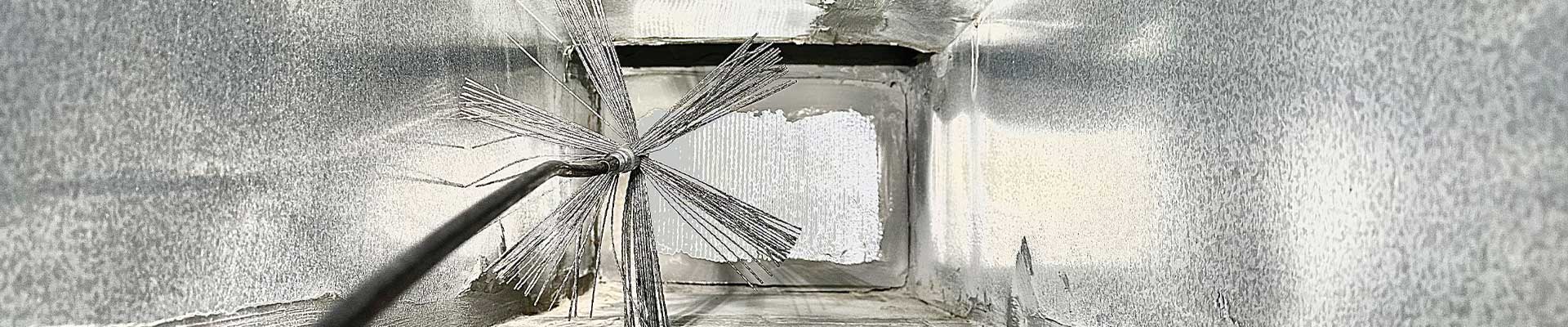
Commercial buildings in Glendale face unique challenges with indoor air quality that can impact employee health, productivity, and operating costs. Professional commercial duct cleaning addresses accumulated contaminants that standard maintenance often misses, targeting everything from construction debris to years of dust, allergens, and microbial growth within your HVAC system.
Commercial duct cleaning involves comprehensive inspection, debris removal, and sanitization of your entire ventilation system using specialized equipment designed for larger commercial applications. Glendale's high altitude environment at 5,400 feet, combined with Colorado's dry climate and seasonal temperature swings, creates conditions where dust accumulates rapidly and HVAC systems work harder to maintain comfortable indoor environments.
Improved indoor air quality reducing employee sick days and complaints
Enhanced HVAC efficiency lowering energy costs and equipment wear
Compliance with health regulations and building maintenance standards
Extended equipment lifespan through reduced strain on motors and components
Common issues in Glendale, CO
Glendale's location in the Denver metropolitan area exposes commercial buildings to specific environmental factors that accelerate duct contamination. The city's proximity to major highways like I-25 and Colorado Boulevard brings vehicle emissions and road dust directly into building air intakes, while Colorado's frequent wind patterns distribute fine particles throughout the region.
The semi-arid climate creates additional challenges with low humidity levels that allow dust to remain airborne longer and settle deeper into ductwork. Spring months bring particularly heavy pollen loads from surrounding vegetation, while winter heating cycles can redistribute accumulated debris throughout your building's air system.
Local factors that increase commercial duct cleaning needs in Glendale include:
High altitude conditions causing HVAC systems to work harder and accumulate debris faster
Frequent temperature fluctuations creating condensation issues that promote microbial growth
Urban pollution from nearby Denver affecting air quality and particulate levels
Seasonal wildfires contributing smoke particles and fine ash to air systems
Construction activity in growing commercial districts generating excess dust and debris
Dry climate conditions allowing contaminants to circulate longer before settling
Our commercial duct cleaning process begins with a detailed inspection using advanced camera systems to document contamination levels and identify problem areas throughout your ventilation network. This assessment allows us to develop a customized cleaning strategy that addresses your building's specific needs and contamination patterns.
Our systematic cleaning approach follows these steps:
Complete system shutdown and preparation with protective barriers around work areas
Access point creation at strategic locations to reach all ductwork sections
Negative pressure establishment using powerful HEPA-filtered vacuum systems
Mechanical agitation with rotating brushes and compressed air tools
Debris extraction through continuous suction maintaining containment
Sanitization treatment using EPA-approved antimicrobial solutions
Final inspection and documentation with before-and-after photography
We utilize truck-mounted equipment capable of handling large commercial systems while maintaining proper containment. Our technicians coordinate with your facility management to minimize disruption to business operations, often working during off-hours or weekends to accommodate your schedule.
Quality control measures include:
Air quality testing before and after cleaning to verify improvement
Photographic documentation of all work performed
Detailed reporting with recommendations for ongoing maintenance
Follow-up inspections to monitor system performance
Action Air Duct brings specialized expertise in commercial HVAC systems with NADCA certification and comprehensive insurance coverage for large-scale projects. Our technicians receive ongoing training in the latest commercial cleaning techniques and safety protocols, ensuring your building receives professional service that meets industry standards.
Our local presence in the Denver metro area means rapid response times and deep understanding of Glendale's specific environmental challenges. We maintain relationships with local HVAC contractors and building maintenance professionals, allowing us to coordinate seamlessly with your existing service providers when needed.
What sets us apart:
Advanced equipment specifically designed for commercial applications
Flexible scheduling including after-hours and weekend availability
Detailed documentation and reporting for facility management records
Ongoing maintenance programs tailored to your building's usage patterns
Emergency response capability for urgent air quality issues
Glendale's commercial building stock reflects its development as a mature Denver suburb, with many structures built between 1970 and 1995 during the area's major growth period. These buildings typically feature steel frame construction with concrete block or brick veneer, designed for the region's climate with emphasis on heating efficiency rather than cooling systems.
The majority of commercial properties in Glendale include office complexes, retail centers, and mixed-use developments ranging from 5,000 to 50,000 square feet. Many buildings utilize rooftop HVAC units with extensive ductwork networks that can span multiple floors and zones, creating complex systems where contamination can accumulate in hard-to-reach areas.
Age-related considerations for commercial duct cleaning in these buildings include:
Original ductwork from the 1970s-80s may contain construction debris never fully removed
Older insulation materials can deteriorate and contribute particulates to air systems
Building envelope improvements over time may have altered air flow patterns
Multiple renovations often leave abandoned ductwork that becomes contamination sources
Aging HVAC equipment operates less efficiently, allowing more debris to circulate
Glendale's environmental conditions create specific challenges for maintaining clean commercial air systems. Located at 5,400 feet elevation with an average annual precipitation of just 15 inches, the area experiences significant dust accumulation due to dry conditions and frequent wind patterns. Air quality measurements often show elevated particulate matter levels, particularly during spring months and wildfire seasons.
The region's water quality comes from Denver Water's treatment system, which maintains relatively low mineral content but can contribute to humidity control challenges in commercial buildings. Soil composition in the area includes clay and sandy loam that becomes airborne during construction activities and landscaping work common in Glendale's developing commercial districts.
High altitude reduces air density, requiring HVAC systems to work harder and accumulate more debris
Low humidity levels allow dust particles to remain suspended longer in air systems
Seasonal temperature swings from -10°F to 100°F create condensation cycles promoting microbial growth
Proximity to major transportation corridors increases vehicle emission exposure
Regional wildfire activity contributes fine particulates that penetrate deep into ductwork
Urban heat island effects from surrounding Denver metro increase cooling demands and system usage
Air Quality Data in Glendale
Glendale's air quality monitoring shows average PM2.5 levels of 8-12 micrograms per cubic meter, with seasonal spikes reaching 35-50 micrograms during wildfire events and winter temperature inversions. The Colorado Department of Public Health tracks particulate matter, ozone, and other pollutants that directly impact commercial building air systems, with Glendale experiencing moderate air quality conditions approximately 60% of the year.
Recent air quality trends show increasing concerns with fine particulate matter from regional sources including vehicle emissions, construction dust, and seasonal wildfire smoke. Commercial buildings in Glendale report higher HVAC filter replacement frequency compared to rural Colorado locations, indicating elevated contaminant loads entering building air systems.
Key air quality impacts on commercial duct cleaning:
Elevated particulate levels require more frequent cleaning cycles than standard recommendations