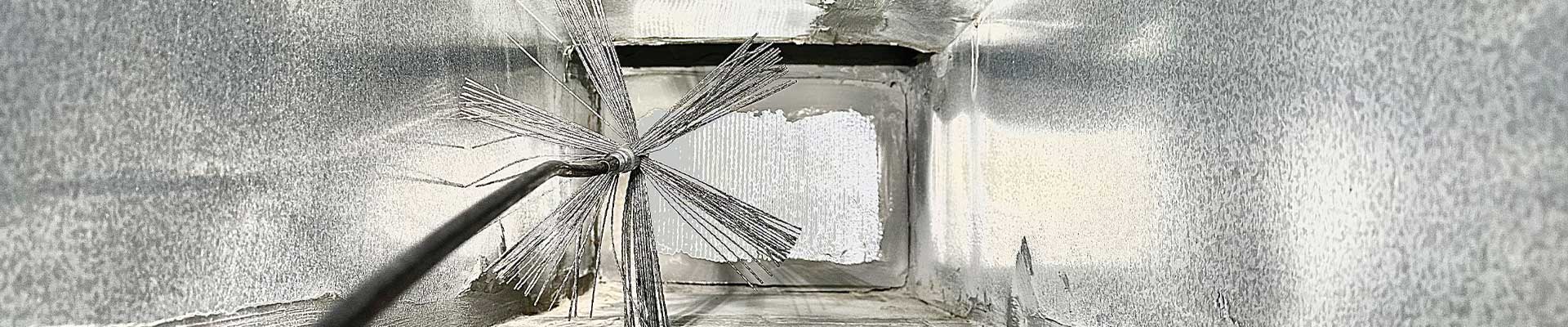
The maintenance supervisor at a Denver-area office complex recently discovered that employee complaints about stuffy air and recurring allergies weren't just seasonal issues – they were signs of severely contaminated ductwork that hadn't been professionally cleaned in over a decade. This scenario plays out frequently across Edgewater's commercial buildings, where busy property managers often overlook the critical role that clean air ducts play in maintaining healthy, productive work environments.
Commercial duct cleaning involves the thorough removal of dust, debris, allergens, and contaminants from your building's entire HVAC system, including supply and return air ducts, registers, grilles, diffusers, heat exchangers, cooling coils, and air handling units. This comprehensive process requires specialized equipment and expertise to reach every component of your system safely and effectively.
Professional commercial duct cleaning matters because contaminated systems don't just circulate dirty air – they work harder, consume more energy, and create environments where employees get sick more often. In Edgewater's semi-arid climate with its frequent temperature swings and seasonal dust storms, commercial buildings face unique challenges that demand professional attention.
Improved indoor air quality reduces employee sick days and increases productivity
Enhanced HVAC efficiency lowers energy costs and extends equipment lifespan
Elimination of odors and allergens creates more comfortable work environments
Compliance with health regulations and insurance requirements
Common issues in Edgewater, CO
Action Air Duct provides Commercial Duct Cleaning services in all neighborhoods of Edgewater including Terra Village.
Edgewater's location along the South Platte River creates specific environmental conditions that impact commercial buildings throughout the area. The combination of river valley moisture, seasonal wind patterns, and proximity to major transportation corridors means that commercial HVAC systems here accumulate contaminants faster than in many other Colorado communities.
The city's mix of older commercial buildings – many constructed in the 1970s and 1980s during the area's development boom – presents additional challenges. These structures often feature original ductwork that has never received professional cleaning, creating decades of accumulated buildup. Meanwhile, newer commercial developments face rapid contamination due to construction dust and the area's active development patterns.
Seasonal factors play a major role in Edgewater's commercial duct cleaning needs. Spring brings cottonwood pollen and dust from surrounding construction projects, while winter's dry conditions and increased heating usage concentrate contaminants throughout building systems. The area's frequent chinook winds can drive outdoor pollutants deep into commercial HVAC systems.
River valley humidity creates ideal conditions for mold and bacterial growth in ductwork
Construction activity from ongoing development projects introduces excessive dust and debris
Proximity to Sheridan Boulevard and Interstate 70 brings vehicle exhaust and road dust into buildings
Older commercial buildings with original ductwork show severe accumulation of decades of contaminants
Seasonal temperature swings cause condensation issues that promote microbial growth
High employee density in many Edgewater office buildings accelerates contamination rates
Our commercial duct cleaning process begins with a comprehensive system assessment using advanced inspection cameras to document the current condition of your ductwork. This diagnostic phase allows us to identify problem areas, measure contamination levels, and develop a customized cleaning strategy that addresses your building's specific needs.
The cleaning process itself follows strict industry protocols designed for commercial environments. We use powerful truck-mounted vacuum systems that create negative pressure throughout your ductwork while our technicians systematically clean each component using specialized brushes, air whips, and compressed air tools.
Pre-cleaning inspection and system documentation with digital photography
Strategic access point creation to reach all system components safely
Negative pressure establishment using truck-mounted collection systems
Systematic cleaning of supply ducts, return ducts, and all system components
Sanitization treatment application to eliminate microbial contamination
Post-cleaning inspection and air quality verification testing
Detailed reporting with before and after documentation
Throughout the process, we maintain clear communication with building management and coordinate our work to minimize disruption to your operations. Our technicians work in sections, allowing most areas of your building to maintain normal operations while we clean other zones.
HEPA filtration systems contain all debris during removal
Antimicrobial treatments eliminate bacteria, mold, and viruses
Flexible scheduling accommodates your business hours and operational needs
Complete system restoration includes register cleaning and filter replacement
Action Air Duct brings NADCA-certified expertise specifically focused on Colorado's commercial market, with deep understanding of the unique challenges facing Edgewater businesses. Our technicians hold state licensing and specialized training in commercial HVAC systems, ensuring we can handle everything from small office buildings to large industrial complexes safely and effectively.
Our local presence means we respond quickly when you need service, often providing same-week scheduling for urgent situations. We maintain relationships with Edgewater's business community and understand the operational pressures you face, which is why we've developed flexible service approaches that work around your schedule rather than disrupting your operations.
Every commercial project includes comprehensive documentation and follow-up services. We provide detailed before-and-after reports with digital photography, air quality measurements, and maintenance recommendations. Our quality guarantee covers all work, and we offer ongoing maintenance programs designed to keep your system performing optimally between deep cleanings.
NADCA certification and Colorado state licensing for all commercial work
Same-week response for most commercial service requests
Comprehensive documentation and air quality verification
Flexible scheduling including after-hours and weekend availability
Ongoing maintenance programs with priority scheduling
Edgewater's commercial building stock reflects the city's development history, with most structures built between 1960 and 1990 during the area's transformation from agricultural land to a thriving business community. This era of construction typically features steel and concrete construction with original HVAC systems that utilized galvanized steel ductwork – materials that are particularly susceptible to corrosion and contamination accumulation over decades of use.
The majority of Edgewater's commercial properties are low to mid-rise office buildings, retail centers, and mixed-use developments that serve the area's growing business community. These buildings typically range from 5,000 to 50,000 square feet, with HVAC systems designed for moderate occupancy loads. However, many have seen increased tenant density over the years, placing additional strain on aging ductwork systems that weren't originally designed for current usage patterns.
The construction methods common during Edgewater's development period often featured minimal duct sealing and basic insulation standards. This means that many commercial buildings experience significant air leakage, which draws in outdoor contaminants and reduces system efficiency. Additionally, the original ductwork in these buildings often includes numerous joints and connections that create ideal collection points for dust, debris, and biological contaminants.
Galvanized steel ductwork from the 1970s-80s shows significant corrosion and scale buildup
Original construction standards allow excessive air infiltration and contamination entry
Increased occupancy in older buildings strains undersized HVAC systems
Multiple renovations over decades have created complex ductwork configurations
Asbestos considerations in pre-1980 buildings require specialized handling protocols
Edgewater's location in the South Platte River valley creates unique environmental conditions that significantly impact commercial HVAC systems. The area experiences moderate humidity levels due to its proximity to the river, typically ranging from 30-50% relative humidity throughout the year. While this is beneficial for comfort, it also creates conditions that support mold and bacterial growth in ductwork, particularly during spring and summer months when temperature differentials cause condensation within commercial HVAC systems.
Air quality in Edgewater is influenced by several factors including vehicle emissions from nearby Interstate 70 and Sheridan Boulevard, seasonal dust from construction activities, and pollen from the area's mature cottonwood trees along the river corridor. The Colorado Department of Public Health and Environment regularly monitors particulate matter levels in the Denver metro area, and Edgewater often experiences elevated PM2.5 and PM10 levels during spring and fall months due to regional dust storms and increased construction activity.
The area's semi-arid climate features significant temperature swings – often 30-40 degrees between day and night temperatures – which causes expansion and contraction in ductwork systems. This thermal cycling can loosen joints and create entry points for contaminants. Additionally, Edgewater's elevation at approximately 5,300 feet means lower air density, which affects HVAC system performance and can lead to increased contamination circulation if systems aren't properly maintained.
River valley moisture promotes microbial growth in commercial ductwork systems
Highway proximity introduces vehicle exhaust particulates and road dust
Seasonal pollen from cottonwood trees creates significant filtration challenges
Temperature extremes cause ductwork expansion that loosens seals and joints
High altitude affects air density and system performance characteristics
Regional dust storms during dry periods overwhelm standard filtration systems
Commercial Building Density & HVAC Maintenance Needs
Edgewater's commercial district has experienced steady growth over the past two decades, with the city now home to over 400 commercial establishments ranging from small professional offices to large retail centers and light industrial facilities. The concentration of businesses along Sheridan Boulevard and 25th Avenue creates a dense commercial corridor where buildings often share similar HVAC challenges due to proximity to traffic, construction activity, and shared environmental conditions.
Recent data from the City of Edgewater shows that approximately 65% of commercial buildings in the area are over 30 years old, with many featuring original HVAC systems that have never received comprehensive duct cleaning. The remaining 35% consists of newer construction and renovated facilities, but these buildings often face accelerated contamination due to ongoing development in surrounding areas. Property management companies report that buildings in high-traffic areas require more frequent HVAC maintenance due to increased particulate infiltration.
The local business community includes a significant number of healthcare facilities, restaurants, and professional services that require strict indoor air quality standards. These businesses face particular challenges in maintaining clean ductwork due to regulatory requirements and the health implications of poor air quality for their clients and employees. Additionally, the area's growing tech sector and co-working spaces feature high-density occupancy that places additional demands on HVAC systems.
Over 400 commercial establishments create concentrated demand for professional duct cleaning
65% of buildings over 30 years old with original HVAC systems requiring attention