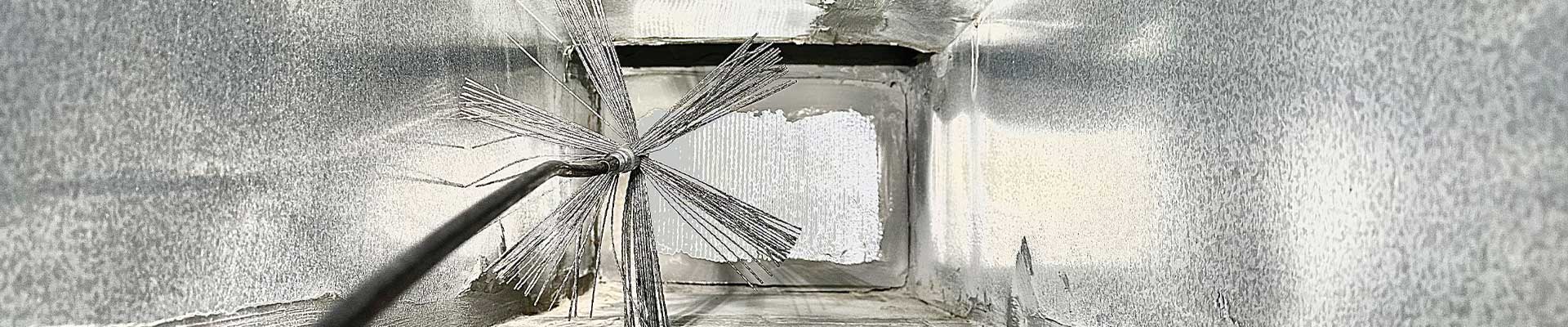
The warehouse manager at a Superior manufacturing facility noticed employees complaining about stuffy air and dust accumulation near the production floor. After investigating, they discovered years of debris buildup in their commercial HVAC system – a common scenario that affects both employee health and operational efficiency.
Commercial duct cleaning involves the thorough removal of dust, debris, allergens, and contaminants from business HVAC systems. This process includes cleaning supply and return air ducts, registers, grilles, diffusers, heat exchangers, cooling coils, and fan motors. Professional commercial duct cleaning goes beyond basic maintenance to address the complex airflow systems that keep businesses running smoothly.
Superior's unique position at 5,400 feet elevation, combined with Colorado's dry climate and seasonal dust storms, creates specific challenges for commercial HVAC systems. Professional intervention becomes necessary when standard maintenance isn't enough to handle these environmental pressures.
Improved indoor air quality for employees and customers
Enhanced HVAC system efficiency and reduced energy costs
Extended equipment lifespan through proper maintenance
Compliance with health and safety regulations
Common issues in Superior, CO
Superior's location in the Front Range creates unique challenges for commercial duct systems. The area experiences significant temperature fluctuations throughout the year, with winter lows dropping below freezing and summer highs reaching the 90s. These temperature swings cause expansion and contraction in ductwork, potentially creating gaps where dust and debris accumulate.
The region's semi-arid climate means low humidity levels year-round, which increases static electricity and dust circulation. During spring months, Superior faces additional challenges from Chinook winds that can carry dust and allergens from the plains into commercial buildings. The proximity to both urban Denver and rural agricultural areas means businesses deal with a mix of urban pollutants and natural particulates.
Many Superior businesses operate in newer commercial developments built since the 1990s, but even these modern buildings face contamination issues due to construction debris that was never properly cleaned from ductwork during initial installation.
Dust accumulation from seasonal wind patterns and low humidity
Construction debris in newer commercial buildings
Pollen and allergen buildup during spring and fall seasons
Our commercial duct cleaning process begins with a comprehensive system assessment using advanced inspection cameras to identify problem areas and contamination levels. This allows us to develop a customized cleaning strategy for your specific facility and HVAC configuration.
Complete system inspection and documentation of current conditions
Protection of work areas and sensitive equipment with plastic sheeting
Strategic access point creation for thorough cleaning reach
High-powered vacuum extraction using truck-mounted equipment
Mechanical agitation and brushing of all ductwork surfaces
Cleaning of registers, grilles, and diffusers
Coil cleaning and fan motor maintenance
Final inspection and air quality verification
We use specialized commercial-grade equipment designed for larger duct systems common in business facilities. Our negative pressure systems prevent contamination from spreading to clean areas during the cleaning process.
HEPA filtration systems to capture microscopic particles
Rotary brush systems for stubborn debris removal
Compressed air tools for precision cleaning
Antimicrobial treatments when necessary
Real-time air quality monitoring throughout the process
Throughout the cleaning process, we maintain detailed documentation and provide before-and-after photos to verify the thoroughness of our work. We coordinate with your facility management to minimize disruption to business operations.
Action Air Duct brings specialized expertise in commercial HVAC systems, with technicians certified by the National Air Duct Cleaners Association (NADCA). Our team understands the unique requirements of business facilities and the importance of maintaining operations during service.
We maintain comprehensive insurance coverage and bonding specifically for commercial work, giving business owners confidence in our services. Our local presence in the Superior area means we understand the specific environmental challenges facing businesses in this region and can respond quickly when issues arise.
NADCA-certified technicians with commercial specialization
Flexible scheduling to accommodate business operations
Comprehensive documentation for facility management records
Emergency response availability for urgent situations
Follow-up inspections to verify long-term results
Local knowledge of Superior's specific environmental challenges
Our commitment extends beyond the cleaning service itself. We provide detailed maintenance recommendations and can establish ongoing service schedules to keep your commercial HVAC system operating at peak efficiency.
Superior's commercial landscape reflects the town's rapid growth since incorporation in 1996. Most commercial buildings in Superior were constructed between 2000 and 2015, representing modern construction standards but also revealing common issues with newer commercial developments. These buildings typically feature larger, more complex HVAC systems with extensive ductwork networks serving multiple zones.
The predominant commercial construction in Superior includes mixed-use developments, office complexes, and retail centers built with steel frame construction and modern insulation materials. Many facilities feature dropped ceilings with accessible ductwork, but some newer energy-efficient buildings have sealed systems that require specialized access techniques for proper cleaning.
Superior's commercial buildings often incorporate sustainable design elements that can affect ductwork maintenance needs. Energy recovery ventilation systems and high-efficiency filtration require more frequent professional attention to maintain optimal performance.
Modern construction materials may trap different types of contaminants
Complex zoning systems require specialized cleaning approaches
Energy-efficient designs may have restricted access points
Newer buildings often have construction debris never properly removed
Advanced HVAC controls require careful handling during service
Superior sits at 5,400 feet elevation in Colorado's Front Range, experiencing a semi-arid climate with low humidity levels averaging 30-40% year-round. This dry environment increases static electricity buildup in ductwork, attracting and holding dust particles more effectively than in humid climates. The area receives approximately 17 inches of precipitation annually, concentrated primarily in spring and early summer months.
Air quality in Superior is generally good but faces seasonal challenges from wildfire smoke, dust storms, and temperature inversions that can trap pollutants in the Front Range corridor. The Colorado Department of Public Health monitors particulate matter levels, which can spike during certain weather patterns, affecting indoor air quality in commercial buildings.
Superior's location between urban Denver and rural Boulder County exposes commercial buildings to mixed contamination sources. Agricultural activities to the east contribute organic particles, while urban development brings vehicle emissions and construction dust.
Low humidity increases static particle attraction in ductwork
High altitude affects HVAC system performance and maintenance needs
Chinook wind events can rapidly introduce outdoor contaminants
Local Business Environment & Commercial HVAC Maintenance
Superior's business landscape includes over 400 commercial establishments, ranging from small professional offices to large manufacturing facilities and retail centers. The town's strategic location along the US-36 corridor has attracted technology companies, healthcare facilities, and service businesses that rely heavily on maintaining optimal indoor air quality for employee productivity and customer comfort.
Local businesses face unique operational challenges due to Superior's elevation and climate conditions. HVAC systems work harder at higher altitudes, and the dry climate increases dust circulation throughout commercial spaces. Many businesses report higher-than-expected filter replacement needs and energy costs related to air quality maintenance.
The Superior business community includes several large employers with facilities exceeding 50,000 square feet, requiring comprehensive commercial duct cleaning services. These facilities often operate specialized equipment sensitive to air quality, making regular professional duct maintenance a business necessity rather than just a maintenance preference.
Technology companies requiring clean room standards for sensitive equipment
Healthcare facilities with strict air quality regulations
Manufacturing operations where dust control affects product quality
Retail establishments focused on customer comfort and experience
Office complexes with high employee density requiring optimal air circulation