
How Do You Vent a Range Hood With No Existing Ductwork?
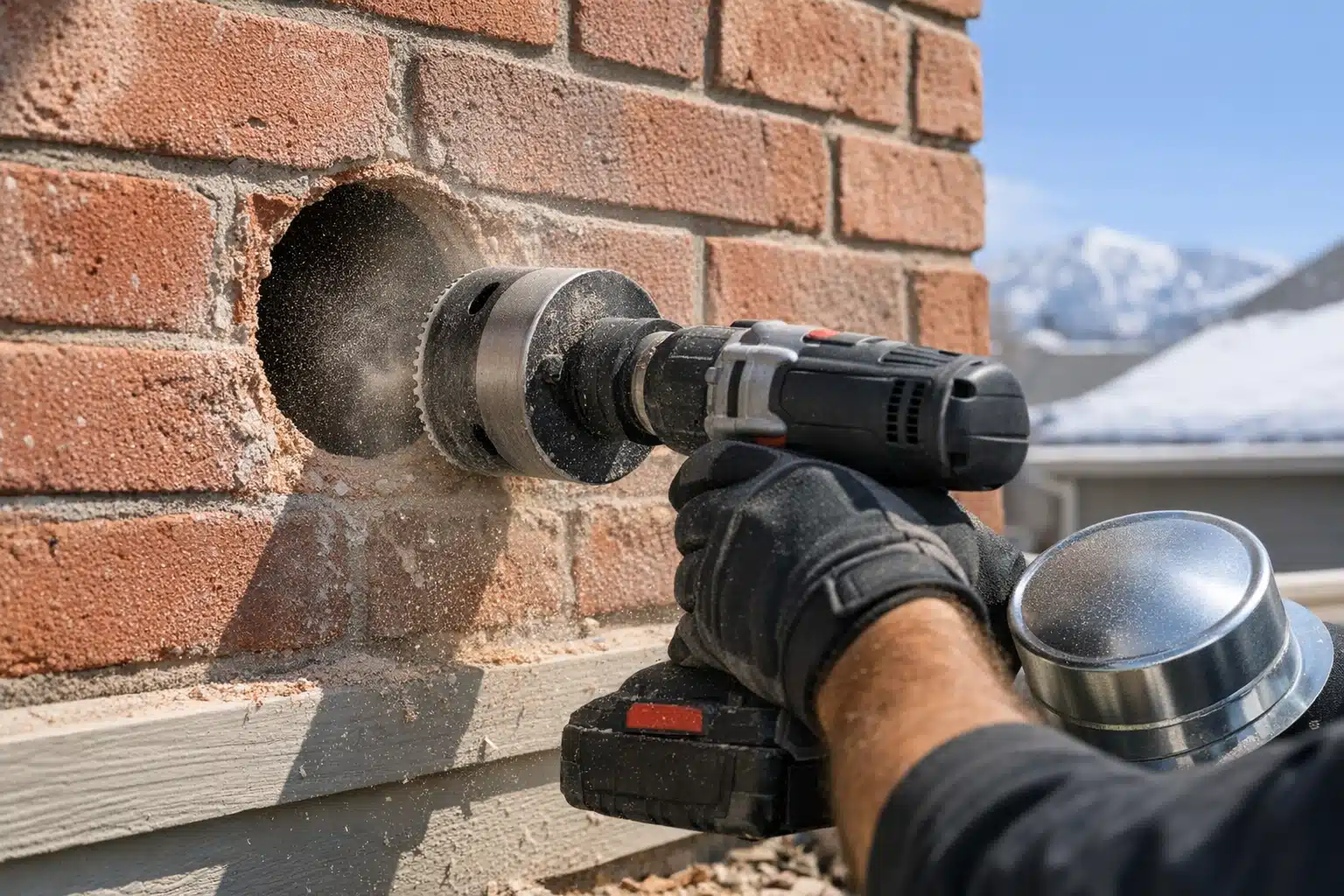
Venting a range hood without existing ductwork is possible by creating a new path to the outdoors, typically through an exterior wall, roof, or cabinet soffit. This installation improves indoor air quality by effectively removing smoke, grease, and moisture from the kitchen.
- Through-wall venting is ideal for ranges near exterior walls, providing a short and efficient duct run. Roof venting is suitable for kitchen islands and interior walls, requiring careful flashing to prevent leaks. Cabinet venting hides ducts in upper cabinets, preserving aesthetics while still allowing for effective ventilation.
- This work is called range hood ductwork installation, and it moves cooking smoke, grease, and moisture out of your kitchen instead of recirculating it.
- Many Denver homeowners assume their only choice is a ductless recirculating hood.
How do you vent a range hood without existing ductwork?
To vent a range hood without existing ductwork, you can create a new vent path to the outdoors, typically through an exterior wall, up through the roof, or concealed within a cabinet soffit. This installation effectively removes cooking smoke, grease, and moisture from your kitchen.
Venting a Range Hood Without Existing Ductwork: The Direct Answer
A range hood with no existing ductwork can be vented by creating a new path to the outdoors, usually through an exterior wall, up through the roof, or hidden inside a cabinet soffit. This work is called range hood ductwork installation, and it moves cooking smoke, grease, and moisture out of your kitchen instead of recirculating it.
Many Denver homeowners assume their only choice is a ductless recirculating hood. That is rarely true. Even older Front Range homes without a prior vent line can usually support a proper exterior duct run.
Below are the real venting routes we install, how each one fits different Denver kitchens, and when to call in a crew instead of attempting it yourself.
Why You Should Vent a Range Hood Outside Instead of Recirculating
A ducted hood pushes air outdoors. A ductless hood pulls air across a charcoal filter and blows it back into the room. The difference matters more in Colorado than most people expect.
Denver kitchens battle dry winter air, tightly sealed homes, and long heating seasons. When you cook without real ventilation, moisture and grease stay trapped inside.
Here is what you gain when you vent a range hood outside:
- Real grease removal instead of a filter that saturates and loses effectiveness
- Lower indoor humidity, which reduces condensation on cold winter windows
- Fewer lingering odors in open-concept homes common across Denver suburbs
- Better indoor air quality, a concern during wildfire smoke season when windows stay shut
Recirculating hoods have a place in condos and historic buildings where no exterior path exists. For everyone else, ducted venting is the stronger long-term choice.
Three Real Venting Routes for Homes With No Existing Hood Duct
When a kitchen has no prior vent line, the duct has to be created from scratch. The route depends on where your range sits, your ceiling type, and your exterior wall access.
1. Through-Wall Venting
Through-wall venting runs the duct horizontally out the nearest exterior wall. This is the route we use most on Denver ranch homes and main-floor kitchens.
It works best when the range sits on or near an outside wall. The duct travels a short distance, then exits with a wall cap and backdraft damper.
A short run matters at altitude. Shorter, straighter duct means stronger airflow, and Denver’s elevation already makes fans work harder to move thin air.
- Best for: Ranges against or near an exterior wall
- Typical duct run: A few feet, with one wall penetration
- Watch for: Electrical, framing, and siding behind the wall
2. Roof Venting
Roof venting carries the duct up and out through the roofline. We rely on this route for kitchen islands and interior walls with no nearby exterior access.
The duct runs vertically into the attic, across to a chosen spot, then out a roof cap. On Front Range homes, that roof cap needs proper flashing to handle snowmelt and ice.
A poorly sealed roof penetration becomes a leak during Denver’s spring snow cycles. Flashing and a weather-rated cap are non-negotiable on this route.
- Best for: Island hoods and interior kitchen walls
- Key detail: Insulated duct in the attic prevents winter condensation
- Watch for: Roof slope, rafters, and existing attic obstructions
3. Cabinet and Soffit Venting
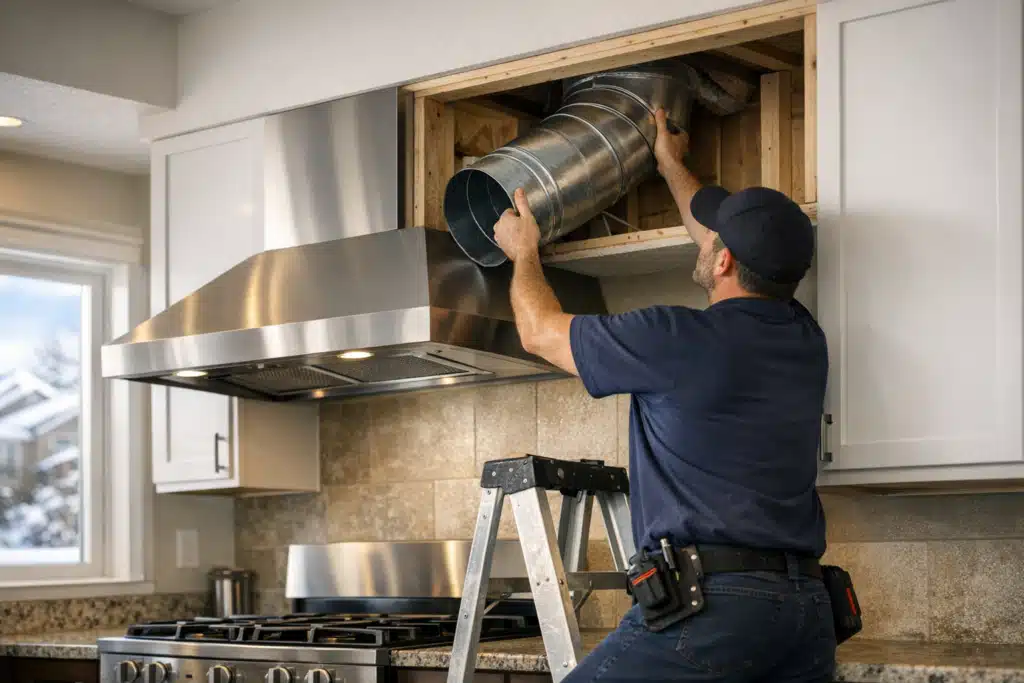
Cabinet venting hides the duct inside an upper cabinet or a built soffit before it exits the home. This route keeps the duct out of sight in kitchens where appearance drives the layout.
The duct rises behind or inside the cabinet above the range, then turns toward an exterior wall or roof. It combines well with either of the first two routes.
We used this approach on a Wash Park bungalow where the homeowner refused to lose cabinet height. The duct tucked into a shallow soffit and exited the gable wall.
- Best for: Kitchens where visible ducting is unacceptable
- Trade-off: Some interior cabinet storage space
- Watch for: Tight bends that choke airflow if planned poorly
What Range Hood Ductwork Installation Involves
Proper range hood ductwork installation is more than cutting a hole and attaching a pipe. The details determine whether the hood actually clears smoke or just makes noise.
A sound install includes the following steps:
- Size the duct correctly. Most hoods need 6-inch or larger rigid metal duct to match the fan’s rating.
- Plan the shortest route. Fewer bends mean stronger airflow at Denver’s altitude.
- Use rigid metal duct. Smooth metal moves grease-laden air better than ridged flex pipe.
- Add a backdraft damper. It stops cold Colorado air from pouring back in when the hood is off.
- Seal and insulate. Attic and roof runs need insulation to prevent condensation in winter.
- Install the exterior cap. A proper wall or roof cap keeps out pests, rain, and snow.
Skipping the damper is a common mistake. Without it, an uncovered exterior vent lets freezing air stream into the kitchen every January.
Why Duct Material and Routing Matter in Denver
Flexible foil duct is cheap and easy, and it is the wrong pick for a range hood. Its ridged interior traps grease and slows airflow, which defeats the purpose of venting.
Rigid metal duct is the standard for grease-bearing exhaust. It cleans better, resists heat, and keeps airflow strong across longer runs.
Routing matters just as much. Every 90-degree elbow cuts airflow, and at Denver’s elevation the air is already thinner and harder to push.
A hood rated for strong airflow on a flat sea-level test will underperform here if the duct fights it. Short runs and gentle turns protect that performance.

Common Mistakes We See in Denver Kitchens
When we inspect existing setups, the same problems appear repeatedly. Each one shortens equipment life or wastes the money spent on the hood.
- Venting into the attic. This dumps grease and moisture into insulation, inviting mold and rot.
- Undersized duct. A 4-inch pipe on a high-powered hood strangles airflow.
- Too many elbows. Three or four tight turns can halve real exhaust capacity.
- No backdraft damper. Cold Front Range air backflows straight into the kitchen.
- Flex duct for grease. Grease collects in the ridges and becomes a fire hazard.
Venting into the attic is the one we warn about most. Moisture released there freezes against cold sheathing, then drips as temperatures swing.
Should You DIY or Hire a Crew?
A few parts of this work are DIY-safe for a confident homeowner. Mounting the hood and connecting a short, straight duct run can be a weekend task.
Other parts carry real risk and belong to a trained crew:
- Cutting roof penetrations where flashing errors cause leaks
- Opening exterior walls hiding wiring or structural framing
- Routing long duct runs that need correct sizing and sealing
- Insulating attic ductwork to prevent Denver winter condensation
If the route touches your roof, your structure, or long attic runs, bring in help. A cutting mistake on a roof costs far more than the install itself.
Bundle the Install With Duct Cleaning
A new range hood vent pairs well with a kitchen duct and HVAC cleaning visit. Grease migrates, and nearby returns and vents collect it over years of cooking.
Scheduling both at once means one crew, one visit, and a cleaner kitchen airflow system end to end. Action Air Duct handles both the range hood ductwork installation and the cleaning in a single appointment.
For Denver homes closed up during winter and smoke season, that combination keeps indoor air measurably cleaner.
Key Takeaways
A kitchen with no existing hood duct can almost always be vented outside using a through-wall, roof, or cabinet route chosen to fit your layout. Rigid metal duct, a short run, a backdraft damper, and a sealed exterior cap make the difference between a hood that works and one that only hums.
For Denver homeowners, proper venting protects indoor air quality, controls winter moisture, and extends equipment life.
Ready to add a vented range hood or fix an underperforming one? Call or text Action Air Duct at 720‑257‑3319, email tamir@actionairduct.net, or visit https://actionairduct.net to schedule an inspection and install consultation.