
Why Does My Furnace Smell Dusty When It First Turns On?
Many Denver homeowners notice a dusty smell when their furnace first turns on after summer. This odor is typically harmless, resulting from dust burning off the heat exchanger, but persistent smells may indicate duct buildup that requires attention.
- The initial dusty smell usually clears within a few hours or after a couple of heating cycles. Opening windows and running the furnace fan can help dissipate the odor faster.
- If the smell returns with every heating cycle or has a musty quality, it may signal a buildup in the ductwork that needs cleaning.
- Regular duct cleaning every three to five years is recommended, especially for homes with pets or recent renovations, to maintain air quality and reduce allergens.
Why does my furnace smell dusty when it first turns on?
A dusty smell from your furnace when it first turns on is typically caused by dust accumulating on the heating elements during the off-season. When the furnace is activated, this dust burns off, creating a temporary odor. This is common and usually dissipates after a short period.
The first cold snap along the Front Range hits, you flip the thermostat to heat, and within minutes a dusty, slightly burnt odor fills the house. That furnace dusty smell on first use catches almost every Denver homeowner off guard each fall. It is one of the most common questions our techs field between late August and October.
The good news: in most cases, this smell is harmless and fades fast. The complication: sometimes it points to buildup inside your ducts that keeps recirculating all winter. Knowing the difference saves you from either overreacting or ignoring a real problem.
Here is what causes the odor, how to tell the harmless version from the one that needs attention, and when a cleaning genuinely removes the smell.
Why Your Furnace Has a Dusty Smell on First Use
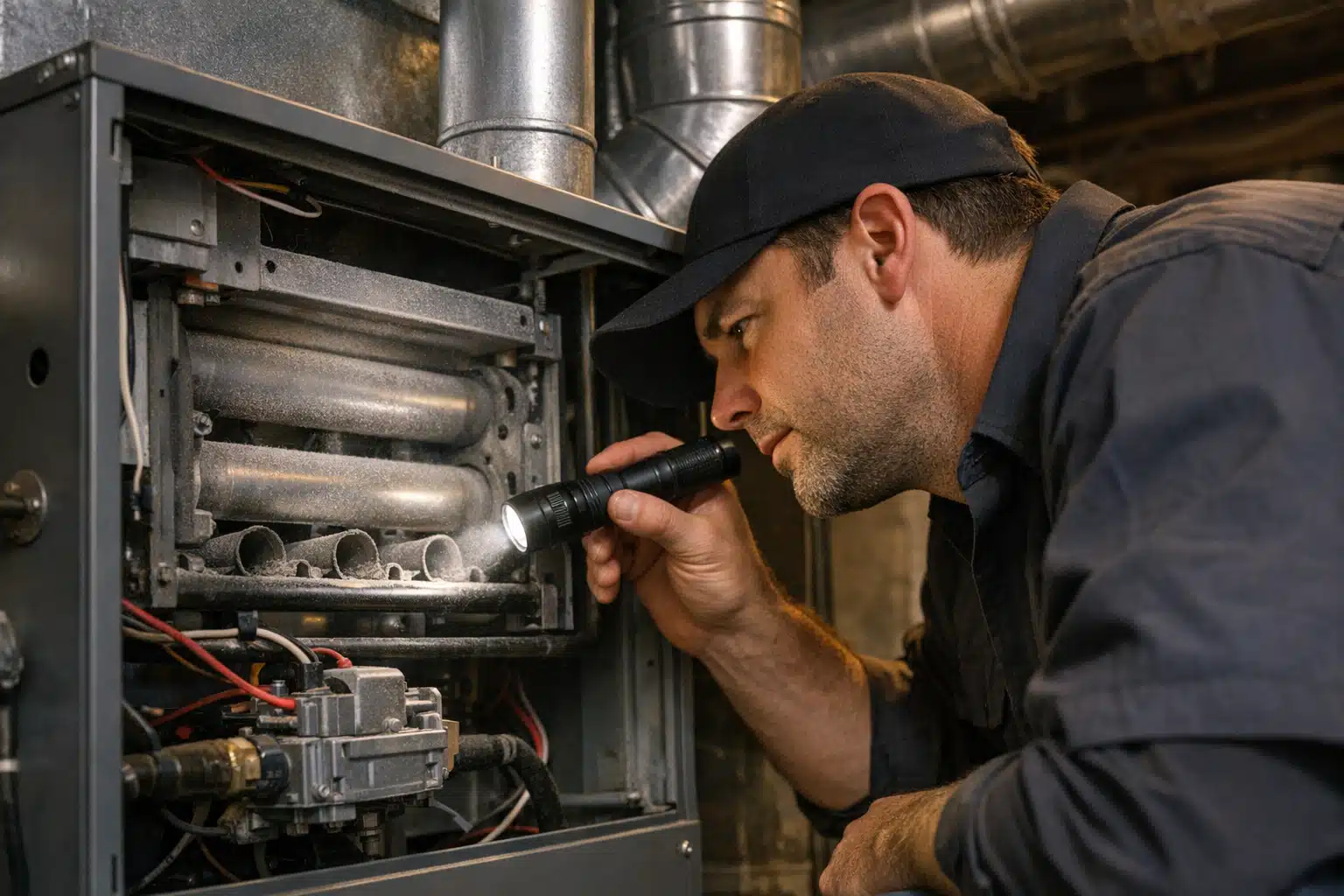
A furnace dusty smell on first use happens because dust settles on the heat exchanger and burner components over the warm months. When the system fires up for the first time, that dust heats and burns off, releasing a faint scorched odor.
Your furnace sits idle from roughly April to September in most Denver homes. During that stretch, fine household dust, pet dander, and airborne particles collect on internal surfaces. The heat exchanger can reach several hundred degrees, which chars that layer of dust almost instantly.
This is the same reason a radiator or space heater smells when you switch it on after summer storage. The smell is combustion of accumulated dust, not a malfunction.
How Long the Harmless Smell Should Last
A normal first-burn smell clears within a few hours to a couple of heating cycles. If the odor is gone by the end of the day, that is the textbook harmless version.
You can speed it along with a few steps:
- Open a window or two for 15 to 30 minutes to move air.
- Run the furnace fan to push out the burned-off particles.
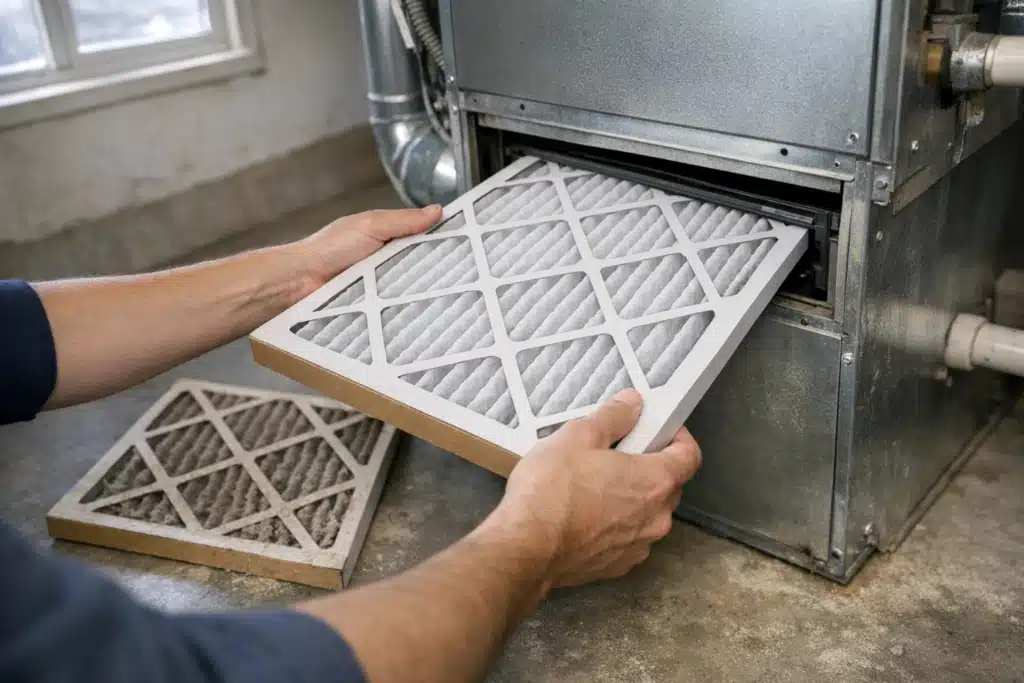
- Replace your air filter before the first run of the season.
- Give it one or two full heating cycles before judging the smell.
A fresh filter matters more than people expect. A clogged filter from last winter traps odor-carrying particles and slows airflow, which makes any smell linger.
When the Furnace Smell When Heat Starts Means Something More
A furnace smell when heat starts becomes a concern when it refuses to fade, changes character, or returns every cycle well into the season. At that point, the dust is not sitting on the heat exchanger. It is living in your ductwork.
This is the distinction our techs care about most. First-burn dust burns off once and disappears. Duct-borne buildup gets picked up by airflow and redistributed every single time the blower runs.
Signs the Smell Is Coming From Your Ducts
Watch for patterns that separate harmless first-burn from a recirculation problem:
- The dusty smell returns with every heating cycle, not just the first day.
- You notice it more at specific vents in certain rooms.
- Dust visibly settles on furniture faster than usual after the heat runs.
- Family members report more sneezing, congestion, or irritated eyes once heating season begins.
- The odor carries a musty or stale edge rather than a clean scorched smell.
A musty note points to moisture or microbial growth inside the duct system. That is a different issue from dry dust and warrants a closer look.
Why Denver Homes Collect Duct Dust Faster
Denver’s dry, high-altitude climate keeps fine dust airborne longer than in humid regions. Low indoor humidity through winter means particles stay light and travel easily into your return ducts.
Add seasonal realities along the Front Range:
- Wildfire smoke in late summer pushes fine particulate into homes and HVAC systems.
- Spring winds carry grit and pollen that settle in ductwork.
- Tight, newer homes recirculate the same indoor air with fewer natural air exchanges.
- Long heating seasons mean the blower runs for months, moving whatever is in the ducts.
These conditions mean a Denver duct system can hold more buildup than the owner realizes, especially after a smoky summer.
The Tech’s Take: When Cleaning Actually Removes the Smell
Duct cleaning removes a furnace odor when the smell is caused by material inside the ducts, not by one-time dust on the heat exchanger. This is the honest answer our techs give on site.
If your odor vanishes after the first day, a duct cleaning will not change your first-burn experience next fall. Fresh dust will settle again over the coming summer. That is physics, not a dirty system.
But if the dusty or musty smell persists cycle after cycle, cleaning the ducts targets the actual source. In those homes, the difference after a thorough cleaning is clear within the first few heating runs.
What a Duct Cleaning Addresses
A proper cleaning pulls out the material that recirculates and carries odor:
- Accumulated dust and debris coating the duct walls.
- Pet hair and dander trapped in bends and junctions.
- Construction or renovation dust left in the system.
- Settled wildfire soot and fine particulate from summer.
- Light microbial growth in spots that held moisture.
Once that layer is gone, the blower moves cleaner air, and the lingering smell has nothing left to carry.
What Cleaning Will Not Fix
Duct cleaning is not the right call for every furnace odor. Be realistic about what it does and does not solve:
- A one-day first-burn smell needs no cleaning at all.
- An electrical or overheating smell points to a mechanical fault, not dirty ducts.
- A rotten-egg or sulfur smell may signal a gas issue. Leave the home and call your utility and a technician immediately.
- A burning plastic smell suggests a wiring or component problem requiring a furnace inspection.
Matching the right fix to the right smell is where homeowners save money and avoid unneeded work.
A Simple Fall Checklist Before You Run the Heat
Running a few checks before the first cold night reduces both the smell and the odds of a mid-winter breakdown. Here is the sequence our techs recommend for Denver homes:
- Replace the air filter with the correct size and MERV rating.
- Check vents and returns for blockage from furniture or rugs.
- Vacuum visible dust from supply registers.
- Run the heat for two cycles with a window cracked.
- Note whether the smell fades or returns each cycle.
- Schedule a furnace tune-up if you skipped last year.
A fall furnace tune-up matters beyond odor. A technician inspects the heat exchanger, burners, and safety controls before you depend on the system for months.
How Often to Clean Ducts in a Denver Home
Most homes benefit from duct cleaning every three to five years, depending on conditions. Shorten that interval if you have pets, allergies, recent remodeling, or a smoky summer behind you.
Property managers and business owners should track this across heating seasons. Commercial systems move more air and collect buildup faster, which affects both air quality and energy use.

Protecting Indoor Air Quality During Heating Season
Clean ducts and a fresh filter do more than remove a smell. They reduce the dust and allergens your family breathes once windows stay shut for winter.
Denver’s long heating season keeps homes sealed for months. Whatever sits in your ducts gets recirculated again and again during that time. A clean system means cleaner air on the days you cannot open a window.
For allergy-sensitive households, this difference shows up in fewer symptoms once the heat runs daily. That is the practical payoff of addressing duct buildup rather than masking an odor.
Key Takeaways
A furnace dusty smell on first use is usually harmless dust burning off the heat exchanger, and it clears within a day. When the smell returns every cycle or turns musty, the source is buildup in your ducts that recirculates all winter. A duct cleaning removes the odor when it comes from the ducts, but it will not stop the normal first-burn smell each fall.
If your furnace smell lingers past the first day or returns with every cycle, Action Air Duct can inspect your system and clean the source. Call or text 720‑257‑3319, email tamir@actionairduct.net, or visit https://actionairduct.net to schedule a duct cleaning or furnace inspection before heating season peaks.