
How Do You Know If Mold Is Growing in Your Ductwork?

Mold in ductwork can be subtle, often indicated by a musty smell, visible growth near vents, and health symptoms that worsen indoors. Homeowners in Denver should be aware of these signs due to the area's fluctuating humidity levels.
- A musty odor often intensifies when the HVAC system runs, signaling potential mold presence.
- Visible signs include dark specks or fuzzy patches around vents, which should be inspected carefully.
- Health symptoms like congestion or headaches that improve when leaving home may indicate mold in the ducts.
How do you know if mold is growing in your ductwork?
You can identify mold in your ductwork by looking for signs such as a musty odor, visible mold growth around vents, or increased allergy symptoms among household members. Additionally, if you notice unusual dust accumulation or a decrease in airflow, these may indicate hidden mold issues within your ducts.
Mold in your air ducts rarely announces itself with a dramatic reveal. It starts quietly, hiding inside metal and insulation where you cannot see it. The question most Denver homeowners ask is the right one: how to tell if mold is in ducts before you pull apart your system.
The answer comes down to three early tells HVAC techs rely on every day. A specific smell, visible clues at the vents, and health symptoms that follow your airflow patterns.
Below, you learn what each tell means, what confirms mold, and why Denver’s dry-then-damp swings make your ductwork a target.
How to Tell If Mold Is in Ducts: The Three First Indicators
Mold in ductwork shows up first as a musty smell, visible growth near vents, and allergy-like symptoms that worsen indoors. Techs call these the smell, sight, and symptom tells. One alone may mean nothing. Two or three together point toward mold.
Here is the fast version before the detail:
- Smell: A damp, earthy, or stale odor that rises when the system runs.
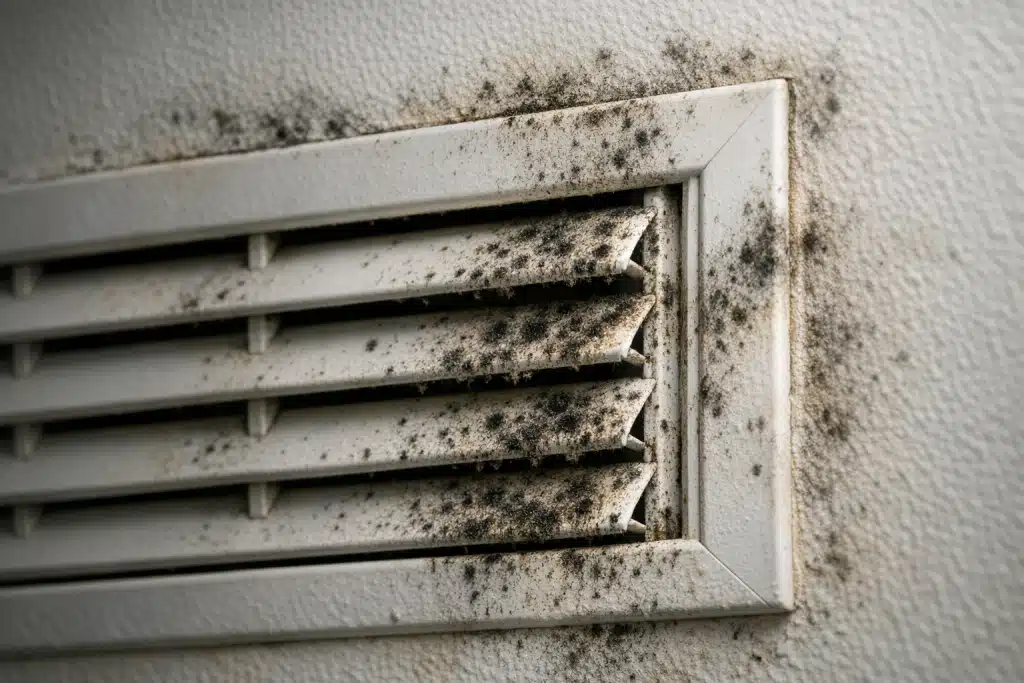
- Sight: Dark specks, fuzzy patches, or staining around registers and grilles.
- Symptoms: Congestion, headaches, or itchy eyes that ease when you leave the house.
Each one tells a different part of the story. Read them together, not in isolation.
The Smell Test: What Duct Mold Actually Smells Like
The clearest early sign of duct mold is odor. Mold gives off a musty, earthy smell that many people compare to a damp basement or wet cardboard.
When the Smell Gets Stronger
Pay attention to timing. Mold odor intensifies the moment your furnace or AC kicks on.
Air pushes across colonized surfaces and carries the smell into your rooms. If a stale odor hits you within seconds of the system starting, that is a strong tell.
Where to Sniff First
Walk to your supply vents and smell the air coming out. Then check the return grille, where dust and moisture collect.
A moldy smell that is worse at one vent than another often points to a localized problem in that run of ductwork.
One scenario Denver techs see: a homeowner notices the musty smell only in a finished basement bedroom. The cold return in that room pulled humid air across a damp duct section all summer. The smell was the first and only clue for months.
The Visual Tells: What Mold Looks Like at Your Vents
You cannot see most of your ductwork. You can inspect the parts near your registers, and that is where visible mold shows up.
What to Look For
- Dark specks or dots clustered around the vent slats.
- Fuzzy or slimy patches in black, green, gray, or white.
- Staining or discoloration on the wall or ceiling near a register.
- Dust buildup that looks damp rather than dry and powdery.
How to Inspect Safely
Turn off the system first. Remove a return grille with a screwdriver and shine a flashlight inside.
Look at the first few inches of duct and the back of the grille. Avoid touching or scraping anything you suspect is mold, since that releases spores.
A common mix-up: black debris at a vent is sometimes dust bonded with oil residue, not mold. Techs confirm the difference with testing, not a glance. If you see dark growth that returns after cleaning, treat it as mold until proven otherwise.
The Health Symptom Tells: Your Body as a Detector
Health symptoms that track with your time at home are a reliable sign of duct mold. Mold spores circulate when the system runs, and sensitive people react.
Symptoms Worth Noting
- Nasal congestion or a runny nose indoors.
- Sneezing, coughing, or a scratchy throat.
- Itchy or watery eyes.
- Headaches or fatigue that lift when you go outside.
- Asthma flare-ups that worsen during heating or cooling season.
The Pattern That Points to Ducts
Ask yourself one question: do symptoms fade when you leave and return when you come back? That pattern separates duct mold from seasonal pollen or a passing cold.
Families with children, older adults, or anyone with allergies tend to feel it first. Their reactions become an early-warning system before the smell or sight is obvious.
Why Denver’s Humidity Swings Raise Your Mold Risk
Denver’s dry climate fools many homeowners into thinking mold is not a concern. The risk comes from swings, not steady humidity.
Summer Monsoon Moisture
Late-summer afternoon storms push humidity up fast along the Front Range. Your AC pulls that moist air across cold evaporator coils and ducts.
Condensation forms. Combined with trapped dust, that moisture feeds mold in exactly the spots you cannot see.
Winter Heating and Trapped Air
Cold Colorado winters mean sealed homes and constant furnace use. Humidifiers run to fight dry indoor air, and that added moisture can settle inside ductwork.
Warm air meeting cold duct surfaces in an unheated crawlspace creates condensation. That is a quiet mold starter homeowners miss until spring.
The Spring and Fall Transition
Front Range temperature swings are the real culprit. A 40-degree change in a single day leaves condensation on duct walls as systems cycle between heating and cooling.
The takeaway: Denver’s dry reputation does not protect your ducts. Moisture events do the damage, and they happen every season.

What Confirms Mold in Your Ductwork
Early tells point you toward mold. Confirmation requires inspection and, when needed, testing.
Professional Inspection Steps
- Visual access: A tech opens access panels and runs a camera into the duct runs.
- Coil and drain pan check: The evaporator coil and condensate pan are prime mold sites and get a direct look.
- Surface sampling: Swab or tape samples go to a lab when the growth type matters.
- Air sampling: Spore counts inside versus outside confirm whether ducts are the source.
When to Call a Pro
Call for an inspection when you notice any of the following:
- A musty smell that returns after you clean the vents.
- Visible growth that regrows within weeks.
- Household symptoms tied to time spent at home.
- Recent water damage, a leaky AC, or a flooded crawlspace.
Testing matters because not all dark buildup is mold, and not all mold is the same. A lab result tells you what you are dealing with before anyone cleans.
What Happens If You Ignore the Signs
Delayed action lets mold spread from one duct section to the whole system. Spores recirculate with every cycle and settle on coils, filters, and insulation.
The cost grows with the spread. A localized cleaning is far cheaper than replacing mold-soaked duct insulation across a home.
Indoor air quality drops the longer it runs. For a Denver business, that means staff complaints and customers noticing a musty lobby. For a family, it means ongoing symptoms that never fully clear.
How to Lower Your Duct Mold Risk
You can cut mold risk with steady maintenance habits. None of these require special tools.
- Change air filters every 1 to 3 months, more often during wildfire smoke or heavy dust.
- Keep indoor humidity between 30 and 50 percent with a hygrometer to check.
- Clear the AC condensate line each cooling season to stop standing water.
- Schedule a furnace tune-up before winter and an AC check before summer.
- Book duct cleaning every 3 to 5 years, sooner after water damage or renovation.
Address any leak fast. A dripping AC or a damp crawlspace will undo every other step you take.
Conclusion
You can tell if mold is in your ducts by reading three tells together: a musty smell that rises with airflow, visible growth at your vents, and symptoms that fade when you leave home. Denver’s seasonal moisture swings make those signs worth watching year-round, even in a dry climate. Confirmation comes from inspection and testing, not guesswork.
If you have noticed any of the signs of duct mold, Action Air Duct can inspect, test, and clean your system before it spreads. Call or text 720‑257‑3319, email tamir@actionairduct.net, or visit https://actionairduct.net to schedule your inspection.