
Why Is One Room in My House Always Dustier Than the Rest?
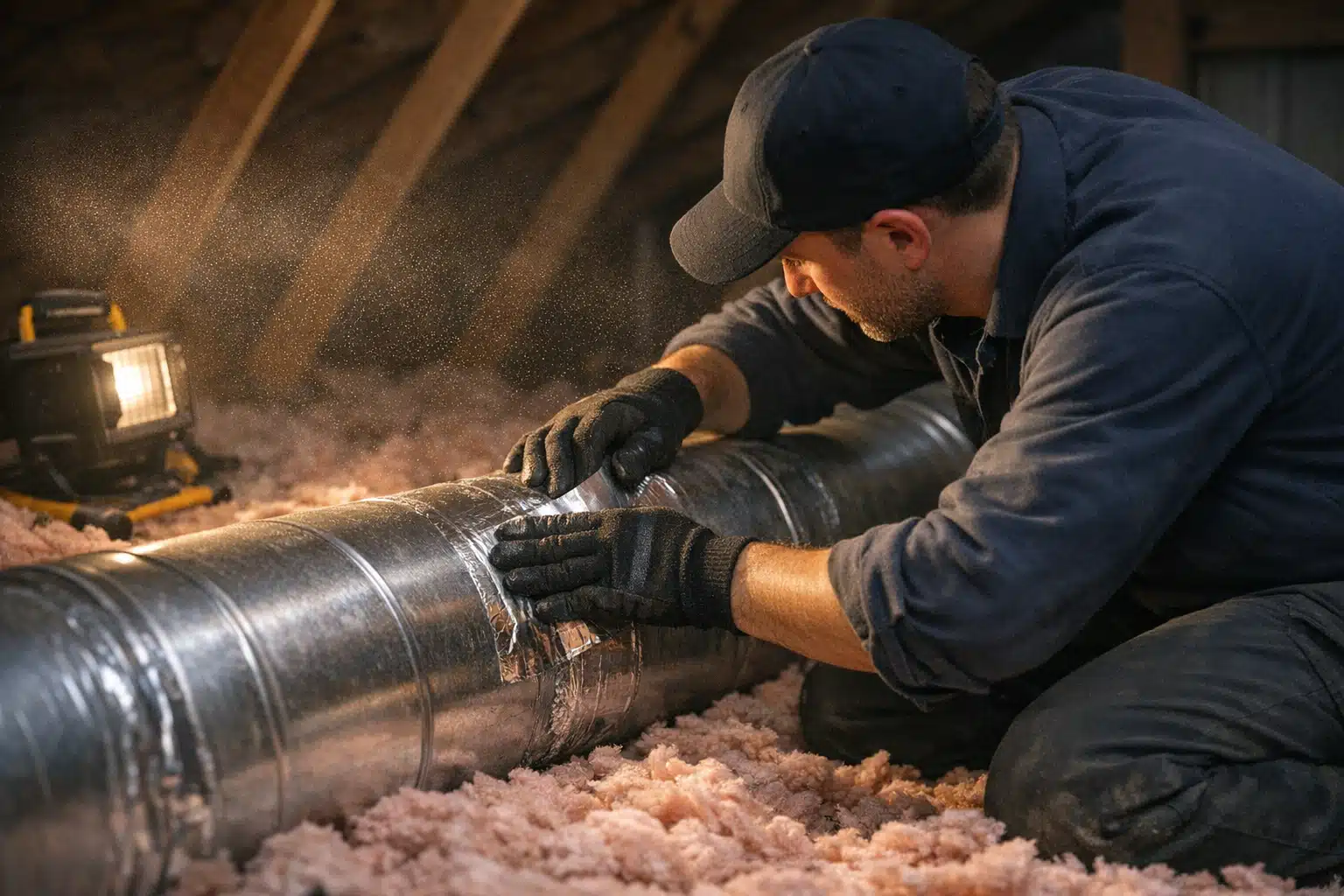
A single dusty room in a home often indicates issues with ductwork, such as leaks or unbalanced airflow. In Denver, factors like dry air and construction dust exacerbate these problems, making it essential to inspect and repair ducts to maintain clean air.
- Dust accumulation in one room usually signals a duct issue, not just poor housekeeping. Common causes include leaky returns and disconnected supply runs.
- Denver's climate contributes to dust problems, with dry air and seasonal temperature changes affecting duct performance.
- Regular maintenance, including filter changes and duct inspections, is key to preventing dust buildup and ensuring efficient airflow.
Why is one room in my house always dustier than the rest?
One room in your house may be dustier than others due to issues with your ductwork. Common causes include a leaky return, a disconnected run, or unbalanced supply air, which can lead to excessive dust accumulation in that specific area.
If one bedroom or office in your home collects a gray film days after you dust, the problem rarely lives in that room. When one room is dustier than others, the cause usually traces back to your ductwork — a leaky return, a disconnected run, or supply air that never balances right.
Denver homes face extra pressure here. Dry air, Front Range wind, construction dust, and summer wildfire smoke all push fine particles into a system that may already have a hidden flaw.
Below, you learn why a single room turns into a dust magnet, how to check it yourself, and when a duct inspection makes sense.
The Short Answer: Why One Room Is Dustier Than Others
A single dusty room is almost always a sign of unbalanced airflow or a duct leak near that room. Dust settles where air moves slowly, leaks pull in dirty air, or a supply register delivers poorly filtered air.
Three mechanical faults cause most cases:
- A leaky return branch pulling unfiltered air from attics, crawlspaces, or wall cavities
- A disconnected supply run dumping air — and dust — behind drywall before it reaches the room
- Unbalanced supply that starves one room of airflow, letting dust fall and sit
Each of these leaves a fingerprint. A technician reads that fingerprint by checking where the dust lands and how air moves.
The Real Uneven Dust HVAC Cause: It Starts in the Ductwork
The most common uneven dust HVAC cause is a return-side leak drawing air from spaces your filter never touches. Your furnace filter only cleans air that passes it. Air sneaking in downstream of the filter skips that step entirely.

Leaky Return Branch
Return ducts carry air back to your furnace under negative pressure. A gap in that duct behaves like a vacuum, sucking in whatever surrounds it.
In many Denver homes, return runs travel through unconditioned attics or basements. A loose joint there pulls in insulation fibers, attic dust, and crawlspace grit.
What you notice: The dustiest room sits closest to that leaky return path, and the dust feels fine and powdery rather than ordinary lint.
Disconnected or Crushed Supply Run
A supply duct that separated at a joint dumps conditioned air into a wall, floor cavity, or attic. The room it was built to serve gets weak airflow and stale, settling dust.
Flex duct is the usual culprit. It crushes behind storage boxes, sags over decades, or pops loose at a collar after rough handling during a prior repair.
What you notice: One room feels stuffy and warm in summer or cold in winter, and dust rebuilds fast no matter how often you clean.
Unbalanced Supply Airflow
Bad duct design or a stuck damper sends too little air to one room. Slow-moving air lets dust drop out and settle instead of carrying it toward the return.
Rooms at the end of a long duct branch suffer most. Bonus rooms over garages and finished basements are frequent offenders in Denver two-story builds.
What you notice: The register barely pushes air when you hold your hand to it, and the room runs a few degrees off from the rest of the house.
Why Denver Homes See This More
Denver’s climate and building patterns make localized dust worse. Several conditions stack up along the Front Range.
- Dry, low-humidity air keeps fine dust airborne longer, so it travels and settles unevenly
- Seasonal temperature swings expand and contract duct metal, loosening joints over time
- Wildfire smoke loads the air with ultra-fine particles that slip past tired filters
- High-altitude air is thinner, so systems run longer to move the same heat — more runtime, more dust cycling
- Older Denver housing stock frequently has retrofitted or patched ductwork with weak seals
A duct flaw that might go unnoticed in a humid climate shows up clearly here. Dry Colorado air carries and deposits dust fast.
DIY Checks Before You Call Anyone
You can rule out a few things in under 30 minutes. Start with the simple items most homeowners overlook.
- Check the air filter. A clogged or wrong-sized filter lets dust bypass the frame. Replace it and note the MERV rating — aim for MERV 8 to 13 for most Denver homes.
- Feel the supply register. Hold your hand over it with the system running. Weak airflow compared to other rooms points to a duct problem.
- Inspect the register vanes. Confirm the louvers are open and not painted shut or blocked by furniture.
- Look for a closed damper. Some supply runs have a lever near the main trunk. A half-closed damper starves the room.
- Scan for dust streaks near the register. Black or gray lines around vent edges signal air leaking past gaps and filtering through drywall.
Warning sign: If the dust returns within days of cleaning and one register runs noticeably weak, stop troubleshooting and get the duct inspected.
What a Technician Actually Finds
A duct inspection connects the dusty room to a physical fault. Techs do not guess — they trace airflow and pressure.
During a visit, expect the technician to:
- Measure airflow at each register to find the starved room
- Check return and supply pressure to locate leaks pulling in unfiltered air
- Camera-scope the ducts to spot disconnected joints and crushed flex runs
- Inspect joints in attics and crawlspaces where Denver returns commonly travel
- Confirm damper positions and balance across the system
Here is a realistic case. A homeowner in a Denver split-level dusted a back bedroom every two days. The supply register felt dead.
Scoping the run showed a flex duct that had pulled off its collar in the attic. Conditioned air dumped into the attic, and attic dust drifted back down into the room. Reconnecting and sealing the run fixed the dust and the cold-room complaint at once.

Cleaning the Ducts Versus Fixing the Fault
Duct cleaning and duct repair solve different problems. Knowing the difference saves you money.
- Duct cleaning removes built-up debris that recirculates and reseeds dust. It matters most after renovations, wildfire smoke events, or years without service.
- Duct repair and sealing fixes the leak, reconnection, or balance issue causing the uneven dust in the first place.
Cleaning a system with a disconnected run only buys you a short break. The dust comes back until the fault is sealed.
The strongest result comes from doing both: seal the fault, then clean the accumulated debris. One room dustier than others usually needs this pairing to stay clean long term.
How to Keep It From Coming Back
Steady maintenance keeps airflow balanced and dust from returning. Build a simple schedule around Denver’s seasons.
- Replace filters every 60 to 90 days — shorten to 30 days during wildfire smoke or heavy heating runtime
- Book a furnace tune-up in early fall before Colorado’s heating demand spikes
- Book an AC check in spring so summer cooling runs clean and balanced
- Schedule duct cleaning every 3 to 5 years, or sooner after remodels and smoke events
- Have duct balance checked if any room runs consistently warmer, colder, or dustier
Neglecting these steps shortens equipment life and raises utility bills. A starved or leaking system runs longer to hit the thermostat setting, burning more energy every cycle.
When to Call Action Air Duct
Call when dust returns within days, one register runs weak, or a room never matches the rest of the house. These are the exact patterns that point to a duct fault rather than ordinary housekeeping.
A proper inspection finds the leaky return, disconnected run, or unbalanced supply behind the problem — then fixes it.
Conclusion
When one room is dustier than others, the cause usually sits inside your ductwork — a leak, a disconnected run, or airflow that never balances. Cleaning alone gives short relief; sealing the fault keeps the dust gone and your system efficient through Denver’s demanding seasons.
If a room keeps collecting dust no matter how much you clean, let Action Air Duct inspect the ducts and find the real cause. Call or text 720‑257‑3319, email tamir@actionairduct.net, or visit https://actionairduct.net to schedule a duct inspection or cleaning.