
What Techs Find Inside Denver Ducts After Smoke Season
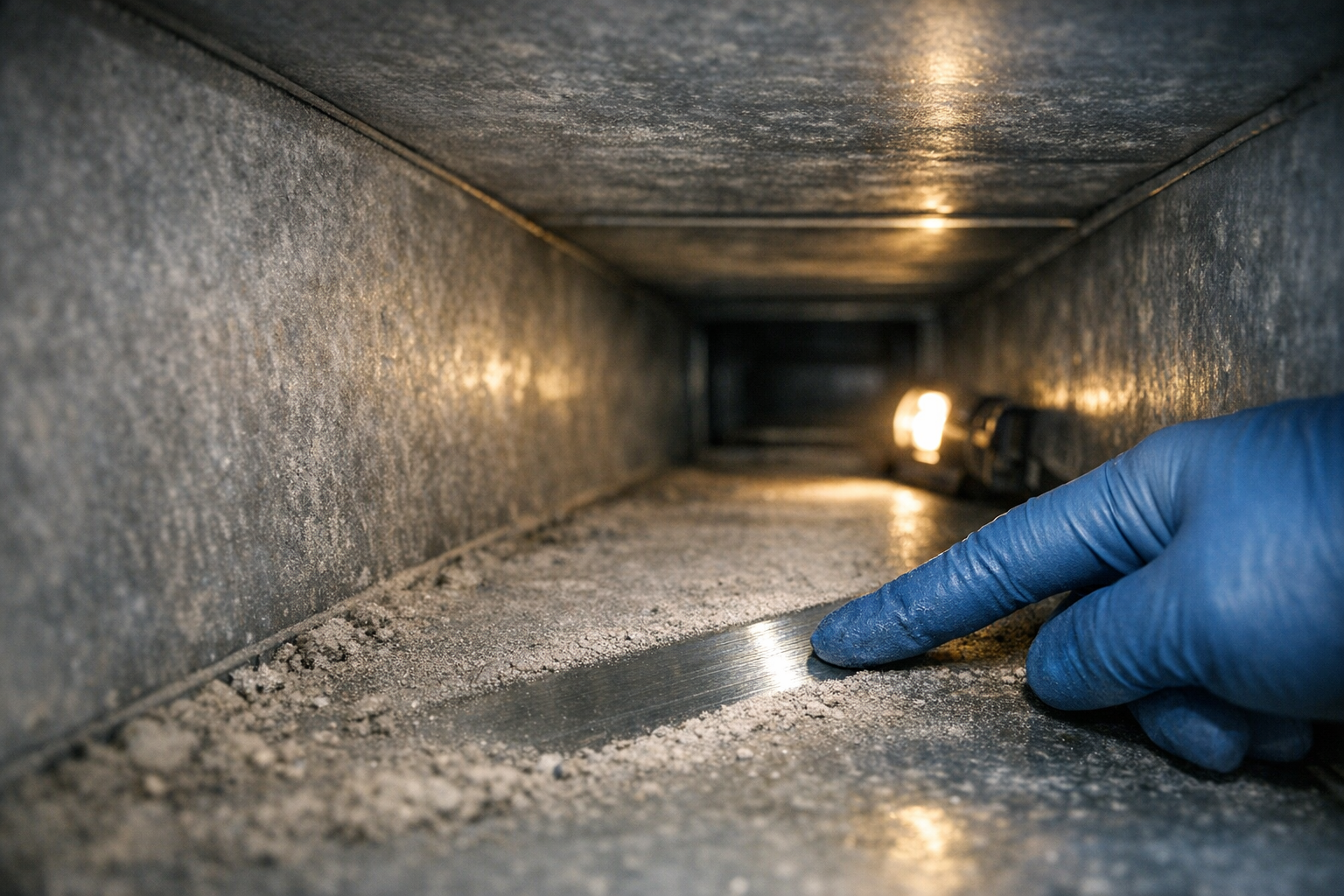
After smoke season in Denver, air ducts accumulate a significant amount of gray ash and other particulates that can impact indoor air quality. This post details what our techs observe in ductwork after wildfire haze, emphasizing the importance of cleaning for health and efficiency.
- Dirty ducts hold a mix of ash, dust, pet dander, and pollen that can affect air quality. Wildfire smoke particles bypass standard filters, leading to rapid buildup in homes.
- Cleaning ducts after heavy smoke seasons is crucial for maintaining airflow and reducing allergens. Homeowners should check for visible ash or odors to determine if cleaning is needed.
- Upgrading filters can help prevent quick accumulation of debris, but it does not remove what is already settled inside the ducts. Regular maintenance is key for optimal system performance.
What do technicians find in Denver ducts after smoke season?
After the smoke season in Denver, technicians often discover a gray film inside the ducts, which is a residue left by wildfire haze. This accumulation includes dust and debris that has settled during months of heavy HVAC use, highlighting the importance of regular duct cleaning.
Open a return-air grille in a Denver home after late-August smoke season, and the story is written in gray film. When our techs pull the first register cover, we see what a summer of wildfire haze leaves behind. This post shows exactly what’s inside dirty air ducts after months of Front Range smoke, dust, and heavy HVAC runtime.
We open ductwork every working day. What we photograph inside Denver systems after smoke season is different from spring dust, and it matters for your air.
Here is what settles inside your ducts, why it collects, and when cleaning makes a real difference for your home or building.
What’s Inside Dirty Air Ducts After Denver Smoke Season
Dirty air ducts after smoke season hold a fine gray ash film, settled particulate, pet dander, drywall and construction dust, and pollen bound together by moisture and static. The ash layer is the marker that separates smoke-season buildup from ordinary spring dust.
When wildfire smoke drifts across the Front Range, the smallest particles ride indoor air. Your blower pulls that haze past filters and deposits it on duct walls. Over weeks, it forms a flat, sooty film you can wipe with a gloved finger.
The layers our techs document
Cracking open a supply trunk after smoke season shows distinct layers, not one uniform coat. Each layer tells us how the home was used that season.
- Ash film: A thin, uniform gray coating on the top and sides of ducts. It smells faintly of campfire when disturbed.
- Settled particulate: Heavier dust that drops along the duct floor, mixed with fabric fibers and skin cells.
- Construction dust: Fine drywall and sawdust in homes that had recent remodels or new builds nearby.
- Pet dander and hair: Clumped near return drops where suction is strongest.
- Pollen and organic matter: Yellow-green streaks from spring and summer that the ash later coats.
The mix changes house to house. A basement remodel plus two dogs plus smoke season produces a very different interior than a sealed condo.
Why Denver Smoke Season Loads Ducts So Fast
Wildfire smoke particles are small enough to bypass low-grade filters and coat duct interiors within weeks. Front Range geography traps haze against the foothills, and Denver homes run air handlers hard during that stretch.
Late summer here means warm days and cooling demand. Your system cycles more, moving more smoke-laden air past every filter and register.
Filters catch less than owners assume
A standard 1-inch fiberglass filter stops large lint but misses fine smoke particulate. That particulate rides straight into the duct trunk and coats the sheet metal.
We find the heaviest ash film in homes running basic filters at MERV 6 or lower. Upgrading filter rating helps, but it does not clean what already settled inside.
High-altitude air moves differently
Denver’s thinner air changes how blowers move particulate. Fine ash stays suspended longer before settling, giving it more chances to reach deep duct sections.
That is why we see even coverage far from the air handler, not just near it. The duct debris after wildfire smoke reaches branch runs that spring dust rarely touches.
The Field Photo Essay: What We See Opening Systems
Documenting real duct interiors is something only a company opening systems daily can do. Here is what our cameras and access panels reveal after smoke season across Denver-area properties.
Return drops and the boot behind the grille
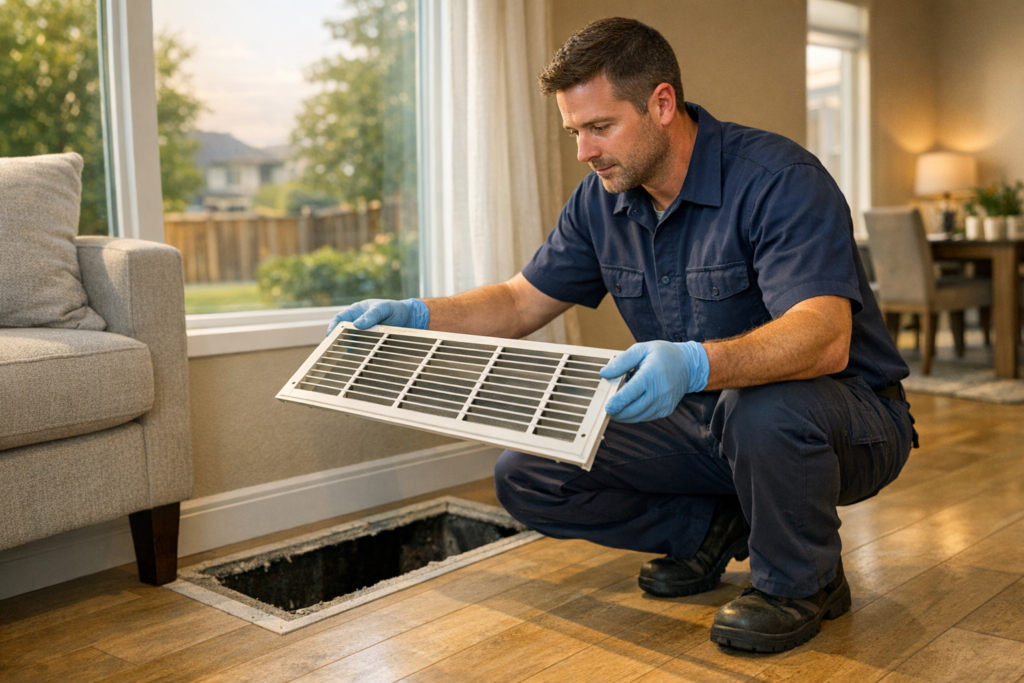
The return drop shows the worst buildup in most homes. Suction concentrates dust, hair, and ash into the metal boot behind the wall grille.
We routinely pull out matted gray felt that formed from months of drawn-in particulate. In pet homes, this section can be nearly closed off by hair and dander.
Supply trunk lines
The main supply trunk shows the cleanest ash film photos. A flat gray coat on galvanized metal, undisturbed, reflecting the flashlight.
Wipe one line and the difference between coated and clean metal is stark. That contrast is the clearest proof of smoke-season loading we can show a homeowner.
Blower wheel and coil
The blower wheel collects a thick fur of dust on each fin. A caked wheel moves less air and forces the motor to work harder.
Just past it, the evaporator coil traps smoke particulate against its cold, damp surface. A coated coil sheds efficiency and can smell musty when the system runs.
Why This Matters for Air, Comfort, and Cost
Coated ducts and components reduce airflow, raise energy use, and recirculate settled particulate every time the system starts. The health and cost effects build quietly over a season.
Indoor air quality
Every startup stirs settled ash back into the airstream you breathe. Homes with allergy-sensitive residents notice it as scratchy throats and lingering campfire odor.
Cleaning removes the reservoir of particulate, not just the airborne portion your filter chases. That is the difference between masking and removing the source.
Energy and comfort
A dirty blower wheel and coated coil force longer run times. Longer cycles mean higher summer cooling bills and more winter furnace strain.
On the Front Range, where systems swing from July cooling to January heating, that added load shortens equipment life. Clean components move designed airflow with less effort.
Warning signs your ducts hold smoke-season debris
- Faint campfire smell when heating or cooling first kicks on
- Gray streaks on walls or ceilings around supply registers
- Filters darkening faster than in prior seasons
- Uneven cooling or weak airflow from far rooms
- More dusting needed on surfaces than usual

When Duct Cleaning Is Worth It After Smoke Season
Schedule duct cleaning after a heavy smoke season if you see visible film at registers, smell smoke odor, or have not cleaned in three to five years. Not every home needs annual cleaning, but a bad smoke stretch changes the math.
Homes that benefit most
- Recent remodels: Construction dust plus ash forms a heavy combined layer.
- Pet households: Hair and dander clog return boots and trap smoke particulate.
- Allergy or asthma residents: Removing the particulate reservoir reduces triggers.
- Older systems: Coated blowers and coils recover airflow after cleaning.
- Commercial spaces: Larger duct runs and higher runtime collect more debris.
What to expect from the visit
A proper cleaning uses negative pressure and agitation, not just a shop vacuum at the register. Our techs seal the system, brush the lines, and pull debris toward a contained collection unit.
You should be shown before-and-after access points. If a company cannot show you what came out, ask why.
Pair cleaning with a filter upgrade
After removing existing buildup, a better filter keeps it from returning quickly. A MERV 11 to 13 filter, matched to your system, catches far more smoke particulate.
Confirm your blower can handle a higher rating before switching. An oversized jump can restrict airflow and strain the motor.
Simple Checks Between Cleanings
You can track smoke-season buildup yourself with a few safe steps. These help you decide when to call for service.
- Remove a return grille and photograph the boot with your phone flashlight.
- Wipe the visible duct edge with a white cloth and check for gray film.
- Change filters monthly during smoke season instead of quarterly.
- Note any odor the first minute the system runs each morning.
If the cloth comes back gray and film is visible, the deeper runs hold more. Interior sections you cannot reach always carry a heavier load than the grille edge.
Conclusion
After Denver smoke season, ducts hold a gray ash film layered over settled particulate, construction dust, and dander that recirculates with every cycle. Removing that reservoir restores airflow, cuts odor, and eases strain on systems facing Front Range temperature swings. If you see film at your registers or smell campfire when the air kicks on, your ducts are ready for attention.
Action Air Duct opens and documents Denver systems every day and can show you exactly what is inside yours. Call or text 720‑257‑3319, email tamir@actionairduct.net, or visit https://actionairduct.net to schedule a post-smoke duct inspection.