
How Often Should You Clean Your Dryer Vent? A Denver Timeline
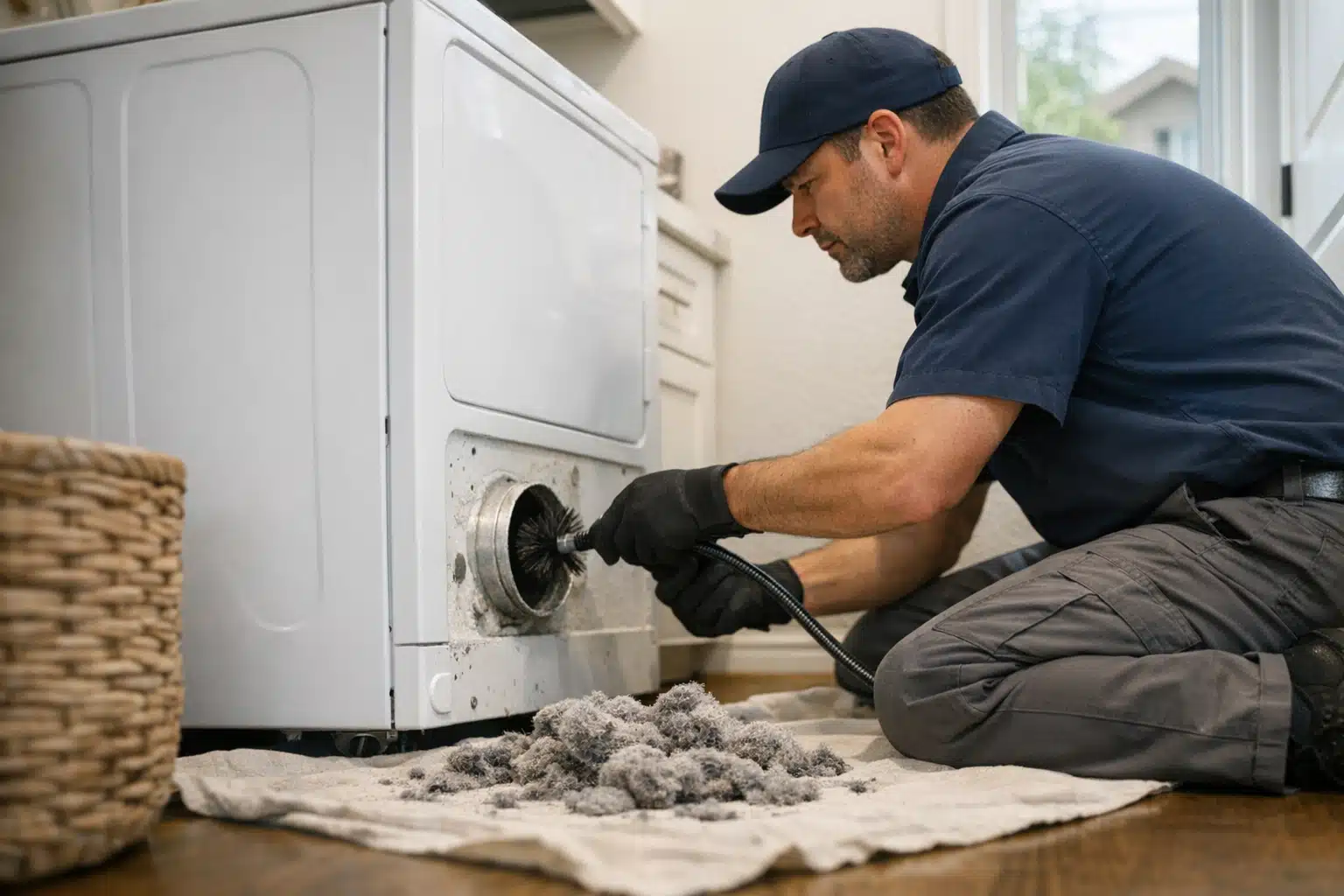
Cleaning dryer vents in Denver is not a one-size-fits-all task. The frequency depends on household size, vent length, and dryer type, with most homes needing attention every 12 months.
- Most Denver homes should clean their dryer vents every 12 months, while larger families may need it every 6 to 9 months.
- Gas dryers require more frequent cleaning due to safety concerns like carbon monoxide buildup.
- Warning signs such as damp clothes after a cycle or a hot dryer indicate it's time for immediate cleaning.
How often should you clean your dryer vent?
You should clean your dryer vent regularly, as the frequency depends on usage and lint buildup. If your dryer takes longer than usual to dry clothes, it may indicate a clogged vent. Generally, it's advisable to check and clean the vent at least once or twice a year, or more often if you notice performance issues.
A dryer that takes two cycles to dry a single load is telling you something. Buried lint is choking the vent, and Denver’s dry air speeds up how fast that buildup happens. If you have wondered how often to clean dryer vent lines in your home, the honest answer is not a flat “once a year.”
The right interval depends on how long your vent run is, whether your dryer runs on gas or electric, and how many loads your household pushes each week. Below is a Denver-specific timeline built from what techs find inside real vents across the Front Range.
How Often to Clean Dryer Vent Lines: The Short Answer
Most Denver homes need a dryer vent cleaning every 12 months. Larger families, long vent runs, and heavy laundry schedules move that window to every 6 to 9 months.
A single person with a short, straight vent might stretch to 15 or 18 months. The generic annual rule works as a starting point, not a rule that fits every house.
Denver’s low humidity matters here. Dry indoor air keeps lint fine and airborne, and that fine lint packs into vent walls faster than it does in humid climates.
Dryer Vent Cleaning Frequency by Household Type
Real variables change the answer more than the calendar does. Here are the tiers techs use when they look at an actual home.
Small Household, Short Vent Run
- Who this is: 1 to 2 people, a few loads per week
- Vent length: Under 10 feet with one bend or fewer
- Recommended interval: Every 12 to 18 months
A short run from a main-floor laundry room to an exterior wall clears easily. Lint has less distance to travel and fewer turns to catch on.
Average Family, Standard Vent
- Who this is: 3 to 4 people, 5 to 8 loads per week
- Vent length: 10 to 25 feet with one or two bends
- Recommended interval: Every 12 months
Kids’ laundry, towels, and bedding add up fast. This is the group the once-a-year rule was written for, and it holds up.
Large Family or Heavy-Use Home
- Who this is: 5 or more people, daily loads, pets, or athletic gear
- Vent length: Any length
- Recommended interval: Every 6 to 9 months
Volume drives buildup. A home running two or three loads a day fills a vent in half the time of an average household.
Long or Complex Vent Runs
- Who this is: Basement laundry, second-floor units, or rooftop venting
- Vent length: 25 feet or more, multiple elbows
- Recommended interval: Every 6 to 9 months
Every bend is a place for lint to snag and stack. A long run with three or four elbows traps far more debris than a straight shot.
Gas vs. Electric Dryers: Why the Fuel Type Changes the Timeline
Gas and electric dryers both push lint, but a clogged gas dryer vent carries a heavier safety concern. Blocked airflow on a gas unit can back up combustion byproducts, including carbon monoxide.
Here is how the two compare for cleaning priority:
- Electric dryers: A clog mainly causes overheating, longer cycles, and fire risk from trapped lint
- Gas dryers: A clog adds the risk of carbon monoxide backing into the home alongside the fire and overheating risks
If you run a gas dryer, lean toward the shorter end of your recommended interval. The extra caution is worth it.
Why Denver’s Dry Air Speeds Up Lint Buildup
Denver sits high and dry, and that climate changes how lint behaves inside a vent. Humid air weighs lint down, but Denver’s low moisture keeps it light and easy to compact.
Fine, dry lint slips into gaps and presses into a dense mat along the vent walls. That mat restricts airflow earlier than many homeowners expect.
Front Range dust adds to the mix. Wind-driven dust and pollen ride into the laundry area and bind with lint, thickening the layer that coats the duct.
Warning Signs Your Dryer Vent Needs Cleaning Now
Do not wait for the calendar if your dryer shows these signs. Any one of them means the vent deserves attention.
- Clothes stay damp after a full cycle, or need a second run to dry
- The dryer or laundry room feels hot during and after a load
- A burning or musty smell comes from the machine
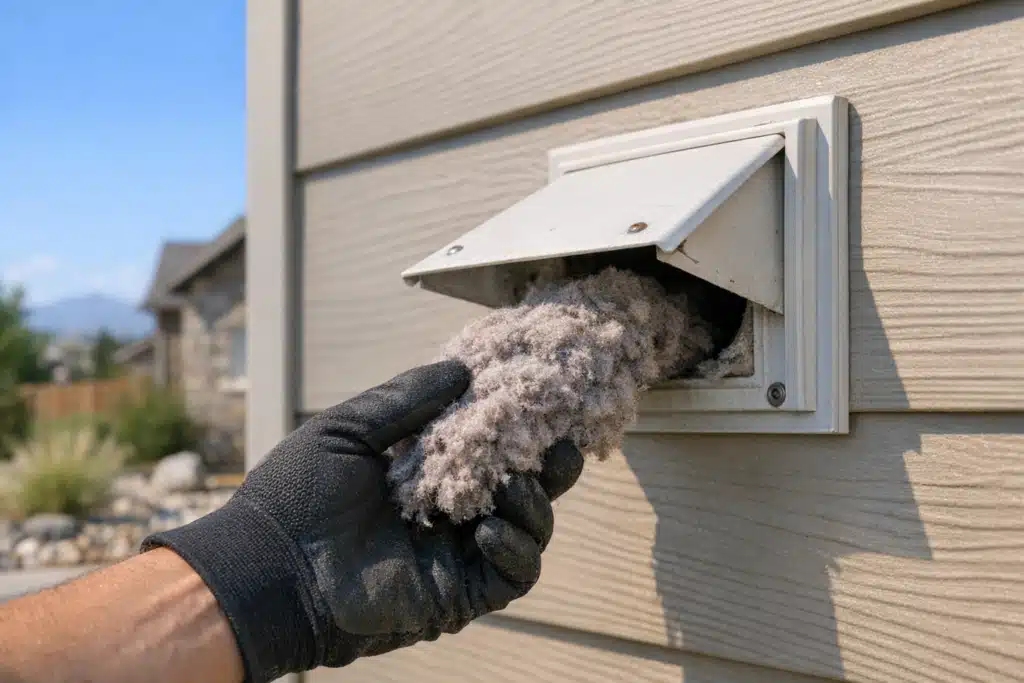
- The exterior vent flap barely opens when the dryer runs
- Lint collects around the door seal or behind the dryer
- Longer drying times that climb month over month
Damp clothes after a full cycle is the sign techs hear about most. It points to restricted airflow that traps moisture inside the drum.
What Happens When You Skip Dryer Vent Cleaning
A neglected vent costs money before it becomes a hazard. Restricted airflow forces the dryer to run longer, and longer cycles raise your utility bill month after month.
The bigger risk is fire. Lint is one of the most flammable materials in a home, and a packed vent near a heat source is a real danger.
Heat buildup also wears out the machine. A dryer fighting against a clogged vent burns out heating elements and control boards early, shortening its lifespan by years.

Dryer Vent Cleaning Frequency for Denver Businesses
Commercial and multi-unit properties run on a tighter schedule. Shared laundry rooms, apartment complexes, and businesses like salons or gyms push volume that home timelines cannot match.
- Apartment and condo laundry rooms: Every 3 to 6 months
- Laundromats and commercial dryers: Every 1 to 3 months
- Salons, spas, gyms, restaurants: Every 3 to 6 months
Property managers carry liability for tenant safety. A documented cleaning schedule protects both the building and the people inside it.
What to Expect From a Professional Dryer Vent Cleaning
A thorough cleaning goes past the lint trap and clears the full run to the exterior. Here is the order a trained tech follows:
- Inspect the vent path from the dryer to the outside termination
- Disconnect the dryer and check the transition hose
- Run a rotary brush the full length to break up packed lint
- Vacuum the loosened debris with high-powered equipment
- Confirm strong airflow at the exterior vent flap
- Reconnect and test the dryer before finishing
A DIY lint-trap brush helps between visits, but it reaches only the first few feet. The packed lint deep in the run needs the full length cleared.
A Simple Denver Dryer Vent Timeline
Use this quick reference to set your own schedule:
- Small home, short vent: Every 12 to 18 months
- Average family, standard vent: Every 12 months
- Large family or heavy use: Every 6 to 9 months
- Long or complex vent runs: Every 6 to 9 months
- Gas dryer: Shorten your interval by a few months
- Any warning sign: Clean now, not later
Conclusion
How often to clean dryer vent lines comes down to your vent length, fuel type, and laundry volume, not a one-size answer. Denver’s dry air and Front Range dust push most homes toward the shorter end of their recommended window. Cleaning on the right schedule cuts fire risk, lowers energy costs, and extends the life of your dryer.
Ready to clear your vent before it becomes a problem? Call or text Action Air Duct at 720‑257‑3319, email tamir@actionairduct.net, or visit https://actionairduct.net to schedule your dryer vent cleaning.