
What Does a Furnace Cleaning Actually Include? Step by Step
A thorough furnace cleaning involves detailed attention to key components to ensure safe and efficient operation, especially important during Denver's long heating season. This process includes cleaning burners, inspecting the heat exchanger, and checking the blower assembly, among other steps.
- Furnace cleaning is not just a quick blow-out; it requires a technician to clean and inspect multiple parts.
- Key components like the flame sensor and heat exchanger must be addressed to prevent issues during winter.
- Annual cleaning is recommended to maintain efficiency and safety, especially in dusty environments like Denver.
What does furnace cleaning include?
Furnace cleaning involves a thorough inspection and cleaning of several key components within the unit. This includes the burners, heat exchanger, blower assembly, and flame sensor. Proper cleaning ensures efficient operation and can help prevent potential issues, making it essential for maintaining furnace performance.
A quick “furnace cleaning” that lasts 20 minutes and involves a leaf blower pointed at your vents is not a furnace cleaning. If you want to know what does furnace cleaning include, the honest answer touches specific parts inside the unit — the burners, heat exchanger, blower assembly, and flame sensor.
Denver winters push furnaces hard from October to April. A furnace running on dirty burners and a fouled flame sensor wastes gas and risks mid-January shutdowns.
Below is the exact sequence a technician follows, part by part, so you can verify a thorough job versus a quick blow-out.
What Does Furnace Cleaning Include? The Short Answer
Furnace cleaning is the removal of dust, soot, and debris from the internal combustion and airflow components, plus a safety and function check. A real furnace cleaning touches at least six parts:
- Burners — cleared of dust and rust flakes that disrupt the flame
- Heat exchanger — inspected and cleaned, checked for cracks
- Blower assembly — wheel and motor cleared of caked dust
- Flame sensor — scrubbed of oxidation so the furnace stays lit
- Ignition system — hot surface igniter or pilot checked
- Air filter and cabinet — replaced and vacuumed out
If a tech skips the blower and heat exchanger, you did not get a cleaning. You got a filter swap with a service fee.
The Furnace Cleaning Process, Step by Step
Here is the furnace cleaning process in the order a technician moves through the unit. Watching this sequence tells you whether the work was real.
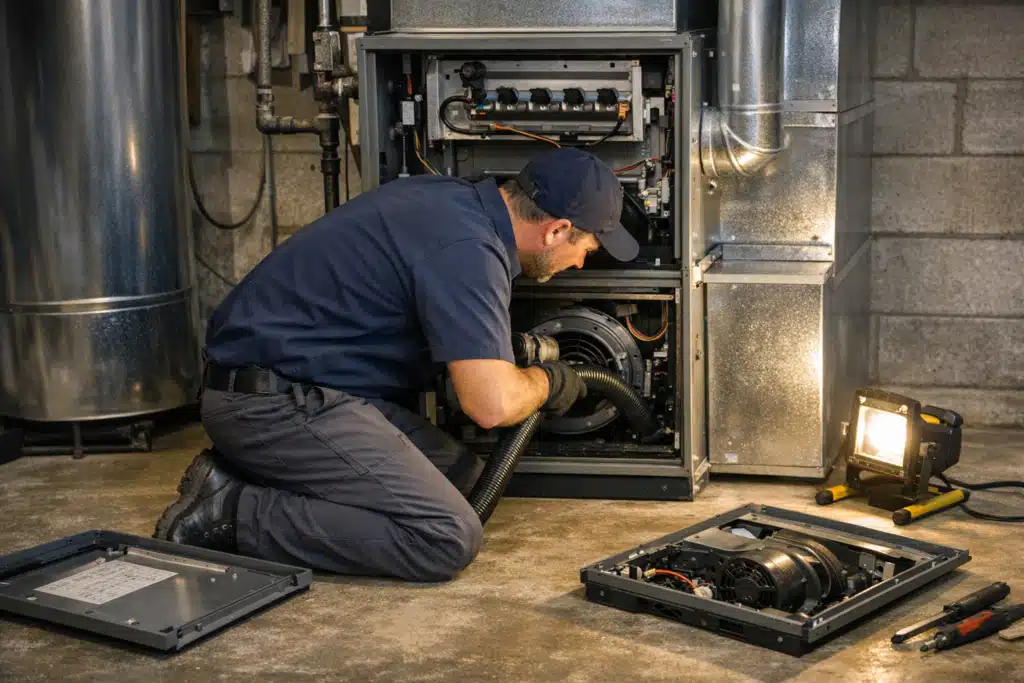
Step 1: Power Down and Gas Shutoff
The tech kills power at the furnace switch or breaker first. The gas valve is closed before any panel comes off.
Skipping this is a red flag. No one should open a furnace with live power and open gas.
Step 2: Remove Access Panels and Inspect
Both the upper and lower panels come off. The tech looks at the burner flames’ color record, soot patterns, and dust load before touching anything.
In Denver homes near open fields or under construction, the lower blower compartment fills with fine grit fast. That grit tells the tech how overdue the unit was.
Step 3: Clean the Burners
The burners are where gas ignites. Dust, rust, and spider webs land here and throw off the flame pattern.
A good tech removes or brushes the burners and vacuums the burner box. Clean burners burn blue and even — yellow or flickering flames point to fouling or a bigger issue.
Step 4: Inspect and Clean the Heat Exchanger
The heat exchanger separates combustion gases from the air you breathe. It is the single most safety-critical part in the furnace.
The tech vacuums accessible surfaces and inspects for cracks or corrosion. A cracked heat exchanger can leak carbon monoxide and means the furnace should stop running until repaired or replaced.
Ask your tech what the heat exchanger looked like. A straight answer here shows the panel actually came off.
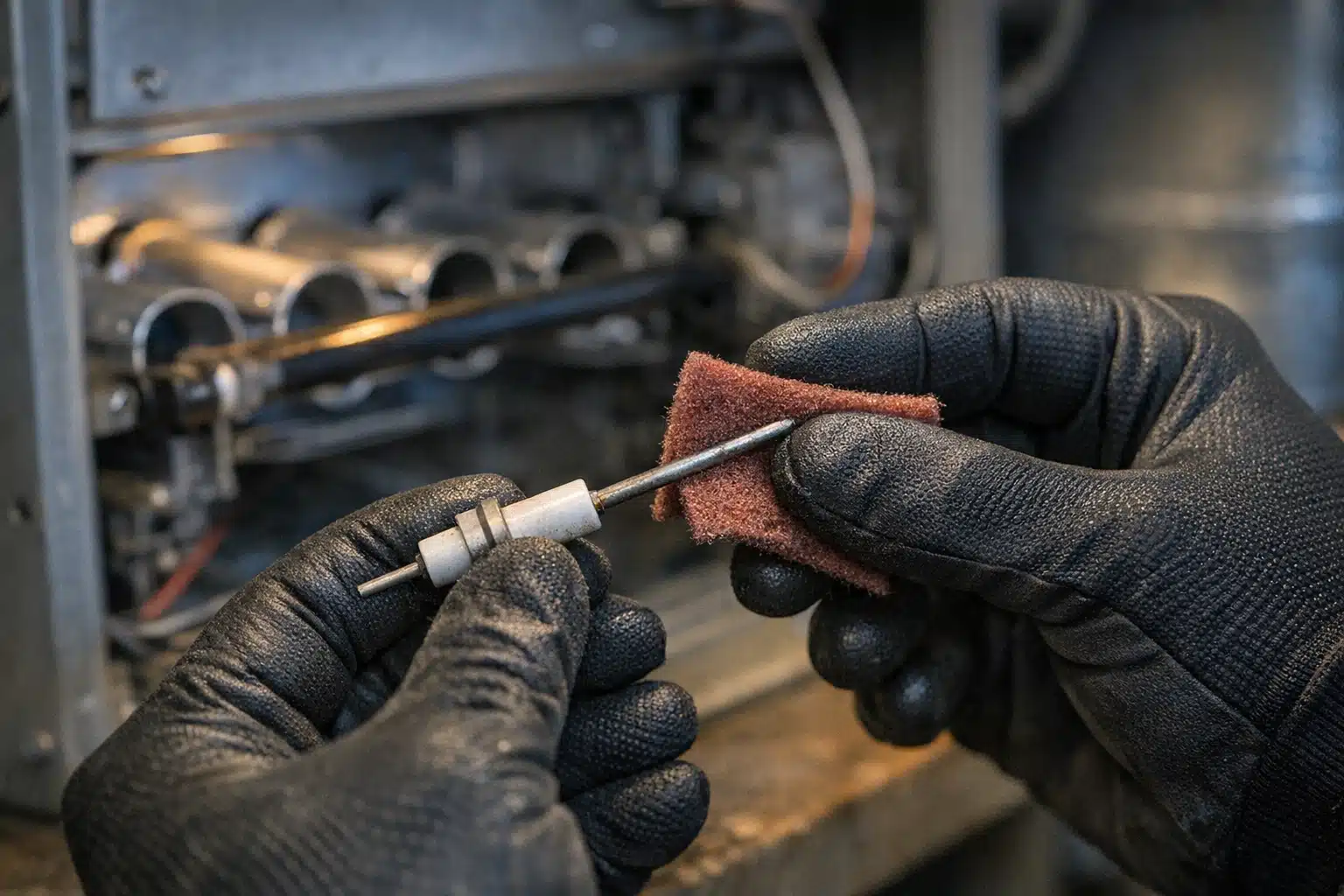
Step 5: Clean the Flame Sensor
The flame sensor is a thin metal rod that confirms the burner lit. Over a Denver heating season, it coats with a white oxide film.
A fouled flame sensor makes the furnace light, run a few seconds, then shut off — over and over. The tech removes it and scrubs it with fine abrasive until the metal shines.
This one part causes a large share of “my furnace won’t stay on” calls in January. A five-minute cleaning prevents a cold night.
Step 6: Clean the Blower Assembly
The blower wheel pushes heated air into your ducts. Its curved fins pack with dust that cuts airflow and strains the motor.
A real cleaning pulls or accesses the blower and clears each fin. A caked blower wheel can drop airflow enough to overheat the furnace and trip the limit switch.
If your rooms feel weak on airflow even with a fresh filter, the blower is a likely culprit.
Step 7: Check the Ignition System
Newer Denver furnaces use a hot surface igniter instead of a standing pilot. The tech inspects it for cracks and tests resistance.
Igniters are brittle and fail with age. Catching a weak one in fall beats replacing it during a cold snap.
Step 8: Replace the Air Filter and Vacuum the Cabinet
The old filter comes out and a correctly sized one goes in. The tech vacuums the base of the cabinet where dust and rust collect.
During wildfire smoke events along the Front Range, filters load faster. Ask which MERV rating fits your furnace without choking airflow.
Step 9: Test the Full Heating Cycle
The tech restores power and gas, then runs a complete cycle. They watch ignition, flame color, blower start, and temperature rise.
A proper test checks the temperature rise across the furnace against the rating plate. Numbers outside that range mean airflow or gas issues remain.
Furnace Cleaning vs. Furnace Tune-Up: What Is the Difference?
People use both terms loosely. Here is a clear split:
- Furnace cleaning — physical removal of dust and debris from burners, blower, heat exchanger, and flame sensor
- Furnace tune-up — cleaning plus measurements: gas pressure, temperature rise, amp draw, safety checks, thermostat calibration
A tune-up includes cleaning. A standalone “cleaning” may skip the measurements. Ask which one you are booking and what it covers.
How to Tell a Thorough Job From a Quick Blow-Out
A rushed visit and a real service look very different. Use this checklist to judge what you received:
- Did the tech remove both access panels?
- Did they clean or remove the burners, not just glance at them?
- Can they describe the heat exchanger condition?
- Was the flame sensor pulled and scrubbed?
- Did they access and clean the blower wheel?
- Did they run a full heating cycle and check temperature rise?
- Did the visit take real time, not ten minutes?
A genuine cleaning on a residential furnace runs closer to an hour. A ten-minute in-and-out did not touch the parts that matter.

Why Furnace Cleaning Matters More in Denver
Denver’s heating season is long and the air is dry and dusty. Furnaces here accumulate grit that clogs blowers and burners faster than in milder climates.
High altitude affects combustion too. Furnaces need proper gas pressure and airflow at elevation, which a real cleaning and check confirm.
Neglect shows up as three problems Denver homeowners face every winter:
- Short cycling from a dirty flame sensor
- Weak airflow from a caked blower wheel
- Higher gas bills from poor combustion on dirty burners
How Often Should You Clean Your Furnace?
Clean and inspect your furnace once a year, before heating season — late summer through early fall in Denver. This catches worn parts before the first hard freeze.
Homes with pets, heavy dust, or recent remodeling benefit from checking the filter monthly. A gas furnace that runs daily from October to April earns its annual attention.
Conclusion
A real furnace cleaning touches the burners, heat exchanger, flame sensor, and blower — then confirms the whole unit runs safely. Knowing what does furnace cleaning include lets you spot a thorough job and avoid paying for a quick blow-out. Annual cleaning before Denver’s heating season keeps your furnace efficient, safe, and ready for January.
Book your furnace cleaning with Action Air Duct before the cold sets in. Call or text 720‑257‑3319, email tamir@actionairduct.net, or visit https://actionairduct.net.