
Commercial Property AC Maintenance: Keeping Denver Businesses Cool and Profitable
Commercial AC maintenance is essential for Denver businesses to keep their cooling systems operational during hot summer months. Regular maintenance not only prevents equipment failures but also enhances productivity and customer satisfaction.
- Scheduled maintenance includes inspections, cleaning, and adjustments to ensure efficient operation.
- Warning signs of AC issues include uneven cooling, rising energy bills, and unusual noises.
- Maintaining commercial AC systems can extend their lifespan and reduce energy costs, benefiting the bottom line.
What is the importance of commercial AC maintenance in Denver?
Commercial AC maintenance in Denver is essential for keeping cooling systems operational during extreme heat. Proper maintenance prevents breakdowns that can lead to customer loss, employee inefficiency, and halted revenue. Regular servicing ensures that businesses can maintain a comfortable environment, especially during peak summer months.
A rooftop AC unit that quits during a July heat wave can empty a Denver restaurant, office, or retail floor within an hour. Customers leave, employees slow down, and revenue stops. Commercial AC maintenance in Denver keeps your cooling system running when Front Range temperatures climb past 90 degrees and your building fills with people.
This post covers what commercial AC maintenance includes, how it protects productivity and comfort, and how to build a schedule that fits Denver’s climate. You will learn the warning signs of failing equipment and when to call a technician.
What Commercial AC Maintenance in Denver Includes
Commercial AC maintenance is scheduled inspection, cleaning, and adjustment of rooftop and split cooling systems that serve business properties. It keeps equipment efficient, prevents mid-season failures, and extends system life.
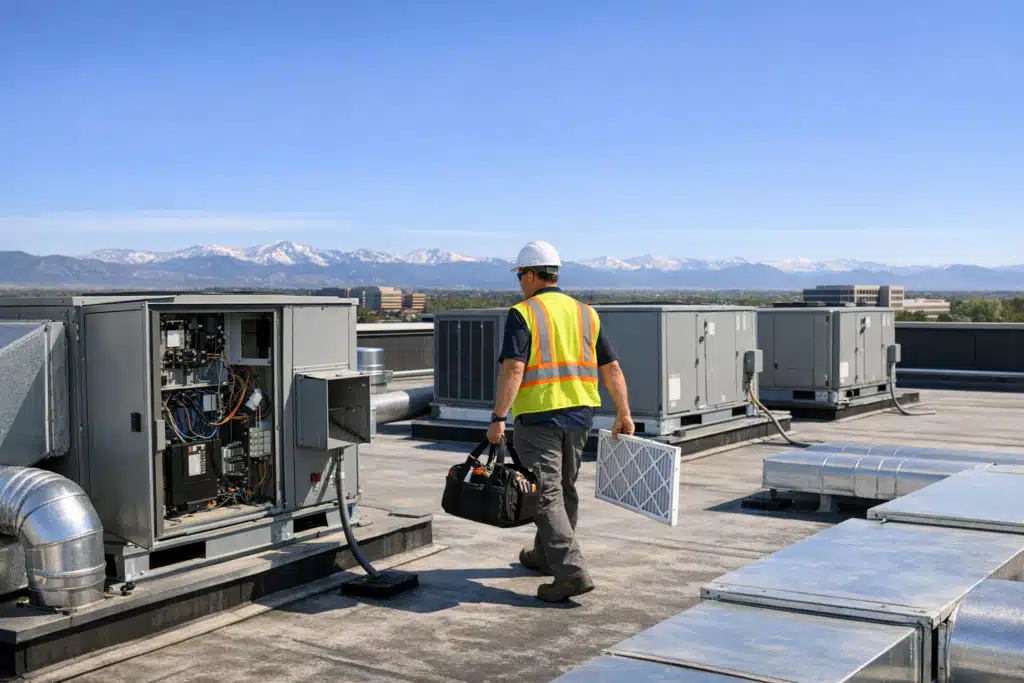
Denver businesses run different equipment than homes. A 20,000-square-foot office may run three or four rooftop units, each cooling a separate zone.
A standard commercial visit covers:
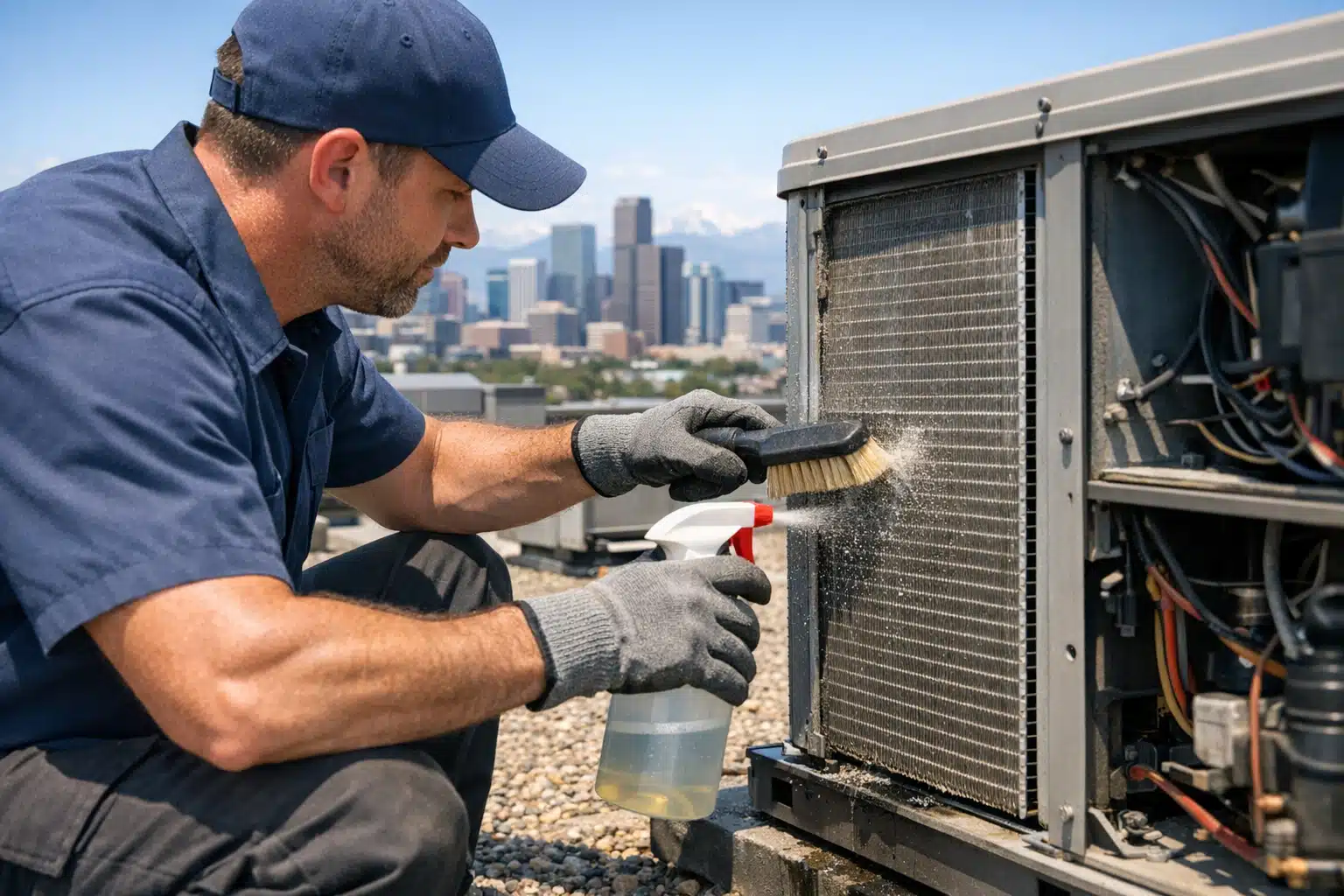
- Coil cleaning — condenser and evaporator coils clogged with Denver dust lose cooling capacity fast.
- Refrigerant check — low charge forces the compressor to work harder and shortens its life.
- Belt and motor inspection — worn belts on rooftop units snap during peak demand.
- Electrical connection tightening — loose contactors cause short cycling and burned components.
- Condensate drain clearing — blocked drains flood ceilings and trigger water damage.
- Filter replacement — dirty filters restrict airflow and raise energy use.
- Thermostat and control calibration — bad readings waste money and leave hot zones.
Why Cooling Downtime Costs Denver Businesses More Than Repairs
A single failed rooftop unit costs far more than the repair bill. The real loss shows up in lost productivity and unhappy customers.
Employee Productivity Drops in the Heat
Warm offices slow people down. Concentration fades when indoor temperatures push into the upper 70s and low 80s.
A Denver call center or accounting office loses measurable output when workers are uncomfortable. Staff take more breaks and make more errors.
Customer Comfort Drives Repeat Business
A hot dining room or showroom sends customers to the door. Retail shoppers leave when the space feels stuffy.
Restaurants feel this fastest. Kitchen heat plus a failed dining-room AC unit clears tables during peak summer service.
Emergency Repairs Cost More
Weekend and after-hours calls carry premium rates. A breakdown during a heat wave means competing with every other business for the same technicians.
Scheduled maintenance costs less than emergency response and lost sales combined.
Denver’s Climate Puts Extra Strain on Commercial AC Systems
Denver sits at over 5,200 feet. High altitude changes how cooling equipment performs and how quickly it wears.
High-Altitude Cooling Loads
Thinner air holds less heat, but strong summer sun and low humidity still push rooftop units hard. Buildings with large windows or west-facing walls heat up fast in the afternoon.
Dust and Airborne Debris
Denver’s dry conditions kick up dust that coats condenser coils. A coated coil cannot release heat, so the compressor runs longer and hotter.
Wildfire Smoke Season
Summer smoke from regional fires loads filters quickly. Commercial buildings pulling outside air need filter checks more frequently during smoke events.
Clogged filters during smoke season force units to strain and cut indoor air quality for employees and customers.
Wide Temperature Swings
Front Range days can start cool and hit 90 by afternoon. Systems cycling hard through these swings need tight controls and clean components to keep up.
Recommended Commercial AC Maintenance Schedule
Most Denver commercial cooling systems need service two to four times per year. Frequency depends on run hours, occupancy, and building use.
- Spring startup (March–April) — full inspection, coil cleaning, refrigerant check, and control calibration before cooling season.
- Mid-summer check (June–July) — filter change, condensate clearing, and belt inspection during peak load.
- Wildfire-season filter checks — added filter inspections when regional smoke moves in.
- Fall shutdown (September–October) — cleaning and protection before switching to heating.
Restaurants, gyms, and medical offices run heavier cooling loads. Quarterly business air conditioning service keeps these buildings ahead of failures.
Warning Signs Your Commercial AC Needs Attention
Catching problems early prevents full breakdowns. Train your staff to report these signs:
- Uneven cooling between zones — one area stays warm while another runs cold.
- Rising energy bills — a jump without added run time points to failing efficiency.
- Weak airflow from vents — dirty coils or clogged filters restrict the system.
- Water stains near ceiling vents — a blocked condensate drain.
- Unusual noises on the roof — grinding or squealing signals a worn belt or motor.
- Short cycling — the unit turns on and off rapidly without cooling the space.
Any burning smell or electrical odor calls for immediate shutdown and a technician.

How Duct and Coil Cleaning Support Commercial Cooling
Clean ductwork and coils keep commercial AC systems moving air efficiently. Dirty ducts spread dust across a building and force units to work harder.
Duct Cleaning for Larger Facilities
Office buildings, schools, and warehouses accumulate dust and debris inside long duct runs. Cleaning removes buildup that restricts airflow and lowers indoor air quality.
This matters most in Denver during allergy and smoke seasons. Cleaner ducts mean fewer complaints from staff and better air for customers.
Coil Cleaning Protects Efficiency
A clean evaporator coil transfers heat the way it should. A coated coil forces the compressor to run longer, raising your electric bill every month.
What to Expect From a Commercial AC Service Visit
A commercial technician should inspect your equipment, document findings, and explain what needs attention. Expect a written report on each unit.
A thorough visit includes:
- Photos or notes on coil, belt, and electrical condition.
- Refrigerant and airflow readings for each unit.
- A clear list of current and upcoming repairs.
- Filter status and replacement recommendations.
This record helps property managers budget and plan. It also flags aging equipment before it fails during peak season.
Extending the Life of Commercial Cooling Equipment
Well-maintained commercial rooftop units commonly last 15 to 20 years. Neglected units fail years earlier and cost more to run in the meantime.
The math favors upkeep:
- Scheduled service costs a fraction of unit replacement.
- Clean, well-charged systems use less electricity month after month.
- Documented maintenance supports warranty coverage.
- Fewer emergency calls mean fewer surprise expenses.
Preventative maintenance protects both comfort and your bottom-line profit.
Conclusion
Commercial AC maintenance in Denver keeps your building cool, your employees productive, and your customers comfortable during the hottest months. Scheduled service prevents costly breakdowns, lowers energy use, and extends equipment life across the Front Range climate.
Action Air Duct services rooftop and commercial cooling systems for Denver-area businesses, including coil cleaning, duct cleaning, and seasonal inspections. Schedule your commercial AC maintenance by calling or texting 720‑257‑3319, emailing tamir@actionairduct.net, or visiting https://actionairduct.net.