
Does Your Denver Home Need a Whole-House Air Purifier or Just Cleaner Ducts?
Denver homeowners often wonder whether to install a whole-house air purifier or just clean their ducts to improve indoor air quality. The decision depends on the specific air quality issues they face, as each solution addresses different problems.
- Duct cleaning removes dust and contaminants already in the system, while air purifiers filter incoming particles continuously. Cleaning is recommended every 3-5 years to maintain airflow and reduce buildup.
- A whole-house air purifier is beneficial for ongoing issues like smoke and pollen that enter the home, especially during wildfire season.
- Many homes benefit from both solutions, starting with duct cleaning to ensure the air purifier operates effectively against new contaminants.
What is the difference between a whole-house air purifier and duct cleaning for indoor air quality?
A whole-house air purifier actively filters and cleans the air throughout your home, addressing pollutants and allergens. In contrast, duct cleaning focuses on removing dust and debris from your HVAC system's ducts, which can improve airflow but may not significantly enhance overall air quality if other sources of pollution are present.
Denver’s air can shift from clear to smoke-hazed in a single afternoon during wildfire season. Homeowners feel it in their throats, see it on their windowsills, and start asking whether a whole house air purifier Denver installation or a good duct cleaning will fix the problem. The honest answer depends on what is causing your indoor air issues.
Both address different problems. One removes what is already stuck in your system. The other filters what enters your air going forward.
This article breaks down the difference, when each makes sense, and how to decide during the months when Front Range air quality drops.
Air Purification vs Duct Cleaning Denver: The Direct Answer
Duct cleaning removes accumulated dust, debris, and contaminants already sitting inside your ductwork. A whole-house air purifier filters and treats air as it circulates, catching particles before they reach your living space.
If your ducts are clogged with construction dust, pet dander, or settled wildfire soot, cleaning solves that. If fine smoke particles and pollen keep entering your home during summer, a purifier handles the ongoing load.
The two are not competitors. During Denver’s wildfire and allergy months, many homes benefit from both, but the starting point matters.
When Duct Cleaning Is the Right First Step
Duct cleaning makes sense when the contamination is already inside your system. Signs point to buildup, not incoming air.
- Visible dust puffing from vents when the furnace or AC kicks on
- Dust resettling on furniture within a day of cleaning
- Musty smells when the system runs
- Recent home renovation or drywall work
- Rodent or insect activity found near ductwork
- No duct cleaning record in the past several years
A Denver homeowner who ran their furnace hard all winter may find ducts packed with fine dust by spring. Cleaning that out before allergy season starts gives any air purifier a cleaner surface to work with.
When a Whole-House Air Purifier Makes More Sense
A whole-house air purifier fits when the problem is what keeps coming in. Smoke and pollen do not stay out on their own.
- Wildfire smoke seeping in during summer fire events
- Seasonal pollen triggering allergy symptoms indoors
- Household members with asthma or respiratory sensitivity
- Persistent odors that return after cleaning
- Fine particulate that a standard filter misses
Standard one-inch furnace filters trap larger debris but let fine smoke particles pass. A whole-house purifier addresses the microscopic particles that make Denver summers hard on sensitive lungs.
Why Denver’s Climate Changes the Decision
Denver puts specific demands on indoor air that other regions do not. The choice between purification and duct cleaning shifts with the season.
Wildfire Smoke Season
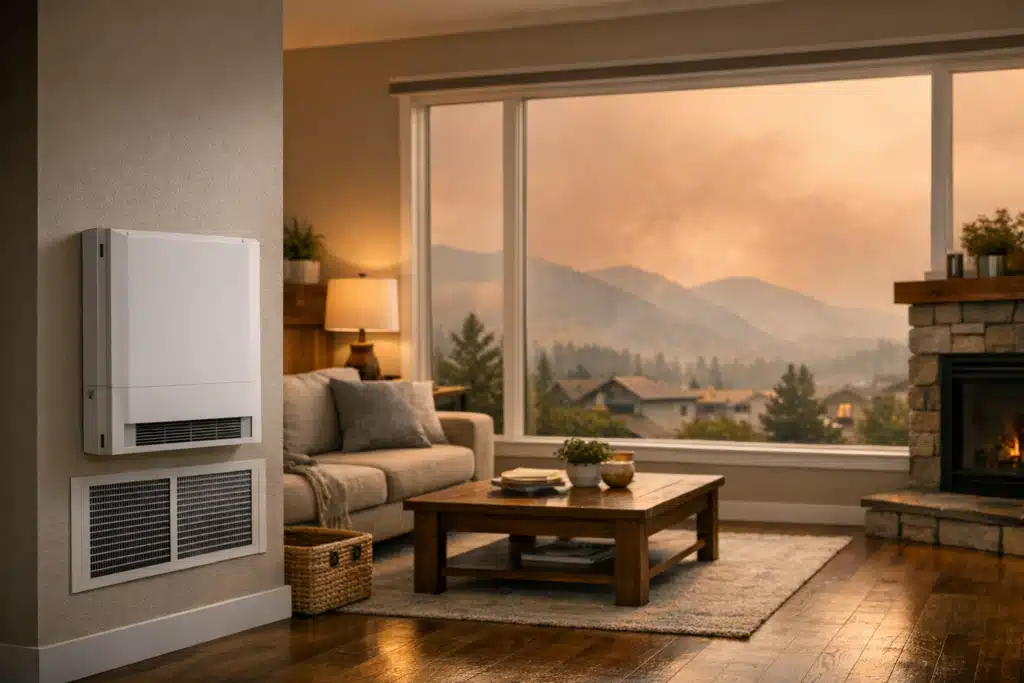
Front Range summers now bring stretches of smoke from regional fires. Fine particulate matter drifts indoors even with windows shut.
Duct cleaning removes soot that has settled inside the system. A purifier keeps filtering the incoming haze day after day. During an active smoke event, the purifier does the heavier lifting.
High-Altitude Dry Air and Dust
Denver’s dry, high-altitude climate keeps dust airborne longer. Particles that would settle in humid regions stay suspended here.
That airborne dust cycles into ductwork and recirculates. Regular duct cleaning every three to five years keeps that load manageable for most homes.
Allergy Season Along the Front Range
Spring and fall bring heavy pollen from grasses and trees across the metro area. Pollen enters on clothing, pets, and open doors.
Once inside, it recirculates through the HVAC system. A whole-house purifier reduces the pollen load that a duct cleaning alone cannot stop from returning.
Air Purification vs Duct Cleaning Denver: Side-by-Side
Here is how the two compare on what matters for a purchase decision.
- Duct cleaning: One-time treatment; removes existing buildup; improves airflow; recommended every 3-5 years; addresses past contamination
- Whole-house air purifier: Installed equipment; treats air continuously; addresses incoming particles; runs year-round; targets smoke, pollen, and fine dust
Duct cleaning is a reset. A purifier is ongoing protection. A home with old, dirty ducts and a smoke problem gets the most value from cleaning first, then adding purification.
How to Decide for Your Home
Work through a short sequence to find your starting point.
- Check when ducts were last cleaned. If it has been over five years or never, start there.
- Identify the main complaint. Settled dust and odors point to cleaning; smoke and allergies point to purification.
- Account for household health. Asthma or allergy sufferers gain the most from continuous filtration.
- Look at the season. Before summer smoke and pollen arrive is the time to plan.
- Inspect your current filter. A filter caked gray in a month signals both a heavy load and a system that needs attention.
Many Denver homes land on a two-part answer: clean the ducts now, install a purifier before wildfire season. Cleaning first means the purifier is not fighting years of stored debris.

What Happens If You Skip Both
Neglecting indoor air maintenance carries real costs beyond comfort. Dirty ducts and unfiltered smoke take a toll over time.
- Reduced airflow forces the system to work harder and raises energy bills
- Recirculating allergens worsen symptoms for sensitive household members
- Settled dust shortens filter life and clogs the blower
- Fine smoke particles linger in living spaces for days after an event
- Long-term buildup can shorten equipment lifespan
A furnace pushing air past clogged ducts during a Colorado winter runs longer cycles. That added strain shows up on the utility bill and in earlier repairs.
What to Expect From the Service
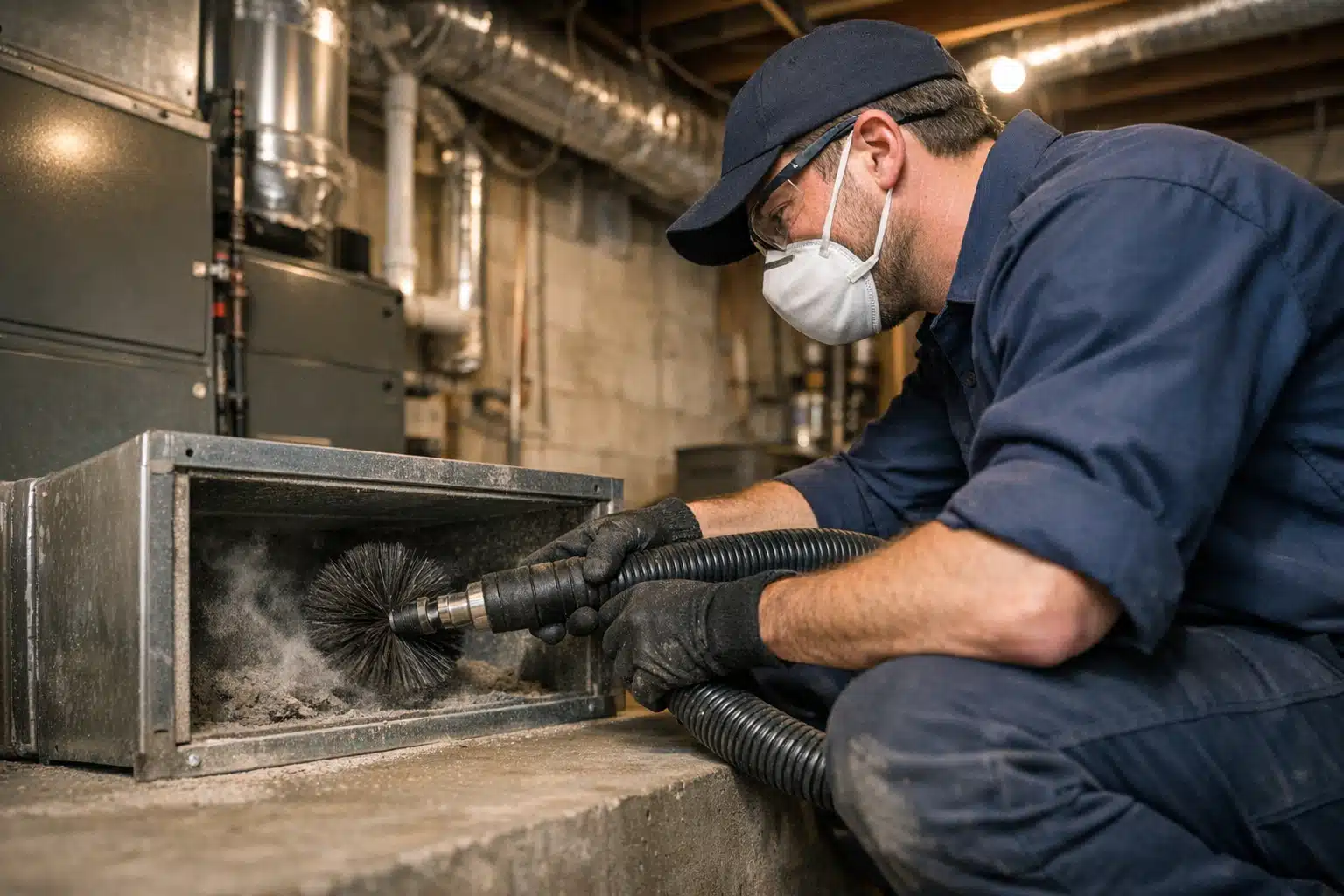
A duct cleaning visit uses negative-air equipment and agitation tools to pull debris from the full run of ductwork. A technician inspects supply and return lines, cleans the vents, and checks for gaps or damage.
A whole-house air purifier installs at the HVAC system so it treats every room the ductwork serves. Placement, system compatibility, and filter type all factor into how it performs.
Ask any technician to show you the before-and-after condition of your ducts. Seeing the removed debris tells you whether the cleaning was warranted and thorough.
Conclusion
Duct cleaning removes what is already trapped in your system; a whole house air purifier filters the smoke, pollen, and fine dust that keeps entering your Denver home. Most homes facing wildfire smoke and allergy season benefit from cleaning the ducts first, then adding continuous purification. That order gives you cleaner air now and lasting protection when Front Range conditions turn.
Action Air Duct handles both duct cleaning and whole-home air purification for Denver-area homes and businesses. Call or text 720‑257‑3319, email tamir@actionairduct.net, or visit https://actionairduct.net to schedule an inspection before smoke season arrives.