
Is Your Basement Cool but Upstairs Sweltering? Two-Story Denver Home Cooling Solutions
Many Denver homeowners experience significant temperature differences between their upstairs and basement during summer months. This issue often stems from airflow and duct problems rather than a malfunctioning air conditioner.
- Heat rises, causing warm air to accumulate upstairs while cool air settles below. This temperature gap can reach 8 to 12 degrees in two-story homes.
- Duct balancing can effectively address airflow issues, ensuring each room receives adequate conditioned air and improving overall comfort.
- Regular duct cleaning and maintenance can enhance airflow and indoor air quality, especially in Denver's dry climate.
What are cooling solutions for a two-story home in Denver?
To address the temperature disparity in a two-story Denver home, consider installing ceiling fans, using window treatments, and ensuring proper insulation. Additionally, upgrading your HVAC system or adding ductless mini-splits can help regulate temperatures between the cooler basement and warmer upstairs areas.
If your basement feels like a cave in July but your upstairs bedrooms feel like an attic, you are not imagining it. The complaint that your upstairs is too hot in Denver homes ranks among the most common summer cooling problems we hear about. A temperature gap of 8 to 12 degrees between floors is normal in many two-story houses along the Front Range.
The good news: most of these imbalances come from airflow and duct issues, not a broken air conditioner. Below you will learn why heat collects upstairs, which fixes work, and when to call for help.
Why Your Upstairs Is Too Hot in Denver Two-Story Homes
Heat rises. Warm air from your main floor and basement drifts upward and gets trapped on the second level. Your air conditioner fights this every hour of a Denver summer afternoon.
Denver adds its own pressure to the problem. High-altitude sun exposure is intense, and second-story rooms bake under the roof. Front Range temperature swings mean a house that feels fine in the morning can overheat by 4 p.m.
A few physical realities drive most two-story imbalances:
- Stack effect: Warm air migrates up and cool air settles down.
- Roof heat gain: Attic temperatures can climb far above outdoor readings.
- Longer duct runs: Air traveling to the second floor loses pressure and cooling along the way.
- One thermostat, two zones: A single thermostat on the main floor reads satisfied while upstairs still cooks.
The Direct Answer
A hot upstairs in a two-story home usually means your duct system delivers unequal airflow between floors. Balancing that airflow, sealing leaks, and clearing blocked ducts restores comfort in most cases.
Duct Balancing: The Overlooked Fix for Two-Story Home Cooling Balance
Duct balancing is the practice of adjusting airflow across a home so each room receives the right amount of conditioned air. It is the difference between a system that runs and a system that keeps every room comfortable.
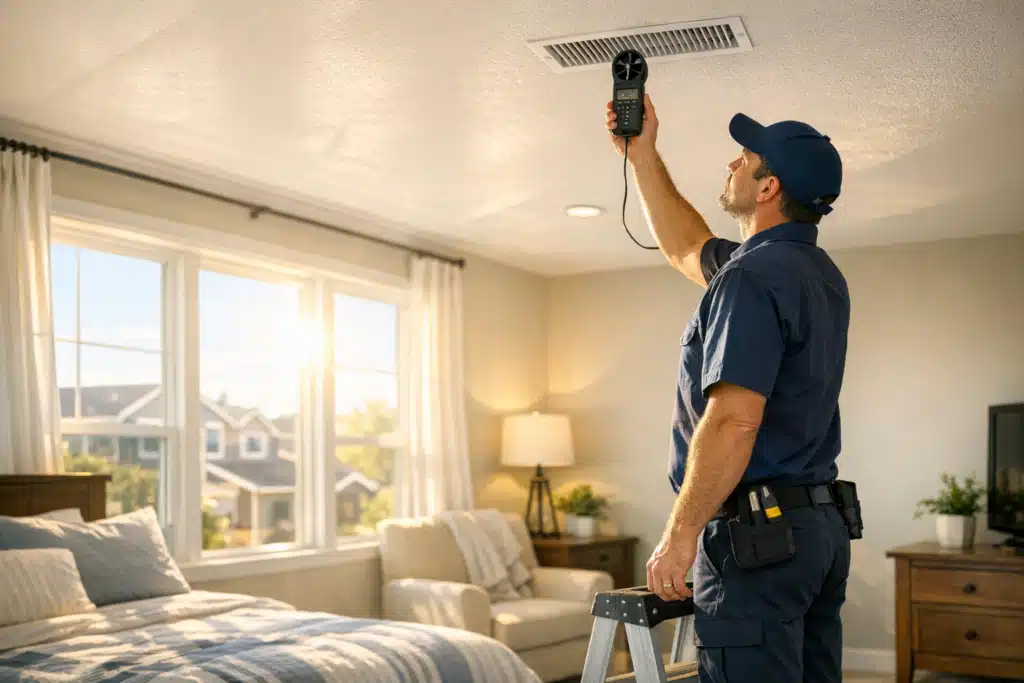
Many Denver two-story homes were built with ductwork sized mainly for the main floor. The second-floor branches were added as an afterthought. That design choice shows up every summer.
How Balancing Works
Balancing shifts cool air toward starved rooms without starving the rest of the house. A technician measures airflow at each register and makes targeted adjustments.
Common balancing steps include:
- Adjusting dampers inside the trunk lines to send more air upstairs.
- Partially closing basement registers that already run cold.
- Checking static pressure to confirm the blower moves enough air.
- Verifying supply and return balance on each floor.
Good two-story home cooling balance often improves comfort more than a bigger air conditioner would. It addresses the cause, not the symptom.
Dirty and Leaky Ducts Make the Problem Worse
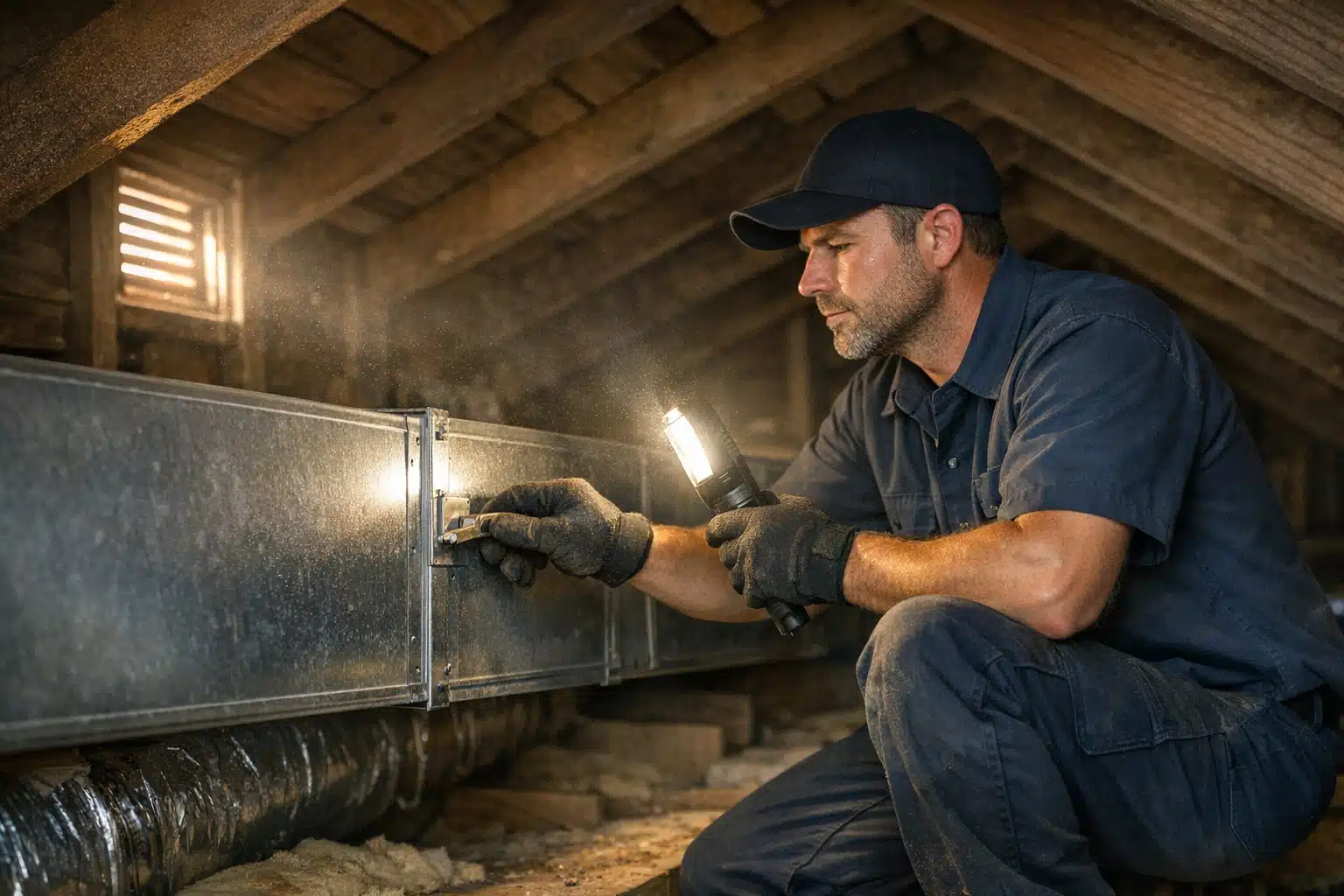
Blocked or leaky ducts strangle airflow to the rooms that need it most. On a second floor with long duct runs, small losses add up fast.
Here is what we find during real inspections of hot-upstairs homes:
- Dust and debris buildup narrowing supply ducts and cutting airflow.
- Disconnected duct joints in the attic dumping cool air into unused space.
- Crushed flex duct behind drywall or above ceilings.
- Leaky seams leaking 20 to 30 percent of conditioned air before it reaches the room.
Denver’s dry, dusty climate and wildfire smoke seasons accelerate buildup inside ducts. When those upstairs branches clog, the floor that already struggles gets even less air.
When Duct Cleaning Helps
Duct cleaning helps when reduced airflow, visible dust at registers, or years of neglect point to buildup inside the system. A clean duct system moves air the way it was designed to.
We recommend having ducts inspected every 3 to 5 years, sooner after remodels or heavy smoke seasons. Cleaning restores airflow capacity that dust has quietly stolen.
Practical Fixes You Can Try First
Some steps are safe to test before booking service. They may narrow the gap between your floors.
- Adjust registers seasonally. Partially close basement and main-floor vents in summer to push air upstairs.
- Replace your air filter. A clogged filter chokes airflow to every room. Check monthly during peak cooling.
- Set the fan to ON. Continuous blower operation mixes air between floors and evens out temperatures.
- Close upstairs blinds. Denver’s strong sun heats second-floor rooms fast through unshaded windows.
- Clear blocked registers. Move furniture and rugs off supply and return vents.
If these steps help a little but not enough, the issue is inside your ductwork. That points to balancing, sealing, or cleaning by a technician.
Warning Signs You Need a Technician
Certain symptoms mean guesswork will not fix the problem. Watch for these red flags:
- A temperature gap over 10 degrees between floors.
- Weak or no airflow from upstairs vents.
- Rooms directly above a running vent that never cool.
- An air conditioner that runs nonstop yet the upstairs stays warm.
- Rising energy bills with no comfort improvement.

Bigger Cooling Upgrades Worth Weighing
When balancing and cleaning are not enough, structural upgrades close the gap. Each fits a different home and budget.
Zoning Systems
A zoning system uses motorized dampers and multiple thermostats to cool floors independently. Your upstairs gets its own setting, so it stops relying on a main-floor thermostat.
Adding Returns
Second floors starved for return air cannot exhaust heat efficiently. Adding an upstairs return path lets hot air escape and cool air replace it.
Attic Insulation and Sealing
Sealing attic bypasses and adding insulation blocks the roof heat that pours into upstairs rooms. In Denver’s high-sun summers, this reduces the load on your whole system.
Why This Matters for Denver Homeowners
Ignoring an imbalance does more than make bedrooms uncomfortable. It forces your air conditioner to run longer, which raises bills and shortens equipment life.
Balanced airflow spreads the workload evenly across your system. That protects the compressor and helps your unit reach its expected 12 to 15 year service life.
Cleaner, balanced ducts also improve indoor air quality. During wildfire smoke season, a well-sealed system keeps more outdoor particles from circulating inside.
Conclusion
A hot upstairs and cool basement usually trace back to unequal duct airflow, not a failing air conditioner. Duct balancing, sealing, and cleaning fix the cause and restore even comfort across both floors. The right steps also lower energy costs and extend the life of your system.
If your upstairs stays too hot in your Denver home, Action Air Duct can inspect your ductwork and correct the airflow imbalance. Call or text 720‑257‑3319, email tamir@actionairduct.net, or visit https://actionairduct.net to schedule an inspection.