
Why Denver’s High Altitude Affects Your Air Conditioning Performance
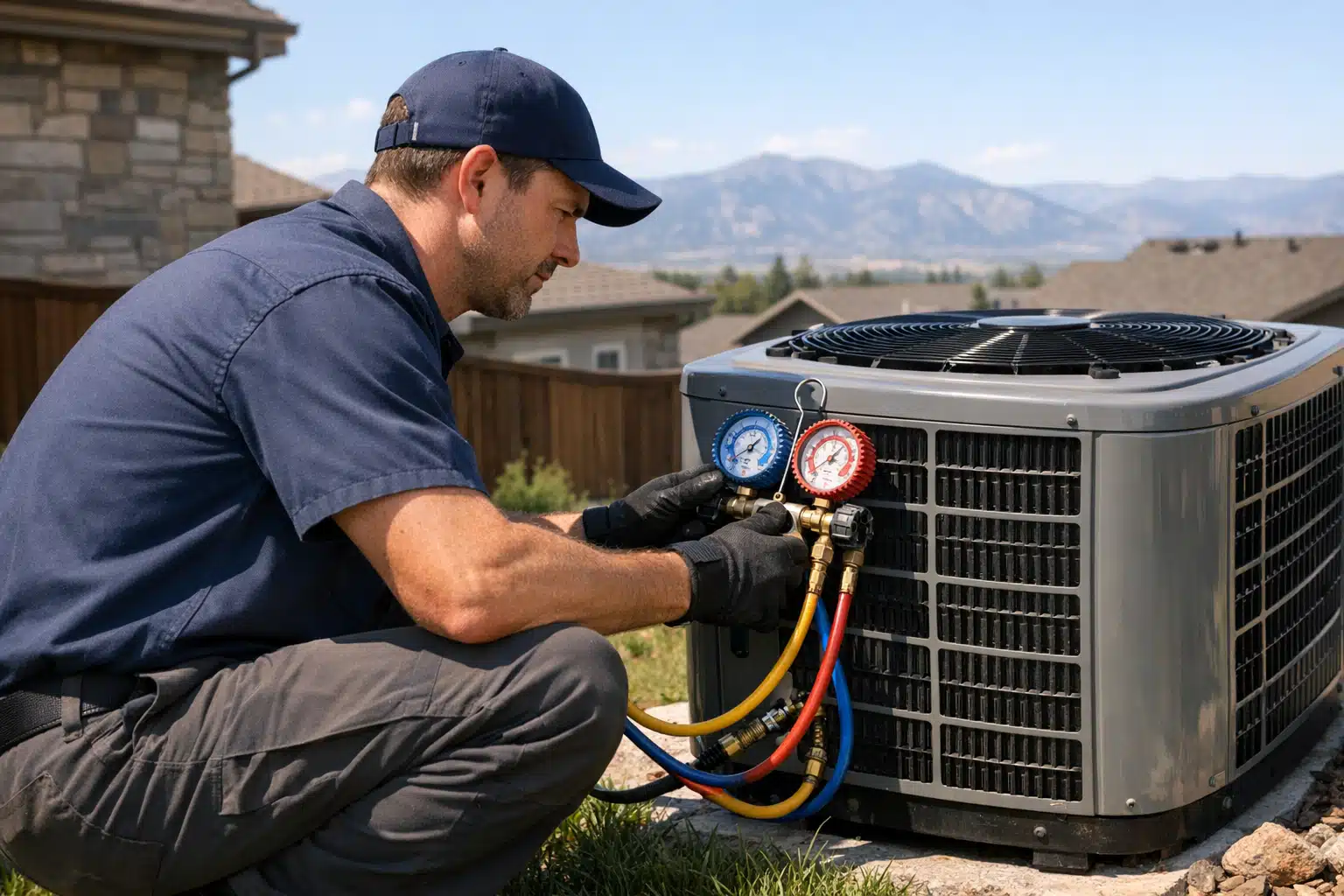
Denver's high altitude significantly impacts air conditioning performance due to thinner air, which affects heat transfer and cooling capacity. This article outlines the challenges posed by altitude and offers tips for maintaining efficient AC operation in the Denver area.
- Air conditioners in Denver struggle to cool effectively because thinner air holds less heat, leading to longer run times. Adjustments in blower speed and refrigerant charge are often necessary for optimal performance at high altitude.
- Common symptoms of altitude-related strain include high electric bills, uneven cooling, and warm air from vents even when the system is running.
- Regular maintenance, including coil cleaning and filter changes, is essential to keep AC systems running efficiently in Denver's unique climate conditions.
How does high altitude affect air conditioning performance in Denver?
High altitude in Denver impacts air conditioning performance because thinner air holds and transfers heat differently compared to sea level. As a result, air conditioners in Denver move less heat than the same models would in lower elevations, affecting their efficiency and cooling capabilities.
Your air conditioner in Denver moves less heat than the same model would in Kansas City. The reason has nothing to do with your equipment brand and everything to do with elevation. High altitude air conditioning in Denver faces a physics problem: thinner air holds and transfers heat differently than air at sea level.
Denver sits at 5,280 feet, and the air here contains fewer molecules per cubic foot. That single fact shapes how your AC cools, how hard it works, and how quickly it wears out.
This article explains what altitude does to your cooling system, which warning signs point to altitude-related strain, and how to keep your AC running efficiently at Front Range elevation.
How High Altitude Air Conditioning in Denver Actually Works
Air conditioners cool by moving heat from inside your home to the outdoors. They rely on air passing across coils to carry that heat away. Thinner mountain air makes each part of that job harder.
Thin air carries less heat. At Denver’s elevation, air density drops roughly 15 to 17 percent compared to sea level. Fewer air molecules pass across your condenser coil, so less heat gets removed per minute.
The result is a real drop in cooling capacity. An AC rated for a certain performance at sea level does not hit that same number at 5,280 feet.
The Two Places Altitude Hits Your System
Altitude affects two heat-exchange points inside your cooling system:
- The outdoor condenser coil — thinner air removes heat from the refrigerant less effectively, forcing the compressor to run longer.
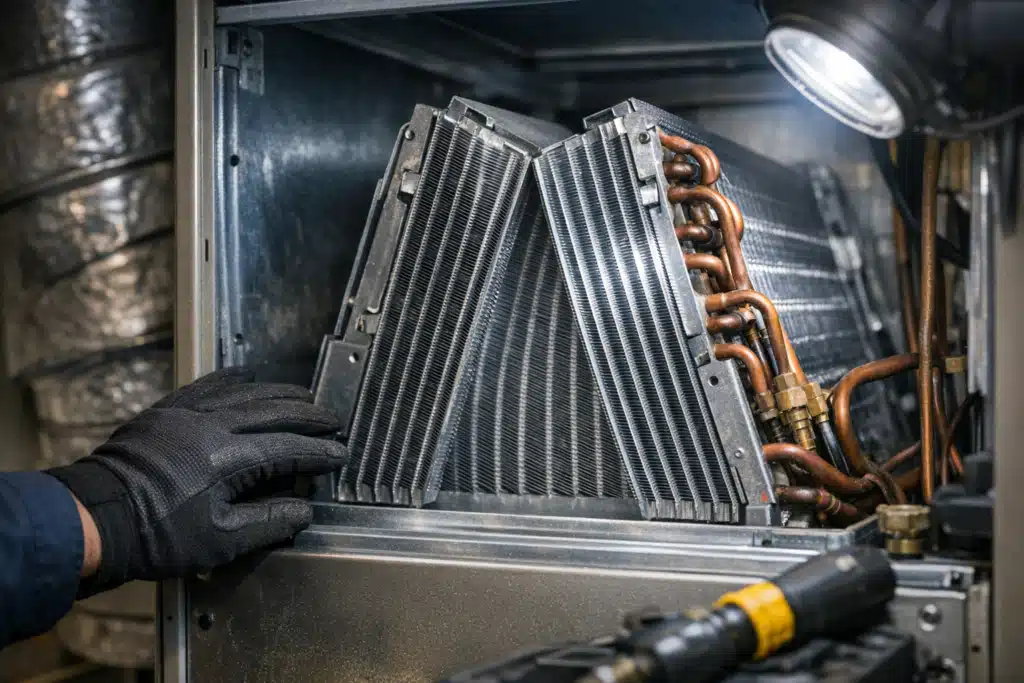
- The indoor evaporator coil — the same low-density air moving over the coil absorbs less heat from your rooms per pass.
Both effects stack. Your system compensates by running longer cycles to reach the same thermostat setting.
Why Colorado AC Efficiency Depends on Correct Sizing and Charge
Colorado AC efficiency depends heavily on whether the system was set up for altitude in the first place. Two setup mistakes cause most altitude-related problems.
Airflow Must Be Adjusted for Thin Air
Blower fans move a set volume of air, but thin air weighs less. To move the same mass of air needed for proper heat transfer, blowers frequently need higher speed settings at altitude.
A system installed with sea-level blower settings often underperforms in Denver. Rooms feel uneven, and the AC runs constantly without reaching the set temperature.
Refrigerant Charge and Coil Load
Refrigerant amounts are calibrated to how much heat the coil absorbs. When thin air changes heat transfer, an incorrectly charged system runs at wrong pressures.
Common symptoms of a poorly matched setup include:
- Long cycles that rarely shut off during afternoon heat
- Warm air from vents even when the compressor runs
- High summer electric bills from constant operation
- Ice on the indoor coil or refrigerant lines
Denver’s Climate Adds More Strain Than Altitude Alone
Altitude is one piece. Denver’s specific weather pattern makes the picture harder for cooling equipment.
Intense High-Altitude Sun
Thinner atmosphere filters less sunlight. Roofs, attics, and outdoor condensers absorb stronger solar radiation than they would at lower elevation, adding heat load your AC must remove.
Wide Daily Temperature Swings
A Denver summer day can hit 95 degrees in the afternoon and drop into the 50s overnight. Your AC handles heavy load for a few hours, then sits idle. That start-stop pattern stresses compressors over years.
Dust, Dry Air, and Wildfire Smoke
Front Range air runs dry and dusty. During wildfire season, fine smoke particles coat coils and clog filters faster than usual.
A dirty condenser coil already fights thin air. Add a layer of dust or soot, and heat transfer drops even further. Coil cleaning matters more at altitude than at sea level.
Warning Signs Your AC Is Struggling With Altitude
Some symptoms point directly to altitude-related strain rather than simple breakdowns. Watch for patterns, not one-time events.
- The system never catches up on hot afternoons. It runs nonstop but the house stays two or three degrees above the setting.
- Cooling gets worse late in summer. Accumulated coil dust and smoke reduce already-limited heat transfer.
- Electric bills climb faster than temperatures. Long run times burn power without matching comfort gains.
- Certain rooms stay warm. Weak airflow in thin air struggles to reach far vents.
- The outdoor unit feels extremely hot. The compressor works overtime to reject heat into thin air.
One or two of these signs may mean routine maintenance. Several together suggest your system was never matched to Denver conditions.

How to Keep High-Altitude Cooling Running Efficiently
You cannot change the elevation, but you can remove every other obstacle to heat transfer. That gives your AC the best shot at coping with thin air.
Maintenance Steps for Denver Homeowners
- Replace air filters every 30 to 60 days during cooling season, and monthly during wildfire smoke events.
- Keep the outdoor condenser clear of cottonwood fluff, grass clippings, and dust that block airflow.
- Schedule a spring AC tune-up before the first heat wave hits the Front Range.
- Have coils cleaned yearly since altitude leaves no margin for dirty heat-exchange surfaces.
- Ask a technician to verify blower speed and refrigerant charge are set for Denver elevation.
Why Duct and Coil Cleaning Matter More Here
Clean ducts and coils protect what little heat-transfer margin altitude leaves you. Dust buildup that a sea-level system might tolerate can push a Denver system into constant running.
Clogged ducts also drop airflow volume, which compounds the thin-air problem. A cleaned duct system lets your blower move the air mass the coils need.
When to Call a Technician
Handle filter changes and outdoor debris yourself. Call a technician when you notice:
- Ice forming on refrigerant lines or the indoor coil
- Cooling that fails to keep pace despite clean filters
- Sudden jumps in summer electric bills
- An outdoor unit that short-cycles or runs without ever stopping
Refrigerant charge, blower calibration, and coil repair need trained hands and proper tools. Guessing at charge levels at altitude usually makes performance worse.
What to Expect From Altitude-Aware AC Service
A technician who understands Denver conditions checks more than a standard tune-up. They confirm the system was set up for 5,280 feet, not shipped-from-the-factory sea-level defaults.
Good altitude-aware service includes:
- Measuring actual airflow and adjusting blower speed for thin air
- Verifying refrigerant charge against altitude-corrected targets
- Cleaning condenser and evaporator coils for full heat transfer
- Inspecting ducts for leaks and blockages that waste airflow
This attention keeps your compressor from overworking, which extends equipment life and holds down summer power costs.
Key Takeaways for Denver AC Owners
Thin mountain air lowers your AC’s cooling capacity, forces longer run times, and leaves no margin for dirty coils or clogged filters. High altitude air conditioning in Denver rewards owners who keep airflow clean and setup correct for elevation. Regular coil cleaning, filter changes, and altitude-aware tune-ups turn a struggling system into a steady one.
Action Air Duct helps Denver homeowners and businesses keep cooling systems running efficiently at Front Range elevation. Schedule a duct cleaning, coil cleaning, or AC inspection by calling or texting 720‑257‑3319, emailing tamir@actionairduct.net, or visiting https://actionairduct.net.