
New to Denver? Why Dry Air Speeds Up Dryer Lint Buildup
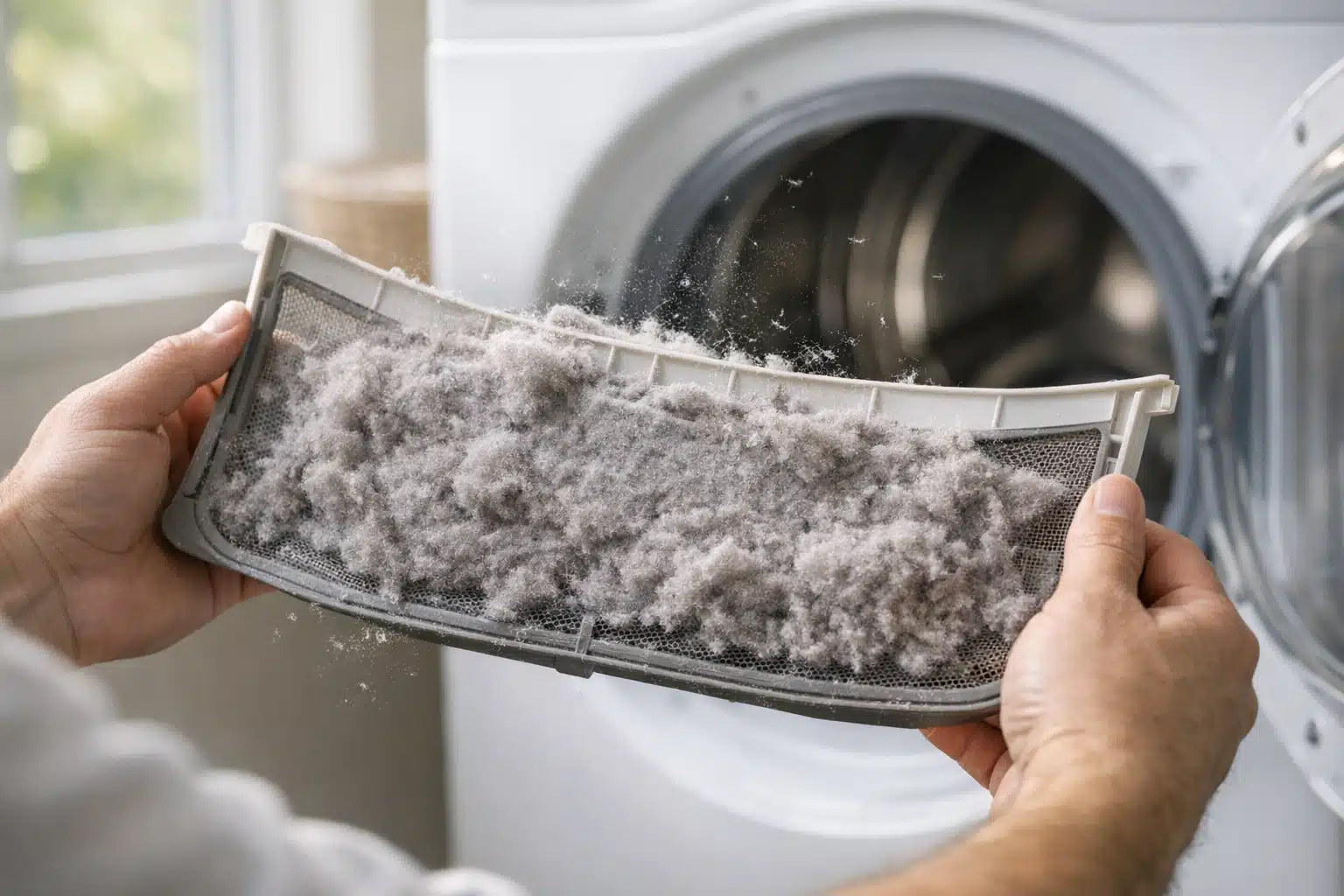
Moving to Denver can lead to faster lint buildup in dryer vents due to the dry climate and high altitude. New residents need to be aware of the signs of lint accumulation and the importance of regular vent cleaning.
- Denver's low humidity increases static electricity, causing more lint to accumulate in dryer vents. Homes from humid areas often experience clogged vents within months of moving.
- Warning signs of lint buildup include damp clothes after drying, a hot laundry room, and a burning smell near the dryer.
- Most homes in Denver should clean their dryer vents annually, but those with heavy usage or pets may need to do so every six to nine months.
Why does dryer lint buildup increase in Denver?
Dryer lint buildup increases in Denver due to the city's dry climate, which causes moisture to evaporate more quickly. As a result, lint accumulates faster in the dryer vent, surprising newcomers who may not have experienced this issue in more humid environments.
If you moved to Denver and noticed your lint trap fills up faster than it did back home, your dryer is not broken. Denver’s dry climate dryer vent lint problem is real, and it catches most newcomers off guard within the first few loads of laundry.
The short answer: low humidity and static electricity at high altitude cause fabric fibers to shed and cling more aggressively. That means more lint in your trap and more buildup inside your vent line.
Below, you learn why this happens, what warning signs to watch for, and how often Denver homes should clean their dryer vents.
Why Dry Climate Dryer Vent Lint Builds Up Faster in Denver
Dry climate dryer vent lint accumulates faster because low humidity increases static electricity, which pulls loose fibers off clothing during every cycle. Denver sits at roughly 5,280 feet, and the air here holds far less moisture than most coastal or Midwestern cities.
When humidity drops, static charge rises. Charged fabric fibers separate more easily and stick to lint screens, vent walls, and duct ridges.
The Static Connection Most Articles Miss
Techs who clean vents across the Front Range notice a pattern. Homes that recently relocated from humid states report clogged vents within months, not years.
The reason is physical, not mechanical:
- Low humidity dries fibers, making them brittle and prone to breaking free.
- Static charge increases, so loose fibers cling to metal and plastic duct surfaces.
- Dry lint packs tighter than damp lint, forming denser blockages inside the line.
In humid climates, moisture weighs lint down and reduces static cling. Denver removes both of those brakes.
Altitude Adds Another Layer
Thinner air at altitude changes how your dryer moves exhaust. Lower air density means your dryer’s blower pushes lint-laden air with less force against the same vent length.
Weaker airflow lets more fibers settle inside the duct instead of exiting outside. Over time, settled lint narrows the passage and traps even more debris.
How Dryer Vent Buildup in Denver Affects Your Home
Dryer vent buildup in Denver shortens appliance life, raises energy bills, and creates fire risk. A restricted vent forces your dryer to run longer and hotter to finish each load.
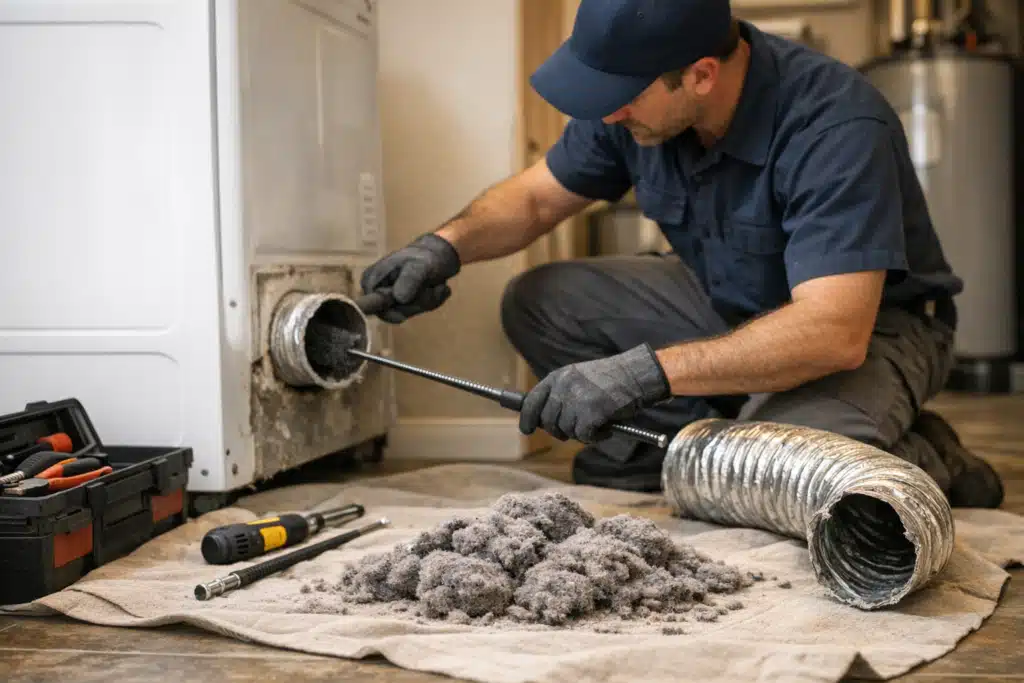
Here is what that restriction costs you:
- Longer drying times — clothes take two or three cycles to dry fully.
- Higher energy use — extended cycles push up your Xcel utility costs.
- Overheating — trapped heat wears out the heating element and motor.
- Fire hazard — dry, packed lint ignites easily near a hot exhaust.
The fire risk matters more in a dry climate. Denver’s arid indoor air keeps lint bone-dry, which lowers the temperature needed for ignition.
A Common Denver Scenario
A family relocates from Houston to a Highlands townhome. Their gas dryer worked fine for years in humid air.
Within four months, they notice damp towels after a full cycle and a burning smell near the laundry closet. Their vent line, packed with dry lint, had lost half its airflow capacity.
This pattern repeats across Denver homes every laundry season.
Warning Signs Your Dryer Vent Needs Cleaning
Watch for these signs that dry climate dryer vent lint has restricted your line:
- Clothes stay damp after a normal cycle finishes.
- The laundry room feels hot or humid during and after drying.
- A burning or musty smell appears near the dryer.
- The exterior vent flap barely opens when the dryer runs.
- Lint appears around the door seal or on clothing after drying.
- The dryer surface feels unusually hot to the touch.
Any single sign warrants a check. Two or more mean you should clean the vent before running another load.
How Often Should Denver Homes Clean Their Dryer Vents?
Most Denver homes should clean their dryer vents once a year. Households with heavy laundry loads, pets, or long vent runs benefit from cleaning every six to nine months.
Denver’s dry air pushes many homes toward the shorter end of that range. Here is a practical schedule:
- Standard household (1-2 people): once every 12 months.
- Family household (3+ people): every 8 to 10 months.
- Homes with pets: every 6 to 8 months.
- Long or complex vent runs: every 6 months.
Track your first year after moving to Denver. If lint fills the trap faster than it did before, shorten your interval.
Why Annual Cleaning Matters More Here
In humid regions, some homes stretch cleaning to 18 months without trouble. Denver rarely allows that margin.
Dry, static-charged lint builds a denser layer inside the duct. Waiting too long turns a routine cleaning into a stubborn blockage removal.
DIY Checks Versus Calling a Technician
You can handle basic maintenance yourself between cleanings. Some situations, though, call for a trained tech.
Safe DIY Steps
- Clean the lint screen before every load, not weekly.
- Check the exterior vent flap for lint and confirm it opens fully.
- Vacuum around the dryer and behind it to catch loose fibers.
- Feel the dryer body during a cycle to spot overheating early.
When to Call a Technician
Bring in a trained tech when the vent line itself needs attention. This includes long ducts, roof-vented systems, and any line you cannot reach safely.
Professional cleaning clears the full duct length, not just the visible ends. A tech uses rotary brushes and airflow tools to remove packed lint that hand tools miss.
Call for service when you notice:
- Repeated damp loads after cleaning the lint screen.
- A vent run longer than 15 feet or with multiple bends.
- A rooftop or second-story exterior vent.
- Any burning smell that returns after basic cleaning.

How Dryer Vent Cleaning Connects to Whole-Home Air Quality
A clogged dryer vent affects more than laundry. Excess heat and moisture push back into your living space when exhaust cannot escape.
In a dry Denver home, that trapped moisture can feed mold near the laundry area. Loose lint fibers add to the indoor dust load your HVAC system already fights.
Pairing dryer vent cleaning with air duct cleaning keeps both systems clear. Cleaner ducts mean less airborne dust, fewer allergens, and steadier airflow during heating and cooling seasons.
Preparing for Denver’s Seasonal Swings
Denver laundry habits shift with the seasons. Winter brings more layers, blankets, and heavy loads that shed extra lint.
Cold months also mean your gas dryer runs harder against outdoor air. A clear vent helps it exhaust efficiently even when temperatures drop below freezing.
Schedule dryer vent cleaning in early fall. You enter winter with clear lines and lower fire risk during peak laundry months.
Key Takeaways
Denver’s low humidity and high altitude speed up dry climate dryer vent lint through static cling and weaker airflow. New residents should watch for damp loads, longer drying times, and burning smells, then clean vents at least once a year.
Clearing your vent protects your appliance, lowers energy costs, and reduces fire risk in a climate that keeps lint dangerously dry.
If your dryer runs longer than it should since moving to Denver, Action Air Duct can inspect and clean your full vent line. Call or text 720‑257‑3319, email tamir@actionairduct.net, or visit https://actionairduct.net to schedule a dryer vent cleaning.