
Signs Your Home Needs Duct Repair, Not Just Cleaning
This article outlines the signs that indicate a need for duct repair rather than just cleaning, emphasizing the importance of maintaining sealed and connected ductwork for energy efficiency and comfort. Homeowners in Denver should be aware of symptoms like uneven temperatures, rising energy bills, and visible damage to their duct systems.
- Uneven temperatures in different rooms often signal loose or collapsed ducts that need repair. Rising energy bills without changes in usage indicate leaking ducts that force HVAC systems to work harder. Visible damage, such as sagging or disconnected ductwork, requires attention to prevent further issues.
- Air duct cleaning removes dust, allergens, and debris from your [...] Air duct cleaning removes dust, allergens, and debris from your system, but it can also expose problems a vacuum cannot fix.
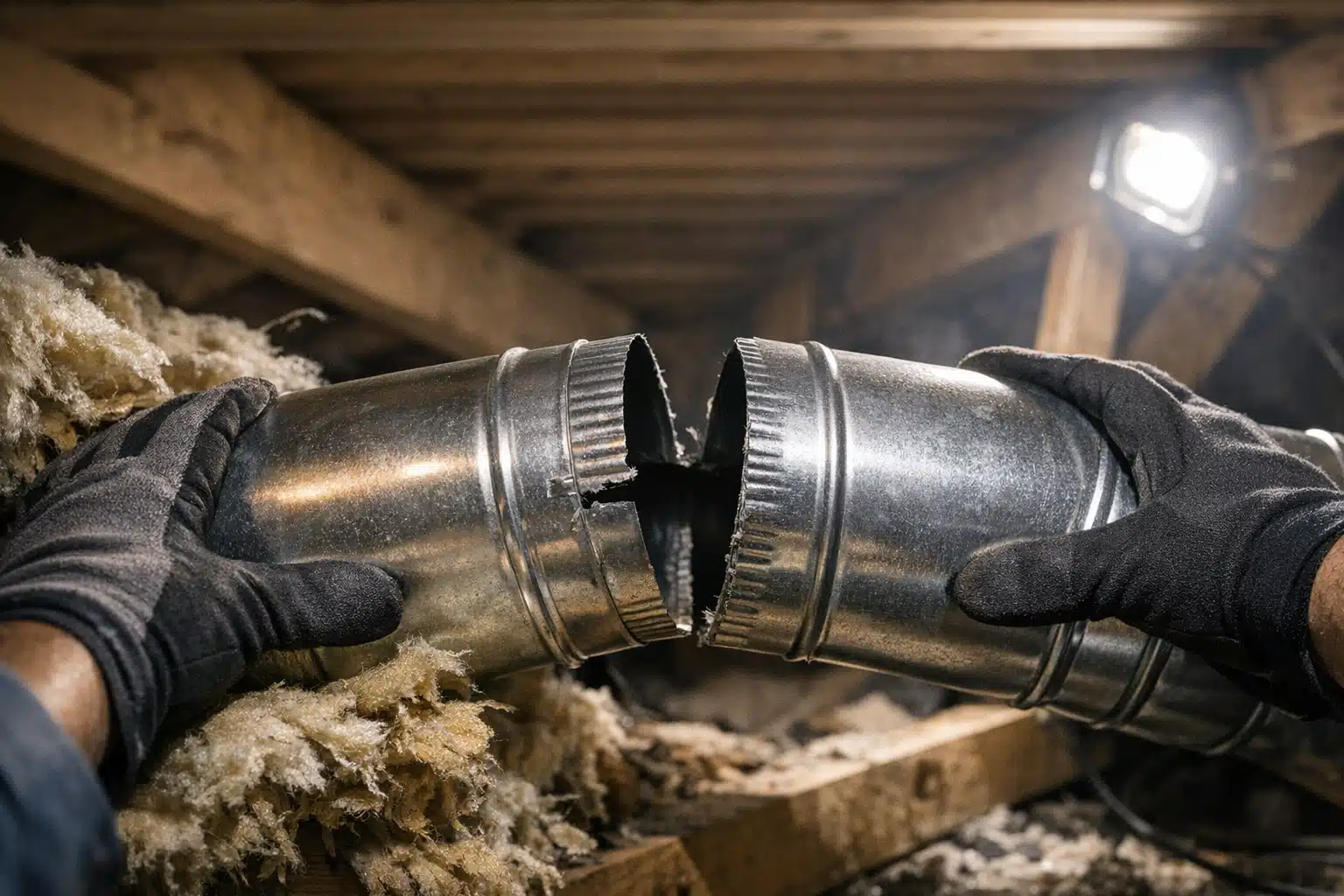
- One of the clearest signs you need duct repair shows up during a routine cleaning, when a technician reaches into a return and finds a joint that has pulled apart behind a wall.
What are the signs that indicate your home needs duct repair?
Signs that your home needs duct repair include discovering disconnected joints during routine cleaning, noticeable dust accumulation despite cleaning, and uneven airflow in different rooms. These issues suggest that the ductwork may be compromised, requiring repair to maintain efficient air circulation and improve indoor air quality.
Air duct cleaning removes dust, allergens, and debris from your system, but it can also expose problems a vacuum cannot fix. One of the clearest signs you need duct repair shows up during a routine cleaning, when a technician reaches into a return and finds a joint that has pulled apart behind a wall. Cleaning dirty ducts matters, but sealed, connected ducts matter more.
Denver homes face cold winters, warm high-altitude summers, and constant dust from the Front Range. Leaky or broken ductwork wastes the heating and cooling you pay for. This article walks you the warning signs that mean repair, not just cleaning.
Cleaning Versus Repair: What’s the Difference?
Duct cleaning removes built-up dust, pet dander, and debris from the inside of your supply and return lines. Duct repair fixes the physical structure of the ductwork itself, including disconnected sections, crushed flex, and sealing gaps.
A clean duct with a broken joint still leaks conditioned air into your attic or crawlspace. You keep paying to heat air that never reaches your rooms.
Here is the practical split:
- Cleaning handles: dust buildup, allergen accumulation, debris, and post-renovation drywall particles.
- Repair handles: separated connections, torn flex duct, crushed runs, failed seals, and rodent damage.
Many Denver homeowners book a cleaning and learn their real issue is structural. A clean system that leaks 20 to 30 percent of its air still drives up utility bills.
Signs You Need Duct Repair, Not Just Cleaning
The clearest signs you need duct repair involve comfort, cost, and physical damage a technician can see or feel. Watch for the following symptoms in your home or commercial space.
1. Uneven Temperatures Between Rooms
One bedroom stays freezing in January while the living room feels fine. That gap usually points to a duct that has come loose or collapsed before reaching that room.
In two-story Denver homes, upstairs rooms suffer most when supply runs disconnect in the attic. Cleaning will not fix a run that no longer connects to its register.
2. Rising Energy Bills Without a Weather Explanation
Your Xcel bill climbs even though the thermostat setting has not changed. Leaking ducts force your furnace or AC to run longer to hit the same temperature.
During a cold Front Range snap, a disconnected joint in an unconditioned crawlspace bleeds heat straight into the ground. You feel it in both comfort and cost.
3. Rooms That Never Get Enough Airflow
Weak airflow from a register often means a crushed or kinked flex duct upstream. Flex duct gets stepped on, pinched by storage boxes, or compressed during other home work.
A pinched flex line chokes airflow no matter how clean the duct is inside.
4. Excess Dust Returning Days After Cleaning
You cleaned the ducts, but dust coats your surfaces again within a week. Gaps in the return side pull dust from attics, wall cavities, and crawlspaces into your airflow.
Denver’s dry climate and dust loads make this symptom common. If dust returns fast after a cleaning, the ductwork is drawing unfiltered air through a gap.
5. Whistling, Rattling, or Banging Noises
Loose duct sections rattle and vibrate when the blower kicks on. A whistling sound points to air escaping a seam or a pinhole in the metal.
Banging in the ducts can mean a panel flexing where a connection has failed.
6. Visible Damage in Attics, Crawlspaces, or Basements
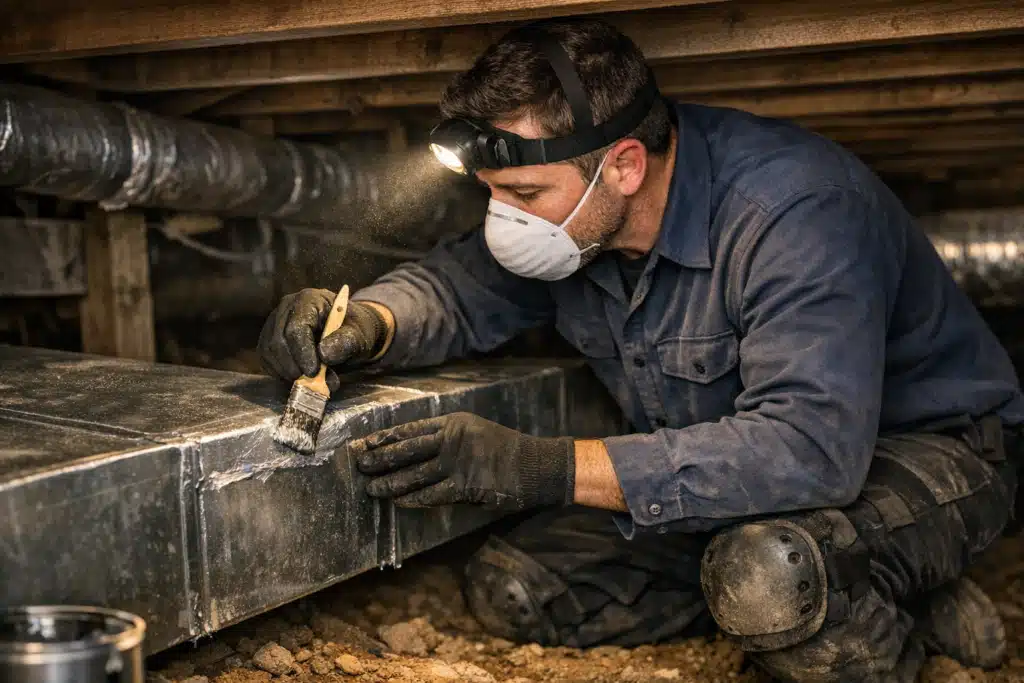
If you can see your ductwork, look for sagging flex, loose tape, or gaps at joints. Rodents in Colorado crawlspaces chew holes and nest inside duct runs.
Any hole, tear, or disconnected collar is a repair issue, not a cleaning one.
What Technicians Find Mid-Cleaning That Signals Repair
Cleaning crews see the inside of ductwork that homeowners never view. During a standard cleaning, our techs routinely find structural problems that explain months of comfort complaints.
The most common discoveries include:
- Disconnected joints: A supply run separates from a plenum or branch, dumping conditioned air into an attic. The connected room gets little to no airflow.
- Crushed flex duct: Insulated flex lines get flattened by foot traffic, stored items, or settling. Airflow drops to a trickle past the crush point.
- Open seams and gaps: Old mastic cracks and foil tape peels after years of Denver temperature swings. The gap leaks air and pulls in dust.
- Failed takeoff collars: The metal collar connecting a branch to the trunk works loose, leaving an open hole at the connection.
- Rodent and pest damage: Chewed flex, nesting material, and torn insulation show up in older crawlspaces and attics.
Finding a disconnected joint mid-cleaning changes the conversation. Cleaning the duct matters, but reconnecting and sealing it restores the airflow you lost.
Why Flex Duct Fails in Denver Homes
Flex duct is the ribbed, insulated tubing used for many residential supply runs. It installs quickly but crushes and tears more easily than rigid metal.
Attic storage, settling, and prior repairs by non-specialists leave flex kinked or compressed. A single crushed section can starve an entire room of heat in winter.
Damaged Ductwork Warning Signs You Can Check Yourself
You can spot several damaged ductwork warning signs with a flashlight and a careful look. These DIY-safe checks help you decide whether to call for an inspection.
- Feel for air leaks: Run the system and pass your hand along visible duct seams. Escaping air points to a gap or failed seal.
- Look for disconnected sections: Check where flex meets metal collars in attics and crawlspaces.
- Inspect for sagging flex: Flex duct should run straight, not droop in deep loops that restrict airflow.
- Check for dark streaks: Dust marks around registers or joints mark air leaking out or in.
- Listen during startup: Rattles and whistles when the blower starts signal loose or leaking sections.
Stop at visual checks. Sealing joints, reconnecting runs, and replacing crushed flex calls for trained technicians and proper materials.

What Happens If You Ignore Duct Repair
Ignoring damaged ductwork costs you comfort, money, and air quality over time. A leaking return pulls attic dust, insulation fibers, and crawlspace air into your living space.
For Denver residents, that means more allergens indoors and worse air during wildfire smoke season. Leaks let smoke-laden attic air bypass your filter entirely.
Delayed repair also strains your equipment:
- Your furnace and AC run longer cycles, raising wear on the blower and compressor.
- Higher runtime shortens the lifespan of a system you hoped would last 15 to 20 years.
- Energy waste shows up on every monthly utility bill through the heating and cooling seasons.
Fixing a disconnected joint is far cheaper than replacing a worn-out system years early.
When to Call for an Inspection
Call for a duct inspection when comfort problems, high bills, or odd noises persist. Book repair-focused service when you see any of the following:
- One or more rooms stay too hot or too cold year-round.
- Energy bills rise without a change in weather or usage.
- Dust returns within days of a thorough cleaning.
- You see sagging, torn, or disconnected ductwork.
- Your system makes rattling, banging, or whistling sounds.
A cleaning appointment is a smart time to catch structural issues. Our technicians inspect connections as they clean, flagging repairs before they drain your wallet.
What to Expect From Repair Service
A technician inspects the full run, identifies the failure, and explains the fix. Repairs range from resealing a seam to replacing a crushed flex section or reconnecting a joint.
For heavily damaged or poorly designed systems, duct replacement or new installation restores proper airflow. Action Air Duct handles both cleaning and duct repair and installation, so one visit can address the full problem.
Conclusion
Clean ducts matter, but connected, sealed ducts decide whether your Denver home stays comfortable and efficient. The clearest signs you need duct repair include uneven rooms, rising bills, fast-returning dust, odd noises, and visible damage. Catching a disconnected joint or crushed flex during a cleaning saves you money and extends your system’s life.
Schedule your duct cleaning and inspection with Action Air Duct and let a technician check your connections while they work. Call or text 720‑257‑3319, email tamir@actionairduct.net, or visit https://actionairduct.net to book your appointment.