
Should You Clean Ducts Before or After Buying a Denver Home?
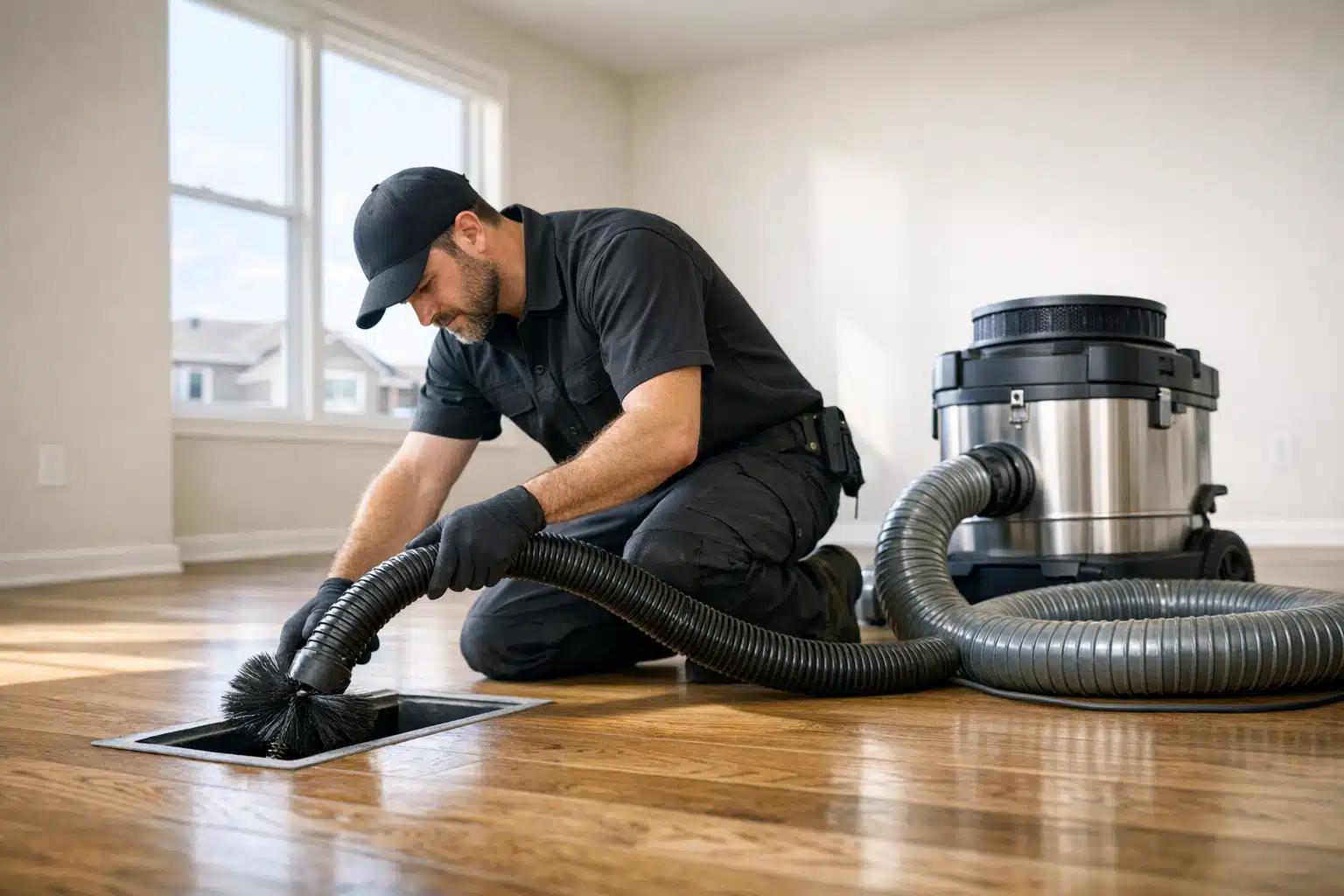
Cleaning ducts after purchasing a home in Denver is essential for a fresh start. This process helps remove hidden allergens and debris, ensuring a healthier living environment before moving in.
- Duct cleaning should be scheduled after closing and before moving in to allow full access for technicians. An empty home ensures a thorough clean without risking personal belongings.
- Common debris found in ducts includes pet dander, construction dust, and pollen, which can affect air quality and comfort.
- Real estate agents can recommend duct cleaning as a health benefit, enhancing client satisfaction and ensuring a smooth closing process.
Should you clean ducts before or after buying a home in Denver?
Cleaning ducts before moving into a new home in Denver is advisable to remove accumulated dust, pet dander, and other allergens. This process ensures a healthier living environment and can improve indoor air quality, making it a valuable step for new homeowners seeking a fresh start.
The empty home you just bought carries the invisible history of everyone who lived there before you. Pet dander, cooking grease, drywall dust from old remodels, and years of Front Range pollen all settle inside the ductwork. That hidden buildup is why duct cleaning when buying a house ranks high on the list for Denver buyers who want a fresh, healthy start.
The short answer: schedule duct cleaning after you close but before you move your furniture in. An empty house gives technicians full access and keeps the mess away from your belongings.
Below, you learn the right timing, what techs find in previously-owned Denver homes, and how to coordinate service around a real estate closing.
Should You Schedule Duct Cleaning Before or After Closing?
Duct cleaning after closing is the right call for most Denver buyers. Before the sale finalizes, the home still belongs to the seller, and you have no authority to send crews inside.
The ideal window is the gap between recording the deed and moving day. During that stretch, the home is yours and still empty.
Why an Empty Home Changes Everything
An empty house lets a technician reach every supply register and return grille without moving sofas or beds. Access equals a more thorough clean.
Dust loosened during cleaning also settles on bare floors, not your mattress or couch. Cleanup is faster, and nothing of yours gets dirty.
- Full access to vents hidden behind furniture in a lived-in home
- No risk to your clothing, electronics, or upholstery
- Faster scheduling since no one is home working or sleeping
- A clean baseline before your HVAC system circulates air you breathe daily
When Cleaning Before Closing Makes Sense
Sometimes a buyer negotiates duct cleaning as a seller concession. In that case, the work happens before closing, paid for by the seller.
This arrangement works when a home inspection flags heavy debris or visible mold near the air handler. Ask your agent to write the request into the purchase agreement.
What Technicians Find in Previously-Owned Denver Homes
Every previously-owned home hides a history you cannot see on a walkthrough. The ductwork holds evidence of how past occupants lived.
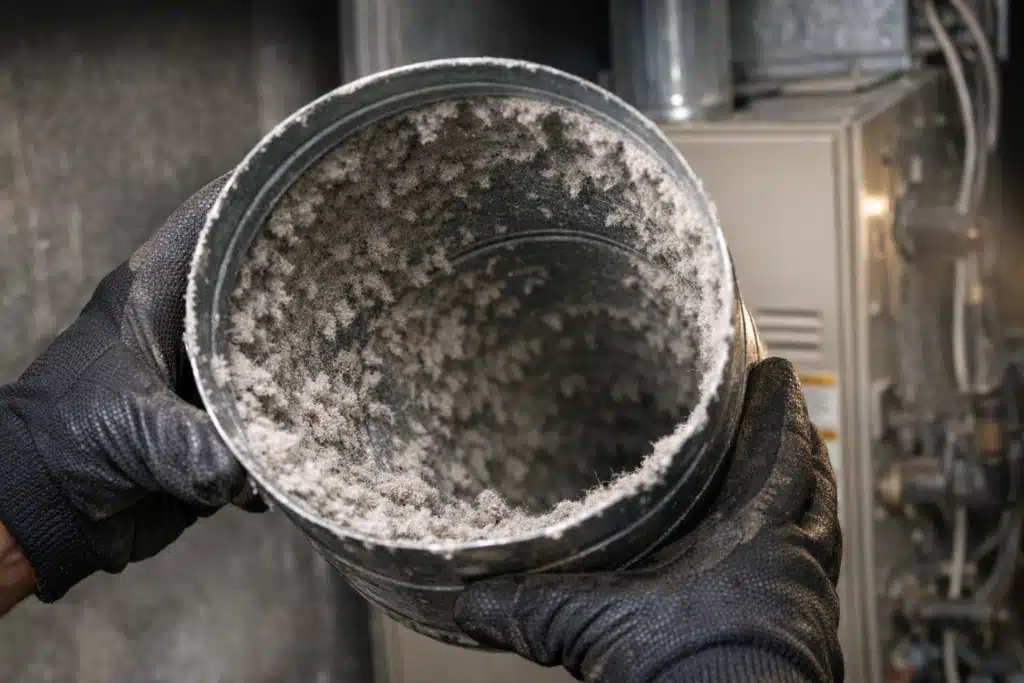
Here is what our crews commonly pull from Denver duct systems during a new home air duct cleaning:
- Pet dander and hair from dogs and cats, even in homes staged to look spotless
- Construction dust left behind from kitchen or basement remodels
- Front Range pollen and dust that accumulates during dry, windy seasons
- Rodent droppings or nesting material in older homes with gaps in the system
- Cigarette or cooking residue coating the inside of supply lines
- Drywall and insulation fragments from attic or crawlspace work
You have no record of when the prior owner last cleaned the ducts—if ever. That unknown history is the strongest reason to start fresh.
The Pet Dander Problem Buyers Underestimate
Pet allergens cling to duct walls for months after the animal leaves. A buyer with allergies can move into a “pet-free” home and still react.
Cleaning the ducts removes that reservoir of dander before your HVAC blows it room to room. For sensitive households, this step changes daily comfort.
Why Denver’s Climate Makes This Timing Matter More
Denver’s seasonal swings push HVAC systems hard, and dirty ducts make them work harder. A fresh system at move-in protects both your air and your equipment.
Winter Heating Demands
Cold Front Range winters mean your furnace runs for months straight. Dust trapped in the ducts gets baked and recirculated every heating cycle.
Starting with clean ducts keeps that first winter’s air cleaner. It also lets your furnace move warm air with less strain.
Summer Cooling and Wildfire Smoke
Denver summers bring warm days and, some years, wildfire smoke that drifts in from the mountains. Fine smoke particles settle inside ductwork and linger.
If the prior owners lived here during a smoky stretch, that residue is still inside. A move-in cleaning clears it before you run the AC all summer.
High-Altitude Dust and Dryness
Denver’s dry, high-altitude air keeps fine dust airborne longer than it would stay at sea level. More airborne particles mean more settles in your ducts over time.
How to Coordinate Duct Cleaning Around Your Closing
Timing the work takes a little planning with your agent and the seller. Use this sequence to line everything up.
- Request records during inspection. Ask the seller when the ducts were last cleaned. No records usually means it has been years.
- Decide who pays. Negotiate it as a concession, or budget for it yourself as a buyer expense.
- Book for the gap after closing. Schedule the cleaning for the window between recording and your move-in date.
- Confirm utilities are on. Technicians need power to run the HVAC blower during cleaning.
- Pair it with a filter change. Install a fresh filter right after cleaning for the cleanest possible start.
Advice for Real Estate Agents
Agents who recommend a move-in duct cleaning give clients a concrete health benefit. It is an easy add-on that makes the closing feel complete.
Suggesting the service during the empty-home window also avoids scheduling headaches later. Your buyers remember who looked out for their air quality.

I thought they were good but they left while the dryer still had a clogged vent notification, so that was $300 down the drain and now we have a real company, Denver Vent Techs, actually troublshooting the issue and finding that a booster fan is both non-functional and blocking everything they tried to blow out. They used a camera to help identify the issue and tracked down the access panel, and are also replacing all the elbows with proper ones. Unfortunately they fleeced us for their money, but now we know who to use in the future.
What to Expect From a Move-In Duct Cleaning
A thorough duct cleaning in a newly purchased home follows a clear order. Knowing the steps helps you judge whether the work was done right.
- Inspection first. The technician checks supply and return lines and the air handler before touching anything.
- Negative air setup. A vacuum system pulls debris out so it never blows back into rooms.
- Agitation. Brushes and compressed air dislodge caked-on dust from duct walls.
- Register and grille cleaning. Every vent cover gets attention, not just the main trunk lines.
- Final walkthrough. You see before-and-after conditions so the result is clear.
Expect the job to take a few hours depending on home size and system layout. A single-family Denver home with multiple returns needs more time than a condo.
What a Cleaning Will Not Fix
Duct cleaning removes buildup, but it does not repair damaged ducts or an aging furnace. If a technician spots disconnected joints or mold, that needs separate attention.
Ask for an honest report. A good crew tells you when a problem is outside the scope of cleaning.
Signs Your New Denver Home Needs Duct Cleaning
Some homes show clear evidence that the ducts were neglected. Watch for these warning signs during your walkthroughs:
- Visible dust coating the vent registers
- A musty or stale smell when the HVAC kicks on
- Pet odors that linger even in a vacated home
- Uneven airflow between rooms
- A dirty, clogged filter left in place by the prior owner
Any one of these points to a system that has gone too long without care. A move-in cleaning resets the clock.
Conclusion
Schedule your duct cleaning after closing and before move-in, when the home is empty and fully accessible. Previously-owned Denver homes hold pet dander, prior-owner dust, and an unknown maintenance history that a fresh cleaning clears away. That clean baseline protects your air quality and your HVAC system from the first heating and cooling season on.
Action Air Duct helps Denver buyers and real estate agents time duct service around closings for a clean start. Call or text 720‑257‑3319, email tamir@actionairduct.net, or visit https://actionairduct.net to book your move-in duct cleaning.