
AC Freezing Up in the Denver Heat? Common Causes and How to Prevent It
Air conditioning units in Denver can freeze up during hot weather due to airflow or refrigerant issues. Understanding the common causes and preventive measures can help maintain system efficiency and avoid costly repairs.
- A frozen AC often results from a dirty filter, blocked vents, or low refrigerant levels. These issues restrict airflow and cause the evaporator coil to ice over.
- Homeowners should regularly change filters and keep vents open to prevent freeze-ups. Running the AC during cool nights can also contribute to the problem.
- If an AC unit freezes again after thawing and filter replacement, it is advisable to call a technician for further inspection and repairs.
What causes an air conditioner to freeze up in hot weather?
An air conditioner can freeze up in hot weather due to several factors, including low refrigerant levels, dirty air filters, or blocked airflow. These issues prevent proper heat exchange, leading to ice formation on the evaporator coil, especially during extremely high temperatures.
Your air conditioner should never form ice, especially during a 95-degree Denver afternoon. Yet a frozen AC unit is one of the most common summer calls we get across the Front Range. If you have noticed your AC freezing up in Denver heat, the cause is almost always something small that grew into a full ice block on your evaporator coil.
The counterintuitive part throws people off. Ice on your system during hot weather feels backwards, but it points to a specific airflow or refrigerant problem.
Below, you learn why it happens, what you can safely check yourself, and when to call for help before the compressor pays the price.
Why Is Your AC Freezing Up in Denver Heat?
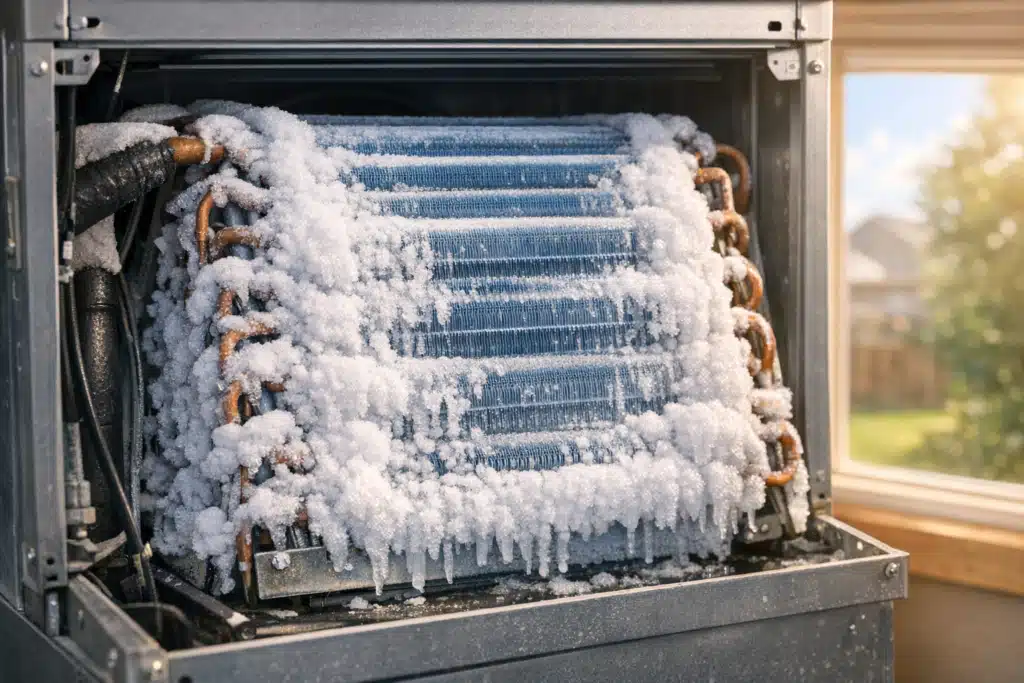
An AC freezes when the evaporator coil gets too cold and moisture on it turns to ice. This happens when warm air stops flowing across the coil or when refrigerant pressure drops too low.
The coil is designed to run cold. It only ices over when heat cannot reach it fast enough to keep the surface above freezing.
A frozen evaporator coil in summer is a symptom, not the root problem. The ice is your system telling you something upstream has failed.
The Denver-Specific Reason This Happens So Much
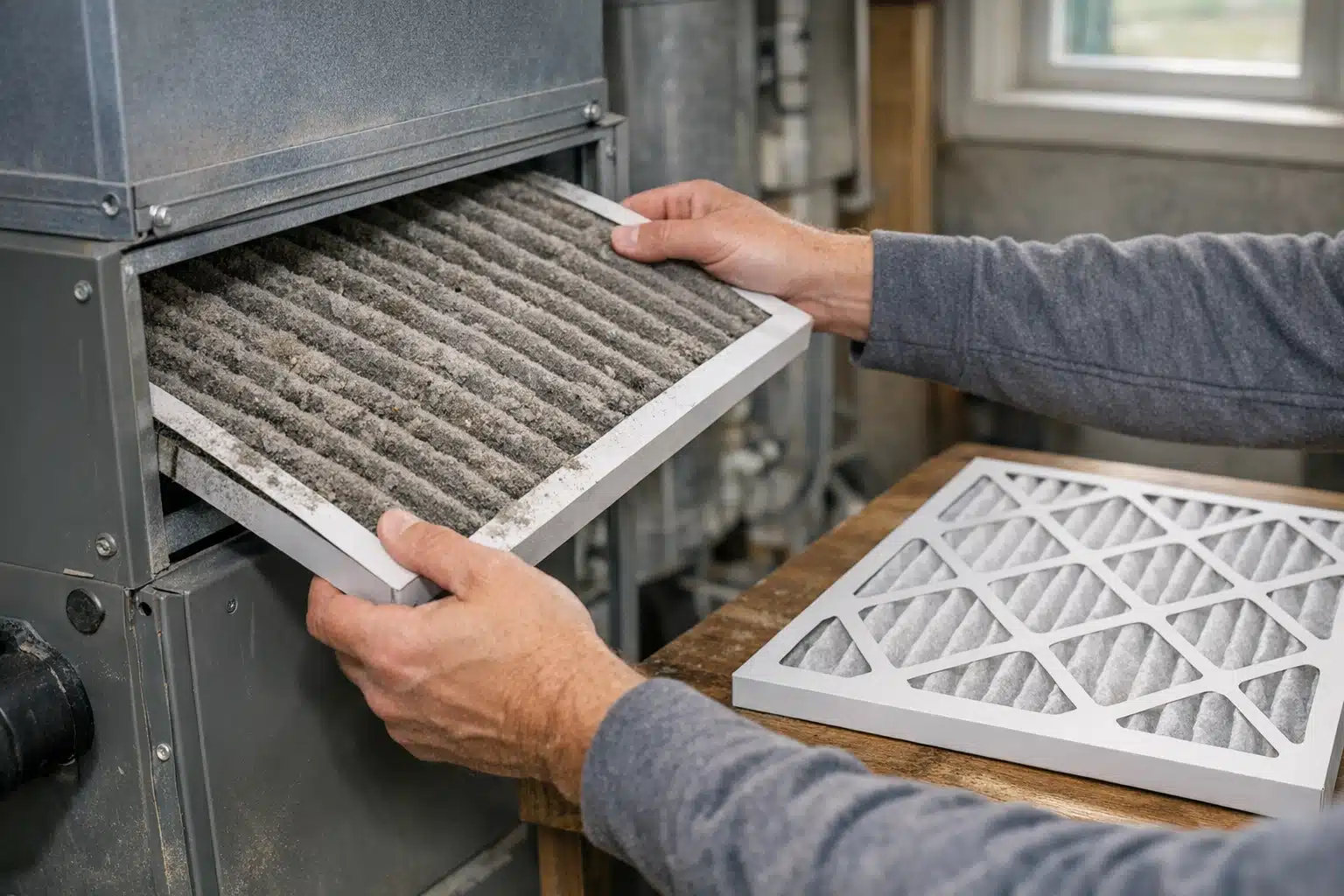
Denver homes fight heavy dust, spring pollen, and wildfire smoke that load up filters fast. A filter that would last a month at sea level can choke in weeks here.
Our dry, high-altitude air also masks the problem. You may not notice reduced airflow until the coil is already an ice ball.
The Most Common Causes of a Frozen AC
Freeze-ups almost always trace back to one of the following issues. Most are airflow related, and a few point to a refrigerant fault.
- Dirty or clogged air filter. The single most frequent cause. Restricted airflow lets the coil drop below freezing.
- Blocked return vents. Furniture, rugs, or closed doors starve the system of return air.
- Dirty evaporator coil. Dust buildup on the coil itself insulates it and traps cold.
- Low refrigerant. A leak drops pressure, which drops coil temperature below freezing.
- Failing blower fan. A weak or dying fan motor cannot push enough air across the coil.
- Running the AC on cold nights. Denver’s big day-to-night swings matter. Running cooling when outdoor temps fall below 60°F can freeze the coil.
- Clogged condensate drain. Backed-up water can freeze and compound the problem.
A Real Scenario We See Every Summer
A homeowner in Aurora runs the AC hard during a heat wave, then forgets it as temperatures drop to the 50s overnight. By morning, the unit blows warm air and the copper lines are frosted white.
The cause was not a broken part. It was the temperature swing combined with a filter that had not been changed since March.
Warning Signs Your AC Is About to Freeze
Catching a freeze early protects your compressor, the most expensive component in the system. Watch for the following signs.
- Warm air from the vents even though the unit is running
- Visible ice on the copper refrigerant lines or the outdoor unit
- Water pooling around the indoor air handler or furnace
- Weak airflow from supply registers
- Higher energy bills with no improvement in comfort
- Hissing sounds, which may point to a refrigerant leak
Warm air paired with visible frost is the clearest signal. That combination means the coil has iced over and airflow is blocked.
What to Do When Your AC Freezes Up
If you find ice on your system, act quickly to avoid compressor damage. Follow these steps in order.
- Turn off the cooling at the thermostat. Stop the freezing cycle immediately.
- Switch the fan to ON. This pushes room-temperature air across the coil to speed thawing.
- Wait for full thaw. Give it several hours. Never chip at the ice with any tool.
- Replace the air filter. A fresh filter restores airflow right away.
- Check return vents. Open every register and clear anything blocking airflow.
- Restart and monitor. If it freezes again, the cause runs deeper.
A repeat freeze after thawing points to a coil, refrigerant, or blower problem. Those require a trained technician and specialized tools.
DIY-Safe Checks Versus When to Call for Help
You can safely change filters, open vents, and thaw the unit. Those handle the majority of freeze-ups caused by airflow.
Refrigerant work, coil cleaning inside the air handler, and blower repairs are not DIY tasks. Refrigerant is regulated and requires certification to handle legally and safely.
Call a technician if the unit freezes again after a full thaw and a new filter.

How to Prevent Your AC From Freezing Up
Prevention costs far less than an emergency repair or a replaced compressor. A few habits keep your coil clear all summer.
- Change your filter every 30 to 60 days. During wildfire smoke or high-pollen weeks, check it every two weeks.
- Keep all supply and return vents open. Closing vents to unused rooms restricts airflow and raises freeze risk.
- Set your thermostat no lower than 68°F. Overcooling drives the coil temperature down.
- Turn off cooling on cool nights. Do not run the AC when outdoor temps drop below 60°F.
- Schedule a spring AC tune-up. A technician checks refrigerant charge, coil condition, and blower operation.
- Have your ducts and coil cleaned when dust buildup becomes heavy.
The refrigerant charge point matters most for repeat freezers. Denver’s dust and altitude accelerate wear, and a slow leak will freeze a coil long before you smell or hear anything wrong.
Why Duct and Coil Cleaning Matters Here
Dirty ducts and a dusty coil restrict airflow the same way a clogged filter does. Over a Denver winter, ducts collect fine dust that gets pushed into the coil once cooling season starts.
Cleaning the coil and ductwork restores full airflow and removes the insulating dust layer. That single step resolves many recurring freeze problems tied to airflow.
It carries a second benefit. Cleaner ducts mean fewer allergens and less recirculated dust indoors during smoke and pollen season.
The Cost of Ignoring a Frozen AC
A frozen coil forces liquid refrigerant back toward the compressor. Liquid does not compress, and the compressor can fail under that strain.
Replacing a compressor is one of the most expensive AC repairs, sometimes approaching the cost of a new unit. A filter change or tune-up prevents that outcome for a fraction of the price.
Every freeze cycle shortens the life of your equipment. Repeated icing wears the compressor and reduces the efficiency you paid for.
Conclusion
An AC freezing up in Denver heat almost always comes back to blocked airflow or low refrigerant, made worse by our dust, altitude, and sharp day-to-night temperature swings. Change your filter, keep vents open, avoid running cooling on cold nights, and schedule a spring tune-up to keep the coil clear. Catching the problem early protects your compressor and the money you spent on it.
If your system keeps freezing after a thaw and a fresh filter, let Action Air Duct inspect the coil, ducts, and airflow before the compressor takes damage. Call or text 720‑257‑3319, email tamir@actionairduct.net, or visit https://actionairduct.net to schedule an inspection or cleaning.